world·Manipur·Senapati District
2nd Manipur State Haomee Wrestling Championship Begins in Senapati
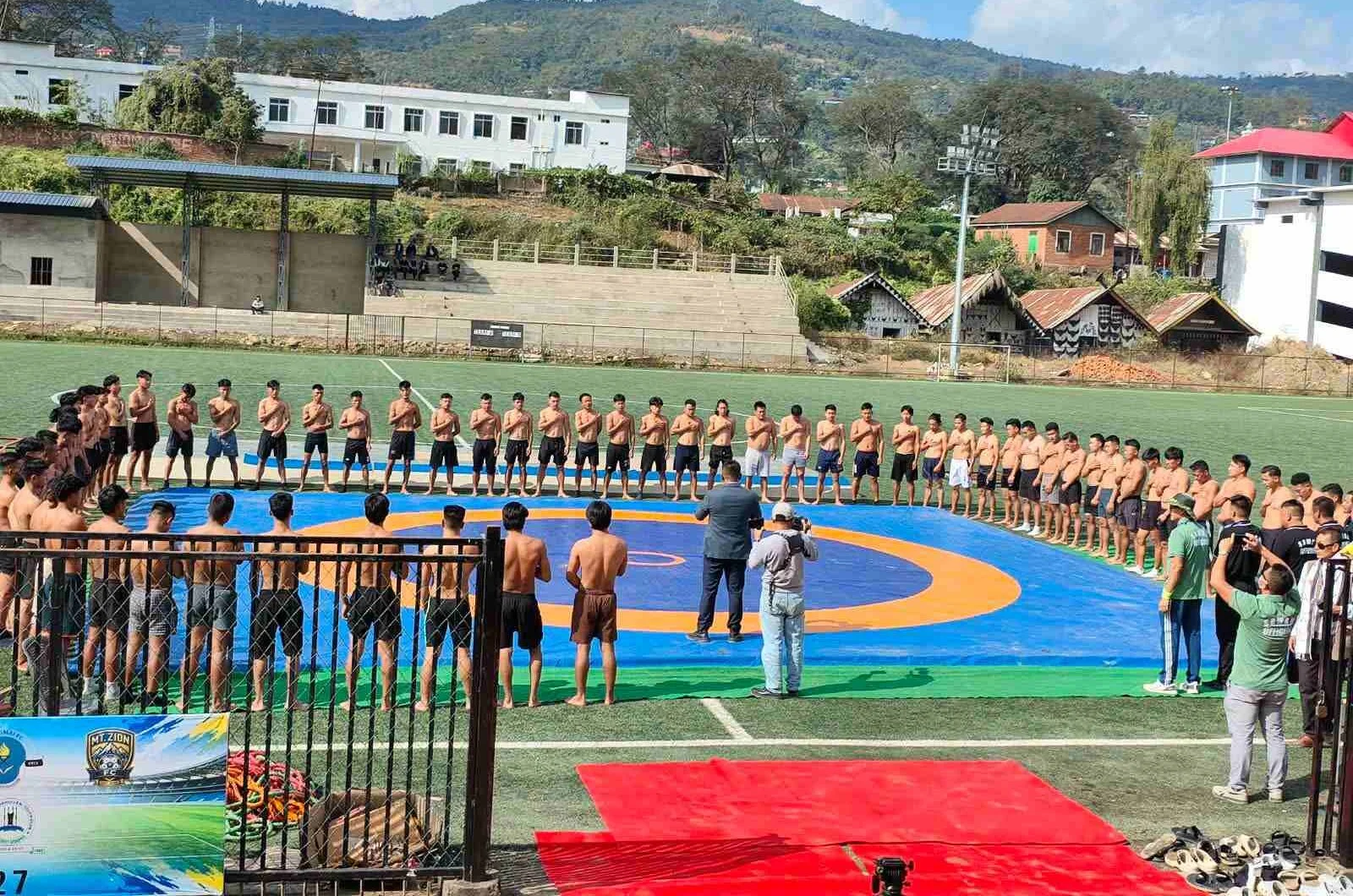
The 2nd Manipur State Haomee Wrestling Championship got underway at the Mini Stadium in Senapati, drawing 77 competitors from across the state in a multiday tournament celebrating indigenous martial traditions.
In this piece
Dozens of traditional wrestlers gathered in Manipur's Senapati district for the opening of the 2nd Manipur State Haomee Wrestling Championship. The multiday…
The 2nd Manipur State Haomee Wrestling Championship officially kicked off at the Mini Stadium in Senapati district on Tuesday, drawing dozens of competitors for a multiday tournament dedicated to indigenous grappling. A total of 77 wrestlers from across the state registered to compete in the traditional sporting event. Spectators and regional sports enthusiasts gathered at the venue to witness the opening bouts and ceremonial proceedings.
The tournament marks the second edition of the state-level championship, which aims to provide a formal competitive platform for indigenous wrestling styles. Athletes representing various local clubs and regions arrived in the hill district to vie for honors across scheduled bouts. Organizers noted that the tournament lineup showcases both seasoned grapplers and emerging talent dedicated to traditional forms of combat.
Traditional wrestling holds deep cultural and historical significance across the indigenous communities of Manipur and the wider Northeast region of India. Bouts are deeply rooted in village folklore, seasonal festivals, and ancient customs of physical prowess and community honor. By holding a dedicated state championship, organizers seek to revive and standardize traditional wrestling disciplines that have often existed outside modern Olympic freestyle formats.
Senapati district, situated along Manipur’s northern highlands, has long served as a vital center for indigenous sports and cultural gatherings. The Mini Stadium in the district headquarters has frequently hosted district and state tournaments, providing essential infrastructure for athletes from surrounding hill communities. The choice of Senapati as the host venue highlights the district's active sporting culture and its ongoing role in fostering regional athletic talent.
The championship is organized with the active support of civil society and sports associations, including the Federation of Haomee and local district athletic bodies. Representatives and community leaders in attendance emphasized the role of traditional sports in strengthening social bonds and mutual respect among different ethnic groups. They noted that shared sporting platforms offer valuable avenues for dialogue, camaraderie, and peaceful coexistence across the state.
Indigenous wrestling styles practiced in the region emphasize balance, agility, leverage, and upper-body strength, differing from conventional mat wrestling through distinct rules and grips. Competitors adhere to time-honored conventions that demand strict sportsmanship and respect for opponents. Matches are typically contested in packed arenas where spectators follow every grip and takedown with intense regional pride.
In recent years, sports authorities and civil organizations across Manipur have placed renewed emphasis on documenting and preserving indigenous physical traditions. Facing competition from globally televised sports, grassroots advocates have pushed to organize structured state championships with standardized judging and official recognition. Events like the Senapati meet serve as critical stepping stones to keep these cultural practices vibrant among younger generations.
The tournament also carries broader social resonance across Manipur, where sporting events consistently serve as rare unifying platforms across geographic and communal divides. Observers note that grassroots gatherings centered around shared athletic heritage help reinforce common cultural threads among diverse populations. By bringing together participants from multiple districts, the championship underscores the enduring potential of sports diplomacy at the local level.
Competition at the Senapati Mini Stadium is scheduled to continue over four consecutive days, culminating in the final rounds and prize distribution ceremonies later in the week. Tournament officials expect steady spectator turnout throughout the knockout stages as the field narrows toward the championship matches. Organizers expressed hope that the successful staging of this second edition will encourage wider participation and secure greater institutional support for future tournaments.
Primary source: Google News Manipur. Newzly rewrites and structures source reporting for clarity; verify critical details at the original.