world·Nagaland·Kohima District
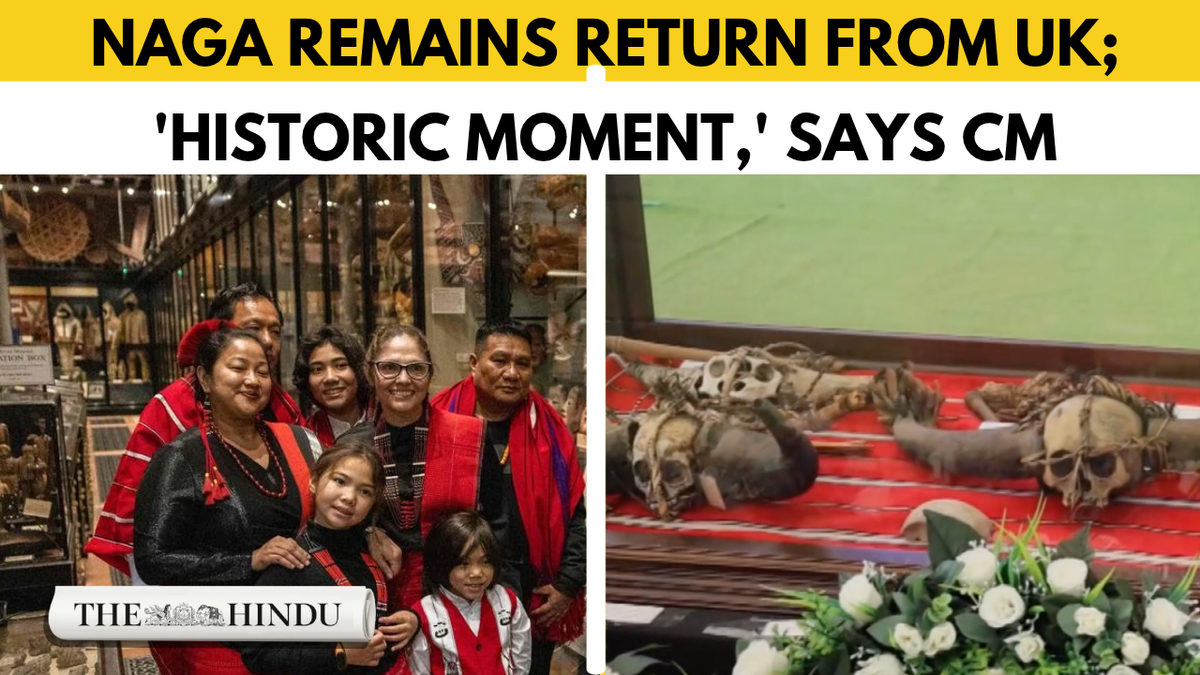
39 Naga ancestral remains return from the UK; Nagaland CM attends Kohima homecoming
Thirty-nine Naga ancestral remains have been returned from the United Kingdom, The Hindu reported, with Nagaland’s Chief Minister attending a homecoming ceremony in Kohima. The public record so far centers on that ceremony and the count.
In this piece
The Hindu reported that 39 Naga ancestral remains have come back from the United Kingdom and that Nagaland’s Chief Minister attended a homecoming ceremony in…
Thirty-nine ancestral remains identified as Naga have been returned from the United Kingdom, according to a report by The Hindu. Nagaland’s Chief Minister attended a homecoming ceremony in Kohima marking their return. The account, distributed through a Google News item citing The Hindu, presents the occasion as a formal homecoming.
The headline is the main public detail in the feed item used for this report. It states the number of remains, describes them as Naga ancestral remains, notes their return from the UK, records the Chief Minister’s attendance, and places the ceremony in Kohima. Particulars that would normally accompany such a story — which institution in Britain held the remains, when they left the Naga hills, and how they were identified — are not set out in that summary.
Kohima is the capital of Nagaland, a state in India’s Northeast whose people include multiple Naga communities with distinct languages, clans, and customary practices. A ceremony in the capital, with the state’s Chief Minister present, places the return in a public and official setting. The report as carried in the news feed does not quote the Chief Minister or name other participants.
Repatriation of ancestral remains has become a recurring issue between museums and source communities in many countries. Human remains gathered during colonial expeditions and anthropological fieldwork were long held in European collections, often with incomplete records of consent or of individual identity. That wider history explains why a return from the United Kingdom can carry public weight. It is background, not a finding from this report about the specific path these 39 remains took.
For Naga families and community institutions, ancestral remains are tied to customary respect for the dead and to the disruption caused when remains were removed from their places of origin. The Hindu’s use of “homecoming” indicates the ceremony was framed as a return to community rather than only as a museum transaction. The available item does not describe rites performed or name the villages associated with the remains.
The figure of 39 is specific enough to suggest a defined consignment. The summary does not say whether the remains are linked to one community or several, or whether other Naga remains are still held abroad. The count should be read as the number attached to this homecoming, not as a full account of Naga remains overseas.
Returns of this kind test how governments, communities, and foreign institutions share responsibility for provenance, dignity in handling, and public acknowledgment. The Chief Minister’s attendance signals that the state government treated the occasion as significant. The report does not describe any agreement signed at the event or any stated commitment about future transfers.
Documentation is often the hardest part of repatriation. Even after remains are physically returned, communities may still lack names, dates, and the circumstances of collection. The available report does not say whether catalogues, photographs, or archival notes accompanied the 39 remains. Until institutions or the state government publish those details, the public record rests on the ceremony and the count.
The United Kingdom has faced growing requests from countries and indigenous groups seeking the return of ancestral remains and cultural objects. Outcomes vary by institution and by the strength of evidence linking items to a place of origin. In this case, the reported return indicates that some process of agreement was reached. The summary does not identify the British body involved or the legal form of the handover.
What follows is only partly visible from the report. The remains are now associated with a homecoming in Kohima, and the state leadership has publicly marked that step. Decisions on where the remains will rest, whether communities will hold further rites, and whether related collections remain in the UK would have to come from Nagaland authorities, Naga representatives, or the institutions that released them. The Hindu’s account establishes the return and the ceremony and leaves those next steps open.
Primary source: Google News Nagaland. Newzly rewrites and structures source reporting for clarity; verify critical details at the original.