A 16th-Century English Castle Is Falling Into the Ocean, Sparking a Debate Over Its Future
A 16th-century fortress commissioned by Henry VIII is collapsing into the sea, igniting an urgent debate over whether to spend millions on coastal defenses or let the monument disintegrate with dignity.
In this piece
England's historic Hurst Castle faces catastrophic damage as coastal erosion and rising sea levels undercut its centuries-old walls. The structural crisis has…
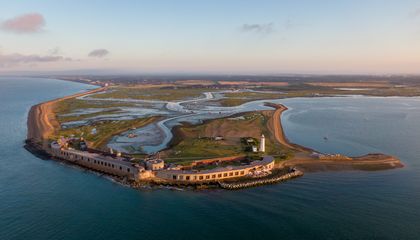
A historic 16th-century fortress along the southern coast of England is steadily collapsing into the ocean, igniting a contentious debate over how to manage endangered historical monuments. Hurst Castle, located on an exposed shingle spit in Hampshire, faces relentless battering from severe storms and accelerating coastal erosion. The fortress was originally built to withstand hostile human fleets, but its most formidable adversary has proven to be the sea itself.
The monument suffered a significant blow when a section of its 19th-century east wing collapsed into the water following violent winter squalls. English Heritage and specialized conservation engineers quickly mobilized to shore up the foundations with thousands of tons of protective granite boulders. Despite these extensive emergency interventions, experts acknowledge that the structure remains exceptionally vulnerable to shifting seabed topography and rising tides.
Constructed between 1541 and 1544 under the direct orders of King Henry VIII, the fortress formed a vital link in a defensive network protecting the Solent waterway. Over the centuries, the stronghold was repeatedly modernized, serving as a prison for King Charles I and housing coastal artillery through both World Wars. Its layered architecture stands as a physical record of more than four centuries of British military history.
The geographical position that once made the spit an ideal tactical vantage point has now become its greatest vulnerability. Sea levels around the British coast continue to climb, intensifying wave action that steadily strips away the fragile bank of shingle beneath the masonry. Climate scientists and marine hydrologists emphasize that such rapid erosion patterns will only accelerate in coming decades.
The structural crisis has pushed preservationists into an unprecedented philosophical and logistical impasse. Heritage authorities must decide whether to commit millions of pounds to increasingly elaborate civil engineering schemes or accept that nature will eventually claim the site. The situation forces caretakers to consider whether historic ruins should be sustained indefinitely or allowed to disintegrate with dignity.
This predicament is far from unique to Hampshire, serving instead as a prominent case study for heritage sites worldwide. From prehistoric settlements in northern Scotland to vulnerable coastal fortifications across Europe, rising oceans are threatening nonrenewable cultural treasures. Public agencies face finite budgets and must balance historical value against the escalating costs of seawalls and rock armor.
Advocates of managed retreat argue that endlessly pouring concrete around waterlogged monuments often compromises their visual integrity without solving the underlying erosion. Some conservation theorists believe recording sites through high-definition three-dimensional scans offers a more honest and ecologically sound approach than fighting sea currents. Under this philosophy, allowing certain ruins to weather naturally respects both geological processes and historical lifecycles.
Yet local residents, maritime historians, and heritage enthusiasts strongly oppose surrendering the iconic fort to the tides without an unyielding defense. For neighboring coastal communities, the fortress remains an indispensable tourist draw and a source of regional identity. Community advocates argue that abandoning such a monumental structure would set a troubling precedent for national heritage stewardship.
For now, site managers are pursuing a hybrid approach by fortifying the most critical areas while closely studying long-term shoreline dynamics. Detailed digital mapping and environmental impact surveys are underway to inform upcoming decisions on coastal defense funding. The ultimate fate of Hurst Castle will likely establish a critical benchmark for how modern society negotiates heritage preservation in an era of climate disruption.
Primary source: Smithsonian History. Newzly rewrites and structures source reporting for clarity; verify critical details at the original.