A Walkable City of Tomorrow Takes Shape in Suburban Utah
A 700-acre transit-oriented development rising on an old steel mill site in Vineyard, Utah, aims to create a walkable downtown, testing whether car-dominated suburbs can embrace high-density urban living.
In this piece
Utah City, a 700-acre master-planned community in Vineyard, Utah, is transforming a former industrial steel mill into a high-density, transit-oriented downtown…
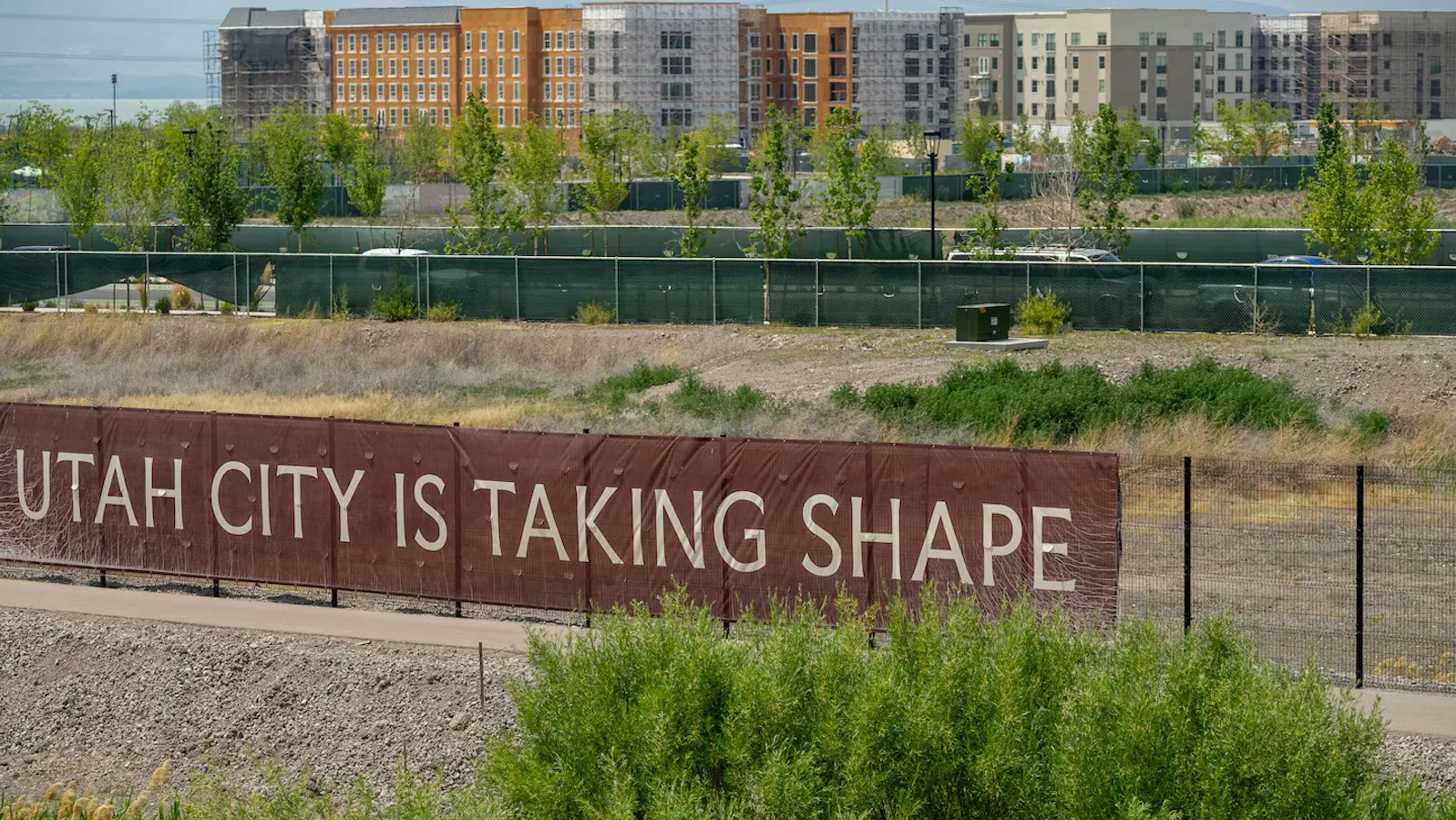
On a 700-acre tract along the eastern shore of Utah Lake, a massive master-planned community called Utah City is rising as an ambitious experiment in high-density, walkable urbanism. The project aims to convert a former industrial site in Vineyard, Utah, into a dense, pedestrian-first downtown designed to counter the car-centric suburban sprawl typical of the region.
Anchored by the recently opened Vineyard FrontRunner commuter rail station, the development is engineered to prioritize foot traffic and public transit over automobiles. Master planners from DPZ and walkability expert Jeff Speck designed the layout with mixed-use blocks, civic plazas, and a wide central pedestrian promenade known as the Greenline.
Developers Woodbury Corporation and Flagship Companies have already begun delivering multi-family residential complexes, including the 120 and 220 Bend apartment buildings, to house thousands of future residents. In addition to residential units, the broader blueprint calls for extensive retail districts, public parks, open lakefront access, and a regional campus for the Huntsman Cancer Institute.
The ambitious project sits on land that once housed the Geneva Steel mill, a sprawling industrial complex built during World War II that drove the local manufacturing economy for decades. Following the plant's permanent closure in the early 2000s, environmental remediation paved the way for Vineyard to evolve from a rural hamlet of roughly 150 people into one of the fastest-growing municipalities in the nation.
That explosive population boom has placed immense pressure on Utah County's transportation infrastructure and regional housing stock. Utah City represents an intentional departure from traditional suburban subdivisions, concentrating thousands of homes in an urban core rather than expanding outward across remaining agricultural lands.
Advocates view the development as a crucial blueprint for environmental sustainability and modern Western urbanization. By clustering employment, housing, and healthcare near high-capacity commuter rail, the project aims to curtail vehicle emissions, improve air quality along the Wasatch Front, and lower individual transportation costs.
Despite its progressive design credentials, the project has ignited political friction within the rapidly evolving community. Newly elected Vineyard municipal leaders and city council members have cast a skeptical eye on agreements negotiated by past administrations, questioning the balance between developer autonomy and public interests.
At the heart of local debates are the substantial public financial mechanisms, tax increment financing districts, and public infrastructure pledges that support the project. Skeptics argue that municipal obligations and density allowances deserve greater oversight, while project backers contend that upfront public-private investments are indispensable for transforming heavily compromised industrial land into a functioning city.
As construction crews continue building out infrastructure and welcoming initial residential tenants, the trajectory of Utah City will serve as a bellwether for transit-oriented communities across the American West. How Vineyard navigates the delicate balance between developer agreements and civic accountability will determine whether the bold urban experiment fulfills its promise as a sustainable city of tomorrow.
Primary source: Google News Utah. Newzly rewrites and structures source reporting for clarity; verify critical details at the original.