AAP Issues Three-Line Whip to Lok Sabha MPs as Delimitation Bill Dominates Coverage
The Aam Aadmi Party has directed its Lok Sabha members to be present for key business, as reports describe a government push on delimitation and sharp criticism from opponents.
In this piece
The Hindu reported that the Aam Aadmi Party issued a three-line whip to its Lok Sabha MPs ahead of important parliamentary business. Related coverage centers on…
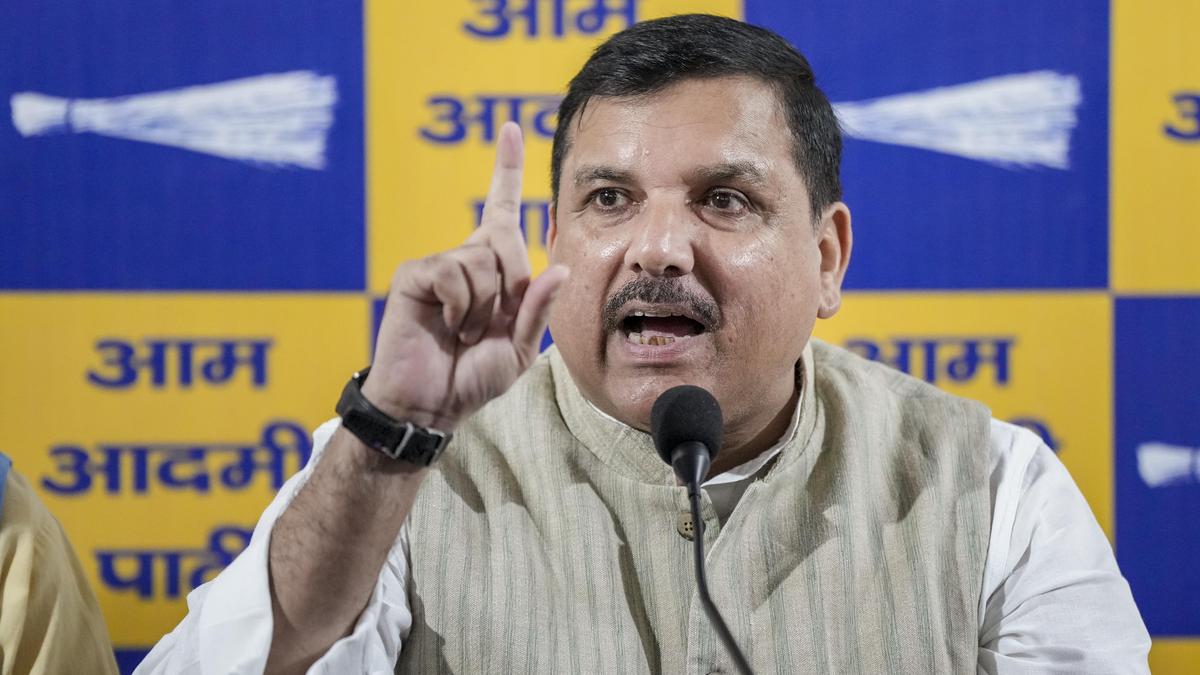
The Aam Aadmi Party has issued a three-line whip to its members in the Lok Sabha ahead of key parliamentary business, The Hindu reported. The directive comes as a cluster of national coverage focuses on a delimitation bill associated with the government of Prime Minister Narendra Modi.
A three-line whip is the strictest form of instruction an Indian party routinely sends its legislators. In ordinary parliamentary practice it requires members to attend and to vote in line with the party position, with the possibility of disciplinary action if they do not. The Hindu headline does not spell out the exact vote the AAP is directing, only that the whip precedes important business in the lower house.
Companion reports treat delimitation as the measure in view. NDTV framed the government’s move as one designed to clear a high bar, describing it as “two-thirds plus some.” In India’s constitutional system, changes that alter the composition or allocation of seats have often required a special majority, so the size of the government’s support is central to whether such a bill can pass.
The Times of India reported that the government has the support of 371 MPs. The same report said seats reserved for Scheduled Castes and Scheduled Tribes would rise by 50 percent together with the women’s quota. Those figures, as published, are the clearest numerical claims in the available coverage; the underlying bill text and the base against which any increase would be measured were not set out in the headlines.
Delimitation is the periodic redrawing of constituency boundaries and, where the law allows, the redistribution of seats to reflect population. It is politically sensitive because it can shift how many representatives each state sends to Parliament. Supporters of an update argue that representation should track population. Critics argue that states with slower population growth could lose relative influence.
Civil society and opposition voices have already attacked the proposal in strong terms. Telegraph India reported that CJP called the Delimitation Bill the “biggest threat” and said “Indian democracy will be finished.” The headline does not identify the individual speaker beyond the organisation.
A separate report in The Hindu quoted a Karnataka Pradesh Congress Committee spokesperson as saying the Delimitation Bill would ensure BJP rule until 2050. That claim is a political prediction, not a finding established in the reporting, and it signals how sharply the Congress unit in Karnataka is framing the stakes.
The reported numbers matter because 371 MPs, if accurate and if they vote together, would place the government well into the range associated with a special majority in the Lok Sabha. Whether that support holds, and whether the women’s quota and the higher SC and ST reservation interact in the way The Times of India described, will depend on the bill’s final text and on how parties whip their members.
The AAP’s three-line whip indicates the party does not want absences when that business is taken up. How many Lok Sabha members the AAP can muster, and whether its instruction is to support, oppose, or simply attend, is not stated in the available headlines.
What happens next is the test on the floor. If the government brings the delimitation measure in the form described by NDTV and The Times of India, the contest will turn on attendance, the two-thirds threshold those reports emphasise, and the political argument already joined by CJP and the KPCC spokesperson. Until the full text and the whip’s voting line are public, the scale of any change in seats remains a claim carried by those reports rather than a completed parliamentary fact.
Primary source: Google News India. Newzly rewrites and structures source reporting for clarity; verify critical details at the original.