ADB Initiative Helps Revitalize Subtropical Farmland in Himachal Pradesh
A major initiative backed by the Asian Development Bank is helping revive fallow agricultural lands across Himachal Pradesh, providing smallholder farmers with climate-resilient irrigation, protective fencing, and high-value fruit crops.
In this piece
An Asian Development Bank-supported project is revitalizing abandoned farmland across Himachal Pradesh by helping smallholders shift to high-value subtropical…
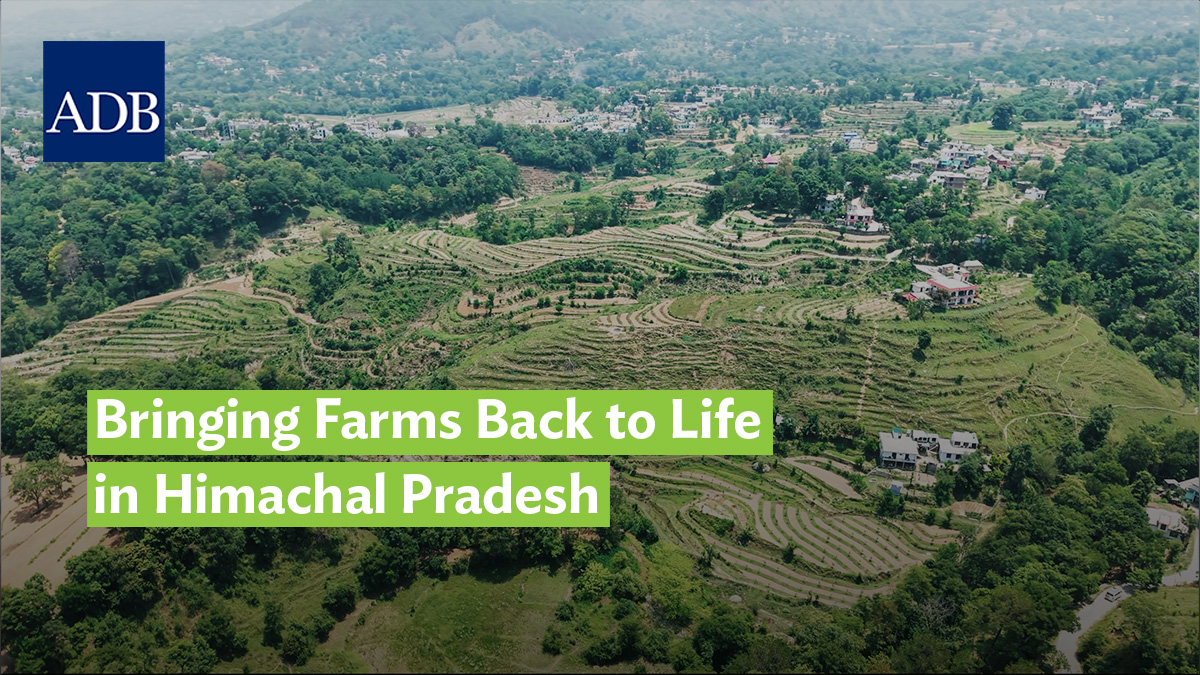
A major rural development initiative supported by the Asian Development Bank is helping revive agricultural lands across the subtropical regions of Himachal Pradesh. The Himachal Pradesh Subtropical Horticulture, Irrigation, and Value Addition Project, known as HPSHIVA, focuses on restoring abandoned and underutilized farmlands by addressing persistent environmental and logistical challenges. Through targeted investments, the project aims to stabilize rural livelihoods and bring commercial scale to smallholder farmers.
For years, agrarian communities in the lower valleys of the northern state have contended with severe agricultural obstacles. Prolonged dry spells and erratic weather patterns have depleted traditional water sources, leaving vast tracts of arable land dependent on erratic monsoon rains. At the same time, recurrent crop damage from wild and stray animals has created significant financial losses, driving many cultivators to scale back operations or leave plots completely fallow.
To counteract these challenges, the project promotes a transition away from traditional low-yield field crops toward climate-resilient subtropical horticulture. Participating farmers are encouraged to plant high-value fruits such as citrus, guava, litchi, pomegranate, plum, and persimmon. These perennial crops are selected for their commercial viability and their ability to withstand the region's shifting agroclimatic conditions.
Securing dependable water access serves as a cornerstone of the revitalization effort. The initiative finances the construction and rehabilitation of dedicated on-farm irrigation schemes, introducing drip and micro-irrigation systems directly to orchard clusters. Community-managed Water User Associations are tasked with overseeing distribution schedules and maintenance, ensuring sustainable and equitable water delivery across participating villages.
In addition to water infrastructure, the project addresses the long-standing threat posed by wildlife intrusions. High-grade perimeter fencing and boundary protection measures are being deployed across target orchards to shield young fruit trees from stray cattle and wild foraging animals. Securing the perimeter gives cultivators the confidence to invest time and resources into high-value tree crops without fear of sudden destruction.
The intervention also emphasizes collective organization to overcome the limitations faced by small and marginal landholders. By grouping growers into farmer clusters and cooperative units, the initiative enables joint management of inputs and shared equipment. Collective organizing allows smallholders to aggregate their harvest, negotiate stronger commercial terms, and achieve economies of scale that individual growers could not secure independently.
Field-level technical guidance is integrated alongside the physical infrastructure improvements. Agricultural extension specialists provide hands-on training to local producers, introducing modern canopy management, soil health enhancement, and integrated pest control strategies. Farmers are also instructed in complementary activities such as intercropping and beekeeping, which generate intermediate income streams while newly planted orchards mature.
Value chain integration forms another critical pillar of the development plan. The initiative supports the establishment of post-harvest handling facilities, cold storage options, and localized grading centers designed to minimize transit spoilage. Linking local producer groups with established commercial distribution networks is intended to ensure growers capture higher price margins within regional and national fruit markets.
State agricultural planners view the resurgence of subtropical farming as a strategic move to balance regional economic disparities. While temperate apple cultivation has long powered the agricultural economy of higher-altitude districts, lower subtropical belts have historically faced lower household farm earnings. Expanding commercial fruit farming offers rural youth and returning migrants viable economic opportunities closer to home.
Looking ahead, project partners and local authorities plan to scale the model across thousands of additional hectares spanning key districts including Bilaspur, Hamirpur, Kangra, Mandi, Sirmour, Solan, and Una. Success will depend on the long-term maintenance of local irrigation assets and the financial durability of farmer producer companies. As newly planted orchards approach full fruiting capacity in the coming years, officials hope the project will serve as a resilient blueprint for sustainable mountain agriculture.
Primary source: Google News Himachal Pradesh. Newzly rewrites and structures source reporting for clarity; verify critical details at the original.