Al Jazeera reporter steps into the pit lane to test Formula 1 crew work
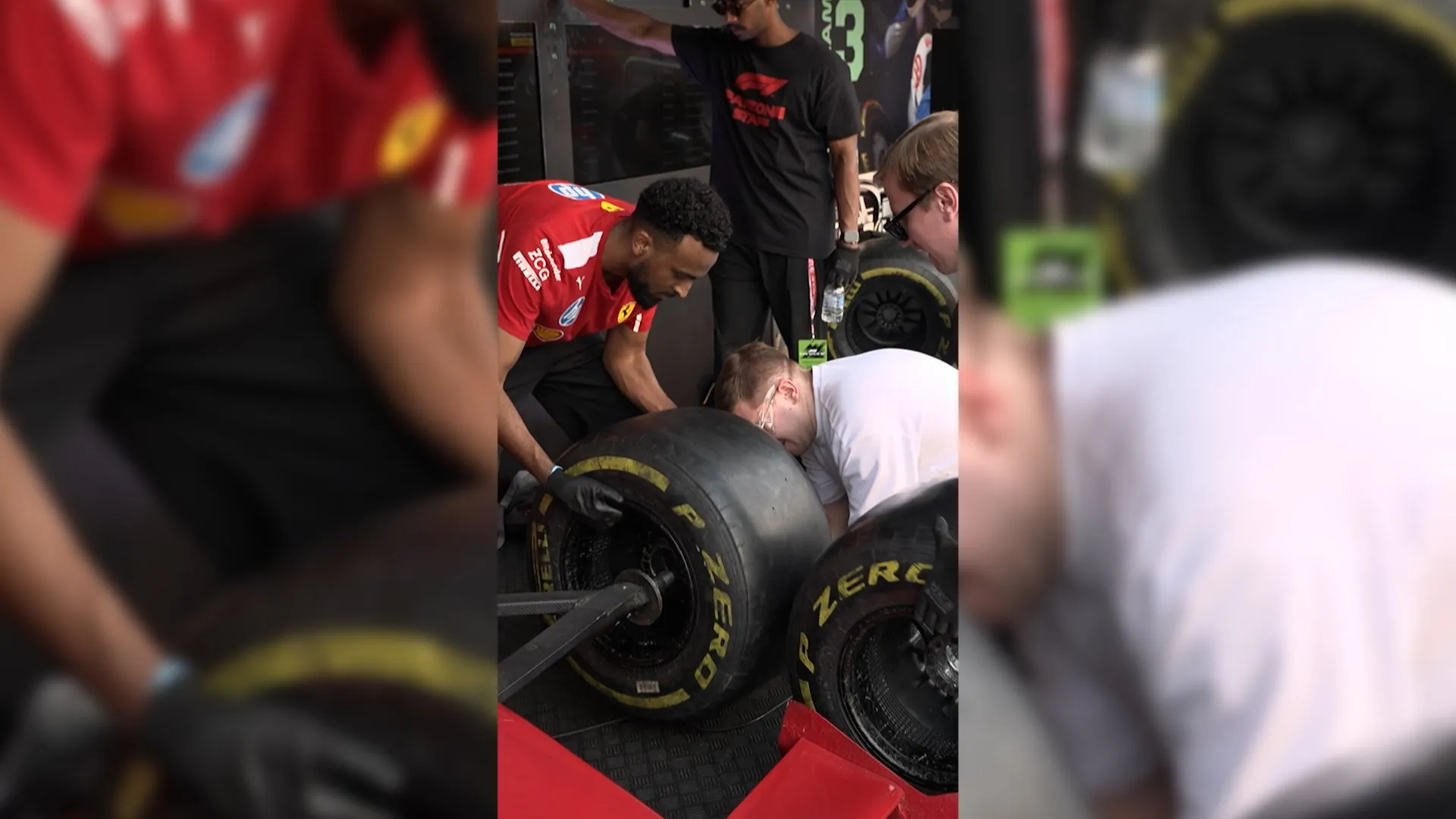
In a video report, Al Jazeera’s Joanna Gasiorowska joins the pit lane to see how demanding a Formula 1 pit-crew role can be when a stop lasts only a few seconds.
In this piece
Al Jazeera correspondent Joanna Gasiorowska went into the pit lane to experience the pressure of a Formula 1 pit crew. The short video looks at the split-second…
Al Jazeera’s Joanna Gasiorowska stepped into the pit lane to find out how hard it is to work on a Formula 1 pit crew. The network’s video, published in its newsfeed, frames the story around the split-second teamwork behind a pit stop rather than a single race result.
The report places the reporter among the people who service a car when it comes in. In Formula 1, a pit stop is the brief window in which a crew changes tires and handles other set tasks while the driver waits. The piece’s premise is that the work looks simple on television and feels far more demanding up close.
Al Jazeera does not, in the text accompanying the video, name a team, a circuit, or a race weekend. It also does not publish stop times, crew counts, or quotes from mechanics. What the item does establish is the reporter’s attempt to sample the role and the difficulty she set out to measure.
That thin public description still points to a familiar part of the sport. A modern stop depends on many people moving at once: wheel guns, tire carriers, a front jack, a rear jack, and a person ready to release the car. Each job has a fixed place, and one late movement can hold the whole stop.
Teams rehearse the sequence until the order of hands and feet is almost automatic. Practice matters because the car arrives at speed, stops in a marked box, and must leave only when every wheel is secure. The sport treats that choreography as a competitive skill, not a sideshow.
The stakes sit in those few seconds. A clean stop can protect track position. A fumbled wheel nut, a crossed tire, or a slow release can drop a driver behind rivals who pitted in the same window. Fans often remember the clock more than the individual motions that produced it.
Gasiorowska’s approach, as Al Jazeera describes it, is experiential. She went into the lane to feel the pressure rather than only narrate it. The network’s wording stresses how hard the job is, which matches a long-running theme in coverage of pit crews: the stop is a team performance squeezed into a moment that viewers can miss if they blink.
Safety sits beside speed. Crews work inches from a live car, with hot brakes, heavy tires, and strict signals for when the driver may pull away. Formula 1 has spent years tightening procedures so that a faster stop does not come at the cost of a loose wheel or a person left in the path of the car.
The video arrives as a feature on process, not as a results bulletin. Readers looking for a classified time, a winning garage, or a driver’s reaction will not find those details in the item’s published summary. The story’s claim is narrower: that the work is harder than the highlight clip suggests, and that a reporter tried it from inside the lane.
What happens next is the usual life of a short sports feature. Viewers can watch Gasiorowska’s pit-lane trial on Al Jazeera, and teams will keep drilling the same sequence at the next race. The public record of this particular piece stops at her attempt to show the difficulty; it does not extend to a measured comparison with a professional crew.
Primary source: Al Jazeera. Newzly rewrites and structures source reporting for clarity; verify critical details at the original.