world·Chandigarh·Amritsar District
Amritsar Deputy Commissioner Urges Government Staff to Uphold Ambedkar’s Vision
Amritsar Deputy Commissioner Dalwinderjit Singh urged civil servants to embody Dr. B.R. Ambedkar’s principles of equity and integrity, administering the constitutional Preamble pledge during Constitution Day commemorations.
In this piece
Amritsar Deputy Commissioner Dalwinderjit Singh led district staff in observing Constitution Day, administering the Preamble pledge at the District…
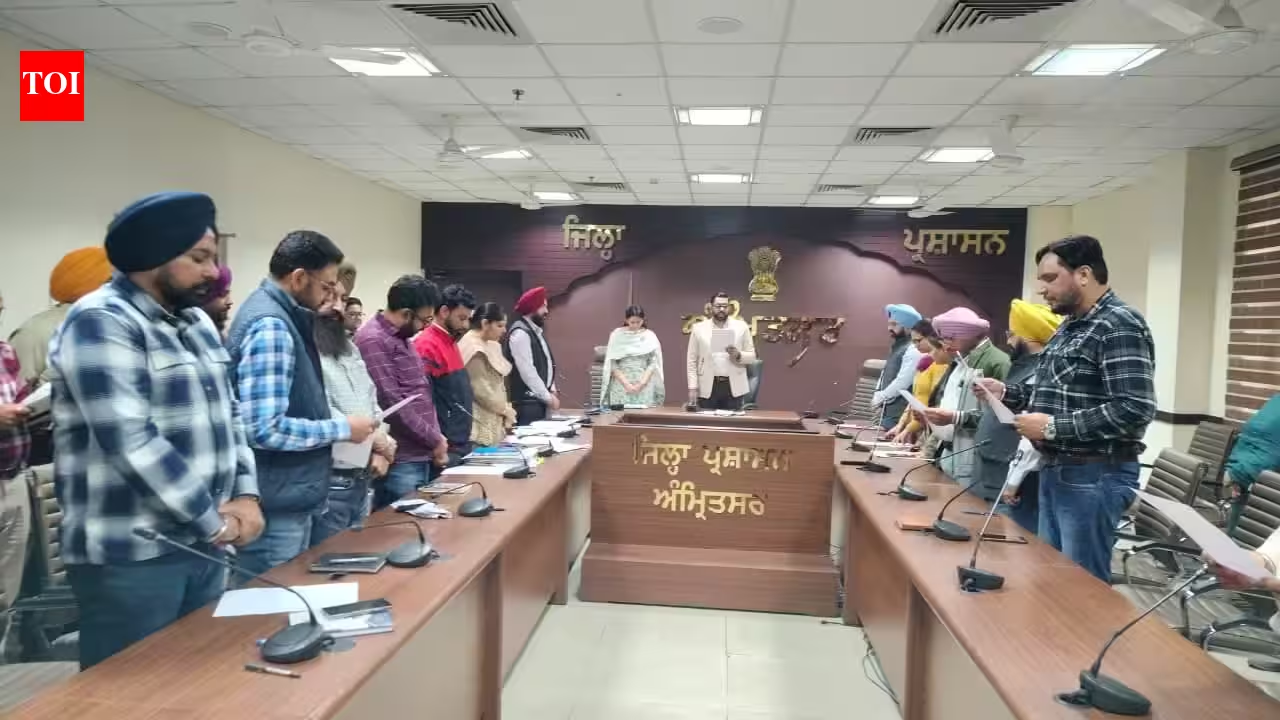
Amritsar Deputy Commissioner Dalwinderjit Singh called on government officers and district administrative personnel to uphold the vision of Dr. B.R. Ambedkar and perform their official duties with steadfast honesty, transparency, and fairness. Speaking during Constitution Day proceedings held at the District Administrative Complex, the deputy commissioner administered the pledge based on the Preamble to the Constitution of India. The gathering brought together administrative personnel and departmental heads from across the border district to mark the annual national observance.
During the ceremonial gathering, participating officials collectively read the Preamble, reaffirming their allegiance to India's sovereign, socialist, secular, and democratic framework. The recitation served as a collective reaffirmation of the core constitutional values of justice, liberty, equality, and fraternity. Civil servants took an oath to remain faithful to these foundational principles in both word and practice.
Addressing the assembled civil workforce, Singh emphasized that public administration exists to serve citizens without prejudice, favoritism, or discrimination. He stressed that government employees bear a heightened responsibility to ensure that administrative actions remain transparent, accountable, and accessible to people from all walks of life. The deputy commissioner stated that adherence to ethical conduct within the civil service represents the most meaningful tribute public servants can offer to the architects of the Constitution.
The appeal centered prominently on the legacy of Dr. Bhimrao Ramji Ambedkar, the principal architect of the Indian Constitution and chairman of the drafting committee. Ambedkar consistently argued that constitutional morality must guide the day-to-day conduct of public servants charged with translating legal provisions into social reality. His overarching objective was the establishment of an inclusive and progressive society where every citizen enjoys equal dignity and protection under the law.
Constitution Day, formally observed across India on November 26 as Samvidhan Divas, commemorates the historic adoption of the draft Constitution by the Constituent Assembly in 1949. While the foundational document came into full legal effect on January 26, 1950, the annual observance highlights the ongoing relevance of constitutional principles in contemporary governance. Similar pledge-taking ceremonies and commemorative events were held across government secretariats, educational institutions, and civic bodies nationwide.
District-level governance serves as the primary point of contact between citizens and the state machinery, making administrative integrity particularly consequential. Ordinary residents rely on district administrative complexes for vital documentation, land records, civic welfare schemes, and grievance redressal mechanisms. When local civil servants uphold impartial and timely service delivery, public confidence in democratic institutions is directly reinforced.
In Punjab, district administrations have faced recurring public calls for streamlined civic delivery, greater accountability, and the elimination of bureaucratic bottlenecks. Initiatives aimed at digital governance and time-bound public service delivery across the state have sought to make administrative workflows more transparent and responsive to everyday citizens. Calls from senior leadership reminding staff of their fundamental duties reflect an ongoing effort to align bureaucratic culture with citizen-centric governance goals.
Civic policy observers frequently note that ceremonial pledges acquire real significance only when translated into daily administrative conduct. Ensuring non-discriminatory service delivery requires active departmental oversight, consistent responsiveness to citizen grievances, and a zero-tolerance approach toward corruption. District leaders frequently leverage milestone occasions like Constitution Day to remind frontline staff that administrative power is a public trust rather than a personal entitlement.
Following the observance, administrative departments in Amritsar are expected to continue standard public service operations under periodic district oversight. Departmental heads were encouraged to maintain vigilance over citizen welfare programs and ensure timely resolution of pending public grievances. As district authorities assess administrative efficiency in the coming weeks, adherence to constitutional values and equitable treatment will remain the stated benchmark for staff performance.
Primary source: Google News Chandigarh. Newzly rewrites and structures source reporting for clarity; verify critical details at the original.