Architectural Digest India features a Maharashtra holiday home set in mango and coconut trees
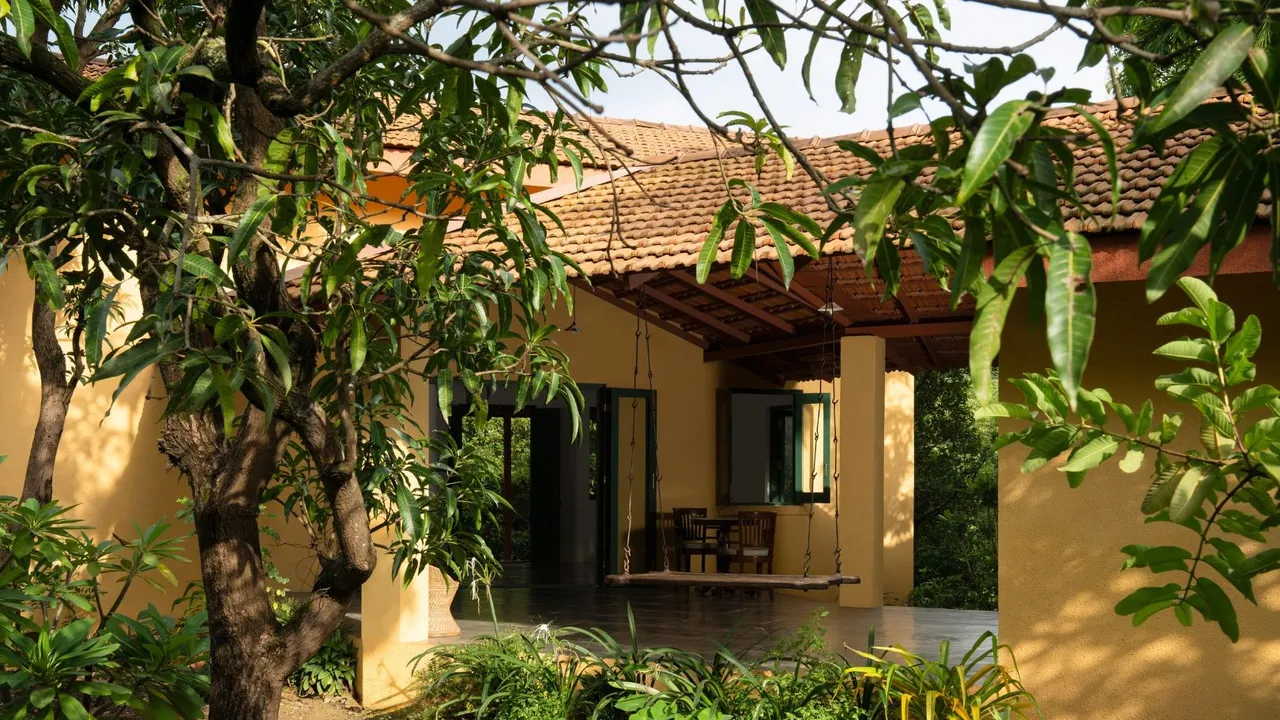
Architectural Digest India has highlighted a holiday house in Maharashtra whose setting is a plantation of mango and coconut trees, placing landscape at the center of the design story.
In this piece
Architectural Digest India has published a feature on a holiday home in Maharashtra surrounded by mango and coconut trees. The item, carried on Google News,…
Architectural Digest India has drawn attention to a holiday home in Maharashtra that sits within a plantation of mango and coconut trees. The item surfaced through Google News under that description, with the magazine identified as the publisher. Beyond the headline, the available notice does not spell out the house’s size, the name of its owners, or the studio behind it.
What the notice does establish is the setting. The residence is presented as a holiday home rather than a primary city house, and its immediate landscape is agricultural: mango and coconut trees, not a formal lawn or an urban street. In design coverage, that distinction matters because the planting becomes part of how the project is introduced to readers.
Maharashtra is a large and varied state, stretching from the Konkan coast through the Western Ghats to the Deccan plateau. Mango and coconut groves are especially associated with the wetter coastal belt, though the source does not name a district, a village, or a coast. Any tighter location would be a guess, and the notice does not support one.
Holiday houses of this kind have become a recurring subject for Indian shelter magazines. Readers are shown retreats that step away from dense cities while still claiming a connection to working land—orchards, plantations, and groves that predate the building. Architectural Digest India’s headline frames this project in exactly those terms.
The choice of trees is not incidental in the way the story is titled. Mango and coconut are long-lived plantation crops in western India, and a house placed among them raises familiar design questions: how much of the grove stays intact, how shade and monsoon rain shape the plan, and whether the building reads as a guest inside an existing landscape. Those questions follow from the headline; the short notice does not answer them.
Architecture features at this stage of distribution often travel first as a title and a publication credit. Search and news feeds compress a photographed essay into a single line. Until the full Architectural Digest India article is read, claims about materials, budgets, or construction methods would outrun the record.
The story still sits in a wider conversation about how Indian second homes are presented. Design media increasingly treats climate, planting, and local building habits as part of the brief, not as scenery behind a glass box. A Maharashtra house introduced through its mango and coconut trees fits that editorial tilt, even without a floor plan attached to the feed item.
For readers outside the state, the headline also signals a shift in what counts as a desirable retreat. The appeal, as described, is enclosure by a working plantation rather than a view sold on its own. That is a specific promise, and it is the only promise the notice actually makes.
What happens next is ordinary for a magazine feature caught at the headline stage. The full Architectural Digest India piece, if read in full, would be the place for photographs, the project team, and any account of how the house meets the grove. Until then, the verifiable core remains narrow: a holiday home in Maharashtra, published by Architectural Digest India, and described as surrounded by mango and coconut trees.
Primary source: Google News Maharashtra. Newzly rewrites and structures source reporting for clarity; verify critical details at the original.