Ardingly Reservoir Depleted to 19% Capacity as Sussex Drought Strains Supplies
The Ardingly reservoir in Sussex has dropped to 19% capacity following England's hottest summer on record, leaving tens of thousands of households vulnerable while a neighbouring storage facility sits unusable due to broken treatment works.
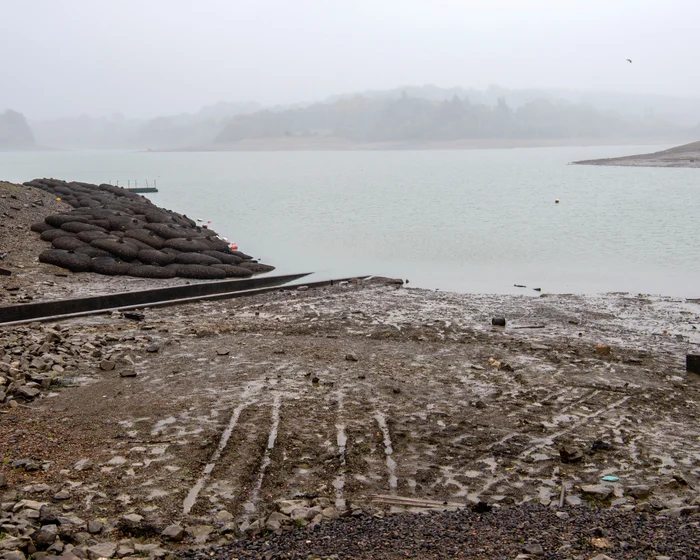
Water levels at the Ardingly reservoir in Sussex have plunged to just 19 percent of total capacity following the hottest summer on record in the United Kingdom. The dramatic decline has left local residents and officials increasingly alarmed as one of England’s most severely depleted reservoirs struggles to meet local water demand.
Managed by utility company South East Water, the Ardingly reservoir provides drinking water to approximately 95,000 properties across Haywards Heath, Uckfield, and surrounding communities. Aerial photographs and shoreline views reveal vast swathes of parched, cracked earth where deep water previously stood, illustrating the severity of the ongoing regional drought.
For longtime inhabitants in the nearby town of Haywards Heath, the visible retreat of the reservoir shoreline has created acute anxiety about winter replenishment. Caroline Allan, a lifetime resident of Haywards Heath, noted that she could see the water going down continually and did not remember ever witnessing the reservoir at such an extreme low.
The crisis in Sussex is compounded by operational limitations at neighbouring facilities, which have left regional water managers unable to easily balance the shortfall. The nearby Weir Wood reservoir, owned and operated by Southern Water, has retained roughly 80 percent of its capacity but cannot be utilised to alleviate pressure on Ardingly.
The discrepancy is caused by the decommissioned water treatment works at Weir Wood, an aging facility dating back to the 1950s that was taken out of service in 2018 due to reliability and water-quality problems. Because the treatment plant reached the end of its operational life without an immediate replacement, millions of litres of stored water remain effectively stranded just miles away from parched communities.
In response to the dwindling reserves at Ardingly, South East Water has implemented strict demand-management policies, including regional hosepipe bans and temporary reductions in compensation flows released into local rivers. Water companies across southern England have increasingly urged consumers to curb discretionary usage, pointing to sustained below-average rainfall across multiple seasons.
Local frustrations have also focused on rapid residential expansion across Sussex, which critics argue has outpaced water infrastructure investment. Community members and local representatives have questioned why large-scale housing developments continue to receive approval while baseline storage and distribution networks remain vulnerable to predictable seasonal droughts.
To address systemic vulnerabilities, water utility planners have proposed engineering schemes to interconnect regional resources, including a planned transfer pipeline linking Weir Wood and Ardingly. However, long-term infrastructure projects, such as a full rebuild of the Weir Wood treatment facility, are not slated for completion until around 2030, offering little short-term relief for current supply constraints.
With autumn rainfall remaining unpredictable, environmental monitors and water executives are closely watching catchment conditions to determine whether winter precipitation will suffice to recharge subterranean aquifers and surface reservoirs. Unless steady and prolonged rainfall arrives over the coming months, utilities warn that regional drought orders and conservation curbs may extend well into the following year.
Primary source: The Guardian Business. Newzly rewrites and structures source reporting for clarity; verify critical details at the original.