Army Reschedules Southeast Iowa Lead Azide Blasts for Wednesday
The U.S. Army has rescheduled the controlled detonation of nearly five tons of unstable lead azide at an ammunition plant in southeast Iowa to Wednesday, citing weather conditions and safety preparations.
In this piece
The U.S. Army has postponed its planned controlled detonation of approximately 9,500 pounds of deteriorating lead azide at the Iowa Army Ammunition Plant until…
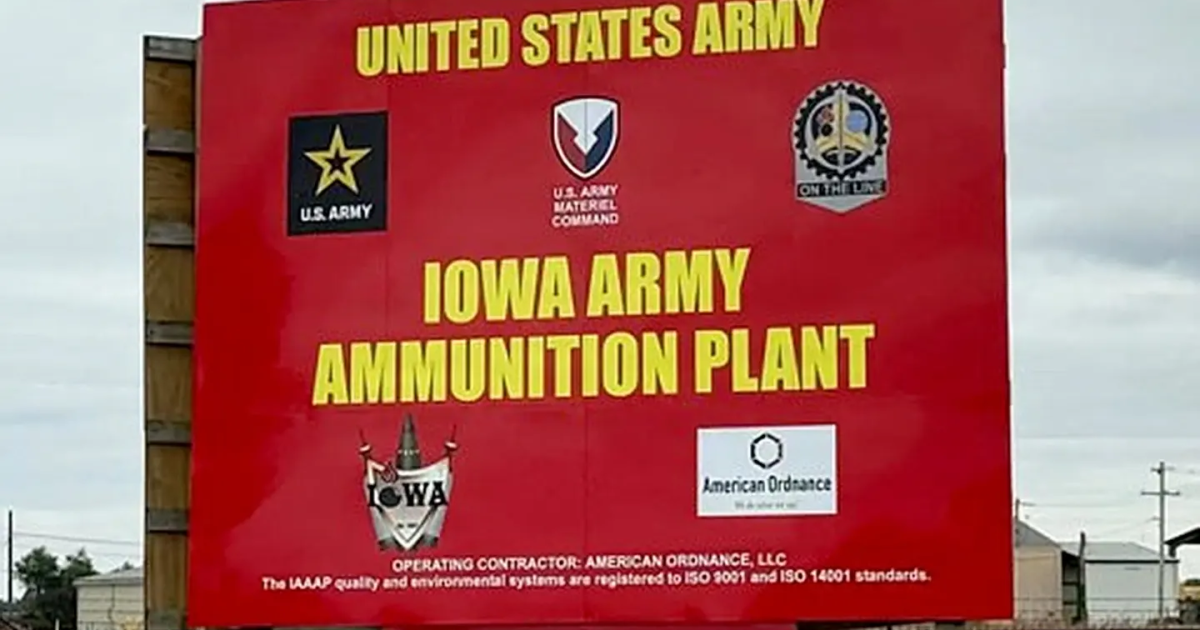
The U.S. Army has rescheduled the controlled detonation of nearly five tons of deteriorating lead azide at the Iowa Army Ammunition Plant to Wednesday. Officials announced the delay from an earlier Monday timeline to allow for more favorable weather patterns and to complete on-site safety preparations. The operation involves approximately 9,500 pounds of the sensitive, high-explosive chemical compound stored at the Middletown facility.
The blasts were originally slated for late last week before being pushed back following intense scrutiny from state officials and community members. Military planners indicated that conducting the disposal on Wednesday provides a better operational window to mitigate risks associated with the high-yield blast. Technicians and emergency management personnel are using the additional time to inspect containment measures and align emergency response assets.
Lead azide is an inorganic chemical compound primarily utilized as an explosive initiator and primary explosive in military ordnance and munitions primers. At the southeast Iowa facility, storage conditions degraded when water-covered tanks containing the compound began drying out, increasing the danger of crystallization. When lead azide crystals dry and form deposits, the substance becomes exceptionally unstable and susceptible to accidental detonation from friction, impact, or static electricity.
Military leadership determined that controlled open detonations are the safest viable method to neutralize the immediate hazard posed by the degraded stockpile. Army representatives argued that attempting to transport or rehydrate the dried compound carries an unacceptable danger of triggering an uncontrolled blast within the facility. Controlled destruction at designated detonation grounds is intended to eliminate the structural threat before unexpected handling shocks cause an incident.
The disposal operation has encountered substantial opposition from regional environmental organizations and local community advocates. Groups including the Iowa Environmental Council and the Sierra Club Iowa Chapter raised alarms over potential environmental contamination and questioned whether safer containment technologies were sufficiently evaluated. Legal filings sought emergency stays to halt the open detonations until comprehensive environmental impact reviews and monitoring frameworks could be established.
Elected officials, including Iowa Governor Kim Reynolds and state lawmakers, previously pressed military authorities for temporary delays to review environmental permits and safety protocols. State leaders sought guarantees that the federal emergency authorization used for the disposal would not bypass necessary precautions for surrounding residential communities. Communications between state agencies and Army commanders focused heavily on plume modeling, local evacuation planning, and emergency air sampling.
Public health experts and environmental scientists have warned that open-air detonations of lead-based compounds create particulate plumes that can travel downwind. Inhalation or environmental settling of toxic lead dust poses long-term contamination risks to nearby soils, watersheds, and populated neighborhoods across southeastern Iowa. Community members expressed frustration that an open burn method was selected over closed thermal or chemical neutralization systems that trap hazardous particulates.
In response to public criticism, the Army stated it is incorporating specialized mitigation measures designed to dampen the spread of airborne lead residue. Engineering controls, soil buffers, and designated safety perimeter cordons are being prepared around the detonation zone to localize the blast impacts. Air-monitoring stations are slated to capture real-time atmospheric data during and immediately after the disposal event.
The Iowa Army Ammunition Plant, established during World War II, encompasses thousands of acres in Des Moines County and has long performed ordnance manufacturing and demilitarization. While the installation has played a vital role in national defense manufacturing, nearby communities have historically navigated legacy contamination and Superfund cleanup initiatives. The present crisis has renewed longstanding local tensions over federal military waste management practices and civilian health safeguards.
Weather monitoring will remain the pivotal factor in determining whether the detonations proceed as scheduled on Wednesday morning. Military officials cautioned that any adverse shifts in wind direction, cloud ceiling, or precipitation could trigger further adjustments to prevent plumes from drifting toward populated areas. State regulators and community monitors plan to evaluate post-blast air and soil quality assessments to verify whether contamination was successfully contained.
Primary source: Google News Iowa. Newzly rewrites and structures source reporting for clarity; verify critical details at the original.