Army Set to Detonate Five Tons of Unstable Lead Azide at Iowa Ammunition Plant
U.S. Army officials plan to detonate five tons of degraded lead azide at an Iowa munitions plant on Wednesday, triggering intense community outcry and legal challenges over potential toxic air pollution.
In this piece
The U.S. Army is scheduled to detonate 68 barrels of degraded lead azide at the Iowa Army Ammunition Plant on Wednesday after the explosive chemical became…
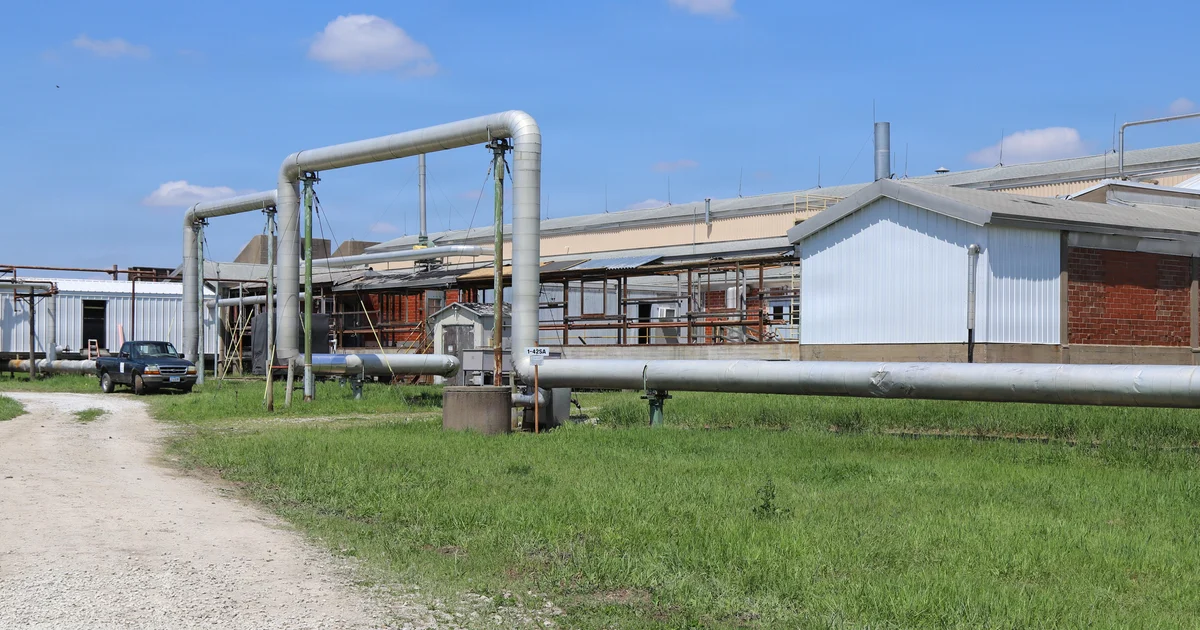
The U.S. Army is preparing to detonate approximately five tons of degraded, highly volatile lead azide explosives at the Iowa Army Ammunition Plant on Wednesday morning. Military officials announced the controlled blast after concluding that the unstable compound poses an imminent danger of spontaneous combustion. The operation in Middletown has prompted significant alarm across nearby communities in southeastern Iowa and western Illinois.
The hazardous material is stored across 68 barrels that have been kept at the facility for more than two decades submerged in a stabilizing mixture of water and ethanol. Recent inspections revealed that the protective liquid had partially evaporated, allowing the lead azide to dry out and recrystallize. In its crystallized state, the primary explosive becomes exquisitely sensitive to friction, vibration, and fluctuating seasonal temperatures.
Federal authorities and military commanders determined that moving or handling the volatile drums would present an unacceptable risk to workers and nearby residents. The Environmental Protection Agency issued emergency clearance for on-site open detonation, identifying the measure as the safest available method to neutralize an impending catastrophe. Army officials emphasized that an accidental, uncontrolled detonation would produce far more destructive consequences than a managed blast.
The planned demolition has ignited fierce backlash from local residents, healthcare advocates, and municipal leaders who fear the environmental and health impacts. Lead azide detonations release toxic lead particulates into the air, raising fears of widespread contamination across agricultural land and residential neighborhoods. Concerned citizens questioned why neighboring populations received minimal notice before such a substantial quantity of heavy metal was scheduled for open-air destruction.
In response to the imminent detonation, community organizations and grassroots advocates moved quickly to distribute high-grade protective masks to households within the anticipated dispersion zone. School districts and families weighed whether children should remain indoors during the scheduled morning explosion. Residents voiced intense frustration over the perceived lack of transparency, demanding more robust real-time air quality monitoring before any demolition proceeded.
The operation soon sparked a legal showdown, with environmental groups including the Sierra Club and the Iowa Environmental Council filing emergency motions in federal court. Challengers argued that the EPA and the military failed to adequately consider enclosed containment technologies or properly model airborne lead drift. The U.S. Eighth Circuit Court of Appeals briefly granted an administrative stay to review the emergency permits, intensifying the race against the chemical compound's declining stability.
The dispute also caught the attention of federal and state political leaders, adding another layer of complexity to the emergency operation. Statements emerged urging the military to temporarily halt the procedure until court proceedings concluded and incoming state leadership was fully briefed. However, defense officials maintained that delays could drastically heighten the probability of a catastrophic accidental blast if storage temperatures continued to shift.
The Iowa Army Ammunition Plant, located in Des Moines County, is a sprawling military industrial installation that has produced munitions and stored ordnance since World War II. Over decades of defense production, the site has managed numerous legacy defense materials, requiring periodic remediation and strict safety protocols. The current crisis highlights the persistent challenges facing defense facilities as aging stockpiles of legacy chemicals deteriorate over time.
As the scheduled detonation hour approaches, base personnel and contracted demolition specialists are finalizing safety perimeters and weather assessments at the testing grounds. Officials plan to monitor wind speed and atmospheric conditions closely to minimize airborne drift toward populated areas during the blast. Community members and environmental watchdogs say they will track post-blast fallout and scrutinize subsequent regulatory reviews to ensure accountability.
Primary source: Google News Iowa. Newzly rewrites and structures source reporting for clarity; verify critical details at the original.