Arunachal Pradesh Marks World Pharmacists Day With Focus on Combating Antimicrobial Resistance
Arunachal Pradesh observed World Pharmacists Day in Itanagar with an urgent focus on antimicrobial resistance, gathering hundreds of students, clinicians, and regulatory leaders to champion responsible antibiotic stewardship.
In this piece
Healthcare professionals and pharmacy students gathered in Itanagar to observe World Pharmacists Day with a dedicated focus on combating antimicrobial…
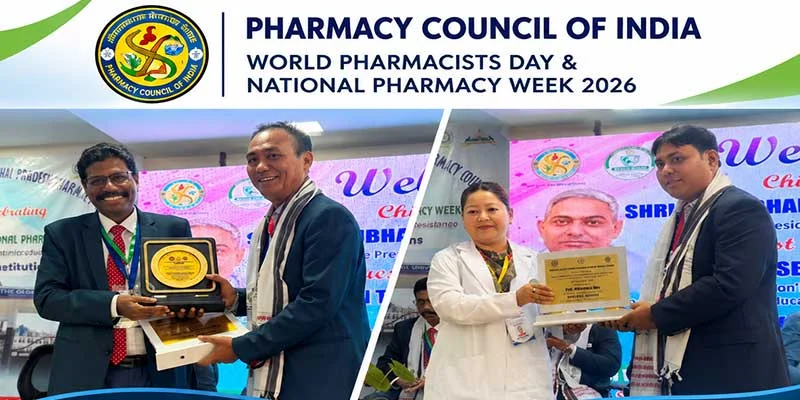
Healthcare professionals, educators, and pharmacy students gathered in Itanagar to observe World Pharmacists Day, placing a concentrated spotlight on the escalating global and domestic challenge of antimicrobial resistance. Organized in collaboration with the Pharmacy Council of India, the state-level event brought attention to the critical frontline role pharmacists play in safeguarding public health and promoting rational drug use.
The observance was hosted at the Himalayan University auditorium in Jullang, drawing an estimated 500 participants from eastern zone pharmacy institutions, including Himalayan University and The Global University. Centered around the theme "Swasth Bharat: Combating Antimicrobial Resistance," the program emphasized how disciplined medication management serves as a crucial line of defense against treatment-resistant pathogens.
Key leadership figures addressed the assembly, reinforcing institutional commitments to elevate clinical pharmacy standards and regulatory adherence across the state. Speakers included Jashubhai Hirabhai Chaudhari, vice president of the Pharmacy Council of India, and Tsering Naksang, chairperson of the Arunachal Pradesh Pharmacy Council. Both underscored the professional responsibility borne by dispensers to stem indiscriminate antibiotic access.
To take the public health message beyond academic halls, student groups organized outreach initiatives directly within urban commercial centers. Participants staged street plays, or Nukkad Nataks, at Akash Deep in Itanagar, illustrating the dangerous consequences of taking antibiotics without proper medical guidance. A public awareness rally subsequently marched from Akash Deep to the Indira Gandhi Park Gate No. 2, carrying banners advocating responsible medicine stewardship.
Inside the academic venue, proceedings included structured technical engagements designed to hone clinical competency and scientific literacy among future practitioners. A dedicated panel discussion examined practical interventions against antimicrobial resistance, while students participated in poster presentations and on-the-spot scitoon competitions. An interactive Pharma Quiz tested trainees on pharmacology, regulatory compliance, and community counseling frameworks.
Antimicrobial resistance, commonly known as AMR, occurs when bacteria, viruses, fungi, and parasites evolve over time and no longer respond to conventional antimicrobial medicines. This resistance makes common infections increasingly difficult or impossible to treat, heightening the risk of severe illness, long hospitalizations, and preventable mortality. Health agencies worldwide have repeatedly identified AMR as one of the most pressing threats to modern clinical medicine.
In India, widespread over-the-counter dispensing, patient self-medication, and incomplete antibiotic courses have exacerbated resistance patterns across primary care settings. Because community pharmacists often serve as the first point of healthcare contact for patients in semi-urban and remote areas, their adherence to prescription rules is vital. Educating dispensers to resist consumer pressure for unnecessary antimicrobials remains a fundamental hurdle in regional containment strategies.
Medical authorities maintain that preventing misuse requires systematic intervention across both public health dispensaries and private retail pharmacies. When patients consume leftover antibiotics for viral ailments or discontinue treatment prematurely, surviving bacteria develop adaptive defenses against standard therapies. Pharmacists are uniquely positioned to intervene by verifying prescriptions, explaining proper dosing regimens, and warning patients about the hazards of sharing medications.
State officials and academic coordinators noted that cultivating rigorous pharmacy education in northeastern India is vital for strengthening decentralized public health systems. By integrating stewardship training directly into institutional curricula, educators aim to prepare graduates who actively safeguard pharmaceutical protocols rather than treating dispensing as a purely commercial transaction.
Moving forward, organizers and regulatory representatives indicated that awareness campaigns in Arunachal Pradesh will continue to target both healthcare providers and local communities. The long-term objective involves establishing sustained surveillance and routine monitoring to curb non-prescription antibiotic sales across regional pharmacies. Continued collaboration between national statutory bodies and state councils is projected to form the backbone of these preventive health measures.
Primary source: Google News Arunachal Pradesh. Newzly rewrites and structures source reporting for clarity; verify critical details at the original.