Australia Overpowers New Zealand 32-12 to Claim Fourth Straight Rugby League World Cup
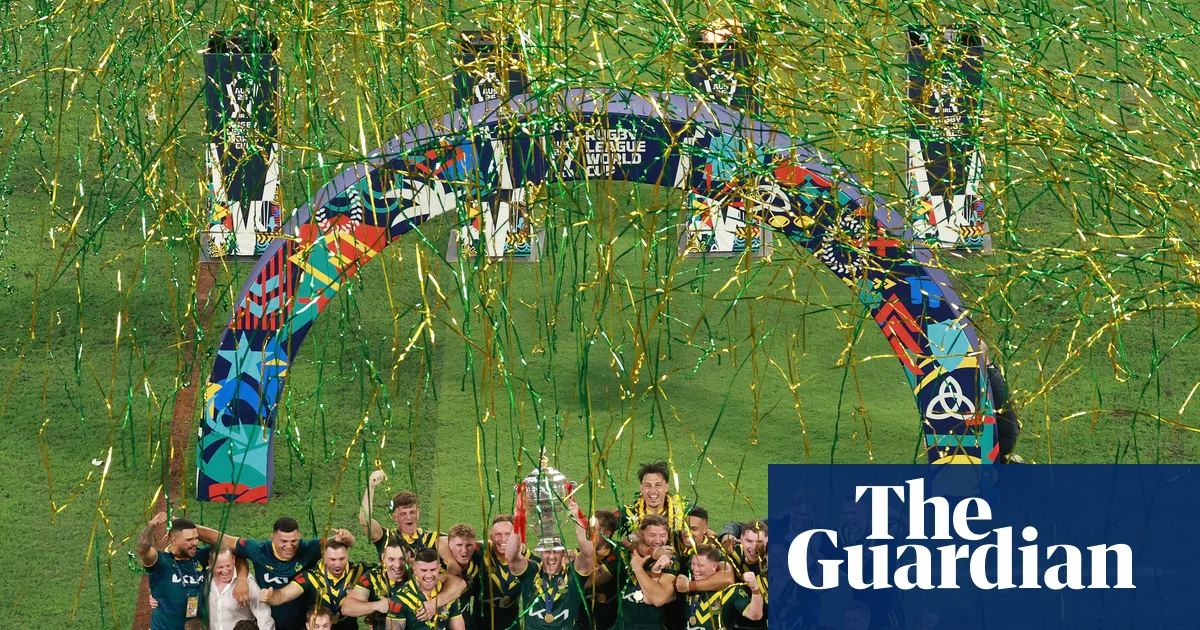
Australia defeated New Zealand 32-12 in Brisbane to capture their fourth consecutive men's Rugby League World Cup title, led by a standout performance from Reece Walsh.
In this piece
Australia claimed their fourth consecutive men's Rugby League World Cup with a decisive 32-12 victory over New Zealand in Brisbane. Reece Walsh starred for the…
Australia secured their fourth consecutive men's Rugby League World Cup title with an emphatic 32-12 victory over New Zealand in Brisbane. Fullback Reece Walsh starred in a commanding performance that saw the Kangaroos assert their authority when silverware was on the line. The triumph reaffirmed the green-and-gold dominance on the international stage, answering high pre-match expectations with ruthless execution.
Heading into the final, anticipation had reached fever pitch following an engrossing opening-night contest between the two trans-Tasman rivals. Supporters had hoped for an evenly matched decider after weeks of competitive tournament football across the board. Instead, Australia methodically took control of the contest, dampening the match's suspense by pulling away on the scoreboard and denying the Kiwis any sustained path back into contention.
The victory marks the tenth time in the past eleven World Cup tournaments that Australia has lifted the men's trophy, cementing one of the most sustained dynasties in global sport. While tournament dynamics and rival squads continue to evolve over four-year cycles, the Kangaroos have consistently demonstrated an unmatched ability to peak in decisive moments. Their clinical showing in Brisbane extended that pattern, reinforcing the competitive gap that remains between Australia and the chasing pack during championship deciders.
Central to Australia's dominance was the standout display of Reece Walsh, whose attacking flair and composure anchored the Kangaroos' decisive plays throughout the evening. Walsh repeatedly probed New Zealand's defensive lines, setting up scoring opportunities and capitalizing on Kiwi errors under pressure. His influential outing provided the decisive spark that separated the two sides and ensured the defending champions maintained territorial and scoreboard control.
For New Zealand, the result served as a sobering conclusion to what had otherwise been an impressive and revitalizing tournament campaign. Over the preceding month, the Kiwis had re-established themselves as a legitimate top-tier international force capable of challenging the very best in the world. However, matching Australia across eighty intense minutes in Brisbane proved too formidable an obstacle, leaving their championship ambitions unfulfilled despite their broader resurgence.
The final also brought a close to a World Cup defined largely by the remarkable and continuing rise of Pasifika rugby league. Breakthrough performances and deep tournament runs by nations such as Samoa and Tonga captivated audiences across the globe, signaling a deeper and more diverse talent pool at the sport's highest level. Those emergent storylines challenged traditional hierarchies throughout the group and knockout stages, reshaping long-held perceptions of international parity.
Yet despite the shifting international landscape and the emergence of fresh challengers, the ultimate outcome delivered a familiar reality check. Tournament observers had pointed to narrowing margins earlier in the competition as evidence of a new era in international rugby league. In the end, Australia's clinical showing in Brisbane demonstrated that when the ultimate stakes are on the line, the Kangaroos remain the definitive benchmark.
As the international calendar turns to the next World Cup cycle, rival nations face the familiar challenge of breaking Australia's enduring stranglehold on the trophy. New Zealand and their Pacific neighbors will look to build upon the genuine competitive momentum established during their campaigns. For Australia, the focus will turn toward sustaining their generational supremacy as dynamic talents like Walsh transition into seasoned leadership roles.
Primary source: The Guardian Sport. Newzly rewrites and structures source reporting for clarity; verify critical details at the original.