Binance Processes $4.65B in Withdrawals Across 15 Networks After Hack
Binance processed nearly $4.65 billion in withdrawals following a post-hack restart across 15 networks, though incoming deposits helped absorb the surge and reduce net outflows to approximately $3.64 billion.
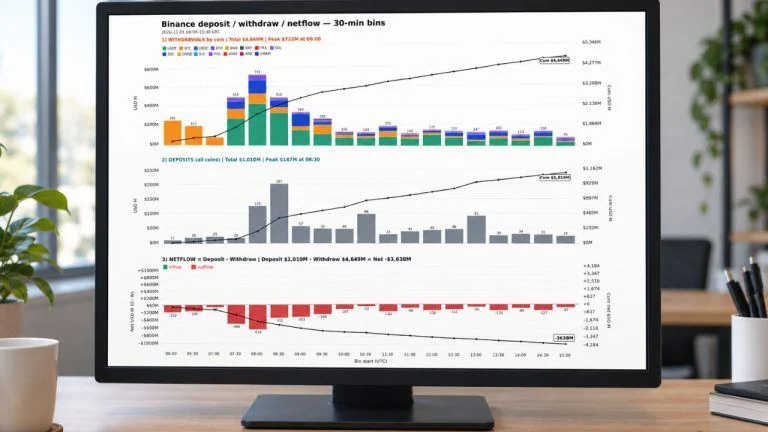
Binance processed $4.649 billion in user withdrawals across 15 blockchain networks following a phased reopening after a major security incident. The wave of requests took place within a nine-and-a-half-hour window between 06:00 and 15:30 UTC as the exchange gradually restored access for customers. Platform representatives stated that transaction activity began to stabilize once the initial rush of pending requests subsided.
The substantial volume of outgoing assets was partially counterbalanced by incoming customer funds during the same timeframe. Users deposited approximately $1.01 billion onto the platform over the reporting interval, helping to moderate the overall loss of liquidity. Consequently, total net outflows stood at roughly $3.64 billion as account holders moved digital assets across the newly reopened rails.
According to figures released by Binance, the net departures accounted for approximately 2.1 percent of the exchange's total assets under management. The company maintains an estimated $171 billion in total reserves based on its public proof-of-reserves reporting framework. Exchange officials emphasized that the platform possessed adequate liquidity buffers to fulfill the elevated withdrawal demands without halting regular settlement.
The initial resumption concentrated on 15 major blockchain networks to ensure that transaction queues could clear methodically and securely. Technical teams chose a staged rollout to monitor system behavior and address any lingering vulnerabilities exposed by the hack. The measured approach allowed engineers to observe block confirmation rates and ensure hot wallets were adequately funded under sudden stress.
The withdrawal surge followed an unprecedented security breach that prompted the exchange to freeze deposit and withdrawal channels across its ecosystem. Investigators and industry trackers identified a massive unauthorized extraction totaling roughly $6.3 billion, making it one of the largest disruptions in digital asset history. Management suspended transfers immediately after discovering the intrusion to audit internal ledger balances and isolate compromised components.
Sharp spikes in redemption volumes are a common pattern across centralized exchanges in the wake of unexpected downtime or security incidents. Market participants frequently shift funds into self-custodial wallets or competing venues while assessing the operational resilience of an affected platform. The simultaneous receipt of more than $1 billion in deposits, however, indicated that a meaningful portion of active traders maintained confidence in the platform's solvency.
The episode highlights the critical importance of proof-of-reserves transparency and stress testing across the cryptocurrency industry. When trading venues encounter major infrastructure shocks, rapid withdrawal fulfillment serves as an essential benchmark for liquidity and solvency. Market observers noted that handling billions of dollars in outgoing transfers in under ten hours demonstrates operational robustness, even under severe scrutiny from global regulators.
As trading firms and individual investors evaluate counterparty risks, security practices at major exchanges face intensified evaluation. Industry analysts point out that multi-network architectures require continuous verification, especially when hot wallets and automated withdrawal pipelines must be re-secured after an intrusion. Binance indicated that security reviews and validation procedures will remain heightened while all transaction pipelines return to normal operating status.
Looking ahead, the exchange plans to continue reconnecting remaining blockchain networks and expanding full account functionality in planned phases. Platform engineers are monitoring wallet reserves, network congestion, and incoming support inquiries to keep transfer channels functioning smoothly. Market participants will be watching future reserve disclosures and transaction flow metrics closely to gauge how quickly user activity returns to pre-incident levels.
Primary source: Bitcoin.com News. Newzly rewrites and structures source reporting for clarity; verify critical details at the original.