Bitcoin Reclaims $74,000 After Inflation-Driven Sell-Off
Bitcoin recovered above $74,600 after hotter-than-expected U.S. inflation data pushed it to $72,787, while reported cryptocurrency liquidations totaled $199 million across the market.
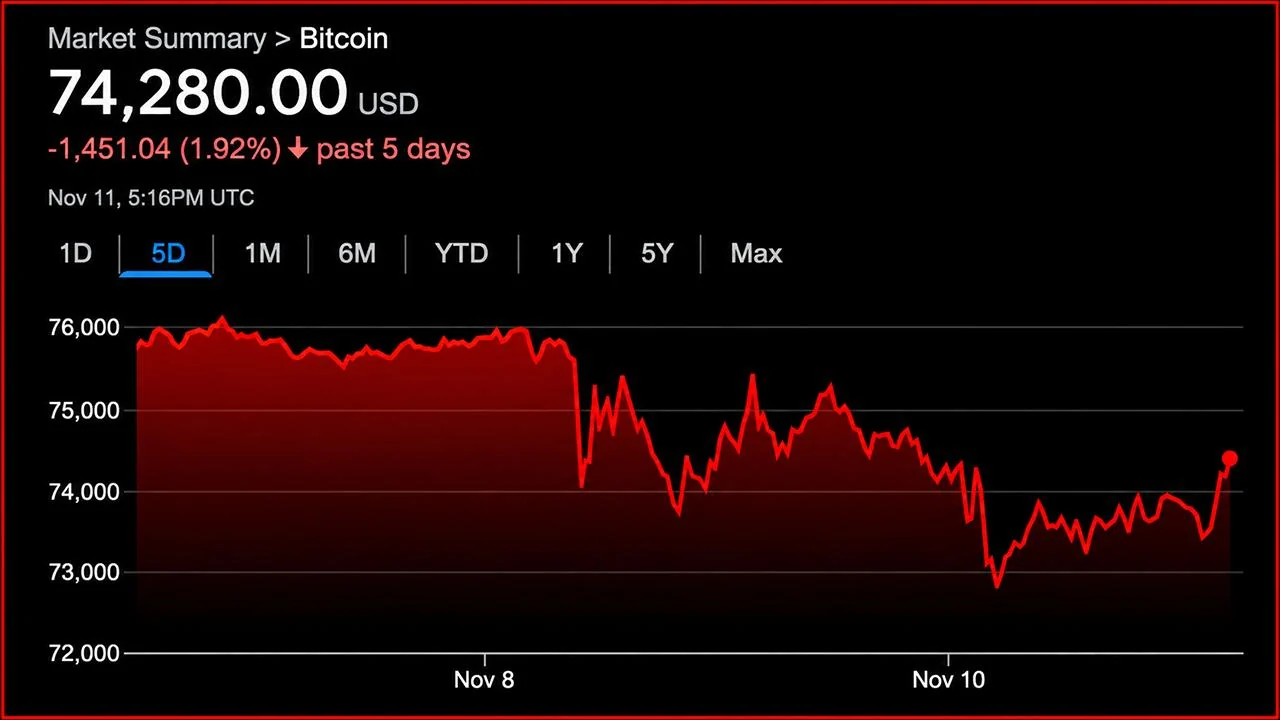
Bitcoin recovered above $74,600 after a sell-off following hotter-than-expected U.S. consumer inflation data briefly pushed its price to $72,787, according to Bitcoin.com News. The rebound returned the cryptocurrency above $74,000, reversing part of the initial market reaction without establishing a sustained breakout.
The reported move from the low to above $74,600 represented a recovery of more than $1,800, or roughly 2.5%. That measures the bounce from the reported trough, rather than a daily gain, because the supplied report does not establish a starting price for the session.
Bitcoin.com News described the trading as range-bound despite the volatility around the inflation release. That distinction matters: a sharp reversal within a trading range does not by itself show that the market has settled on a new direction. The recovery demonstrated a reversal of the immediate decline, not necessarily the end of selling pressure.
The report put cryptocurrency liquidations at $199 million market-wide, including $51 million tied to bitcoin positions. On those figures, bitcoin represented approximately a quarter of the reported total. The remaining liquidations involved other cryptocurrencies, although the supplied material did not identify them individually.
Liquidations occur when leveraged positions are forcibly closed because traders no longer meet the required collateral conditions. They are distinct from ordinary selling and should not be read as a measure of all money lost or withdrawn from the market. The reported figures describe forced position closures rather than the full scale of trading activity.
The source characterized the liquidation activity as relatively subdued alongside the price swings. However, the supplied excerpt does not specify the measurement window or provide a comparable earlier total. That limits how precisely the figures can establish whether leverage-related stress was easing beyond the period described.
The inflation release was the catalyst identified for the initial decline. The available material describes the data as hotter than expected but does not include the actual inflation reading, the forecast or the reporting month. It therefore supports an account of the reported price response, rather than a detailed assessment of the economic release itself.
For traders assessing the rebound, price recovery and liquidation activity offer different perspectives on the same episode. Bitcoin regained ground after the initial shock, while the liquidation figures captured forced closures in leveraged markets. Neither measure alone establishes whether investors were building lasting positions or responding to short-term volatility.
The next question is whether bitcoin can retain the recovered ground rather than return toward its reported low. The source's range-bound description leaves that outcome unresolved. On the available evidence, the episode marks a rebound after an inflation-linked sell-off, not confirmation of a durable change in trend.
Primary source: Bitcoin.com News. Newzly rewrites and structures source reporting for clarity; verify critical details at the original.