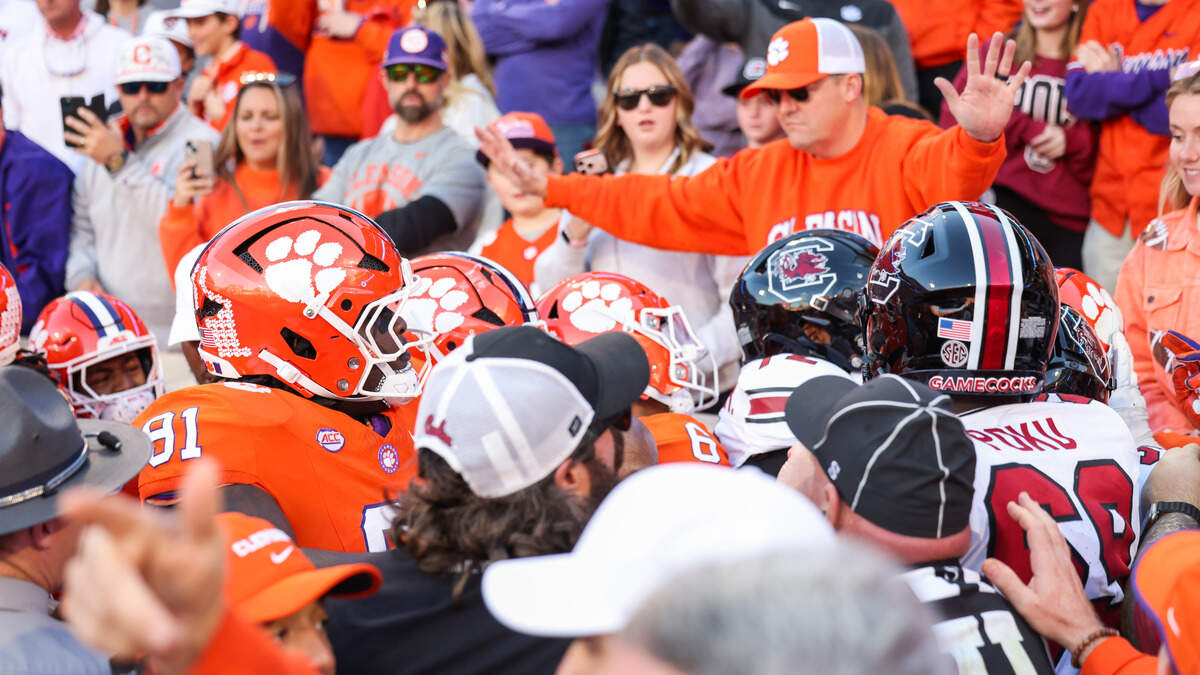
Brawl breaks out in first half of South Carolina-Clemson rivalry game
A fight erupted in the first half of the South Carolina-Clemson football rivalry, The State reported. The brief account did not identify who was involved or how officials responded.
In this piece
The State reported that a brawl broke out in the first half of the South Carolina-Clemson football rivalry. The item, carried on a Google News South Carolina…
A brawl broke out in the first half of the South Carolina-Clemson football rivalry game, according to The State. The newspaper’s headline said the fight erupted while the game was still in its opening half. A Google News South Carolina feed carried the item with little more than that headline and the paper’s name.
The material available here does not identify players or staff involved, describe how the altercation started, or say whether officials halted play for a lengthy review. It also does not report penalties, ejections, injuries, or the score at the time of the fight. Those details, if they exist, sit in the original report and any updates that followed it.
South Carolina and Clemson meet annually in one of college football’s sharpest in-state rivalries. The Gamecocks and the Tigers draw statewide attention that extends well beyond the campuses in Columbia and Clemson. Fans, alumni, and recruits treat the result as a marker of bragging rights inside South Carolina.
Rivalry weeks often carry extra emotion, and on-field scuffles are not unique to this series. A fight in the first half can still change the tone of a night before either side has settled its plan. Officials in college games typically separate players, mark penalties, and decide whether ejections fit unsportsmanlike-conduct rules. Nothing in the brief item confirms that sequence for this game.
The State’s headline opened with “Look,” a newsroom cue that photos or video often accompany a story. That wording suggests the incident was visible enough to document. This account does not describe those images or confirm what they show. The visual record belongs to the original report.
Because the source is limited to the headline and publication credit, basic facts remain unconfirmed in this retelling. The stadium, the attendance, and any injury report were not included. Naming participants or assigning blame would go beyond what the circulated item states. The State is the sole attribution for the brawl as described here.
The moment matters because of the size of the series. A first-half fight can affect field position and penalty yardage, and it can shape how coaches manage emotions for the rest of the game. Conference offices sometimes review such incidents afterward, using video to decide whether further discipline is needed. The available report does not say that any review has begun.
The two programs have built the rivalry over decades of close games, blowouts, and memorable finishes. The annual meeting falls late on the calendar, when one or both teams may be playing for bowl positioning, pride, or a closing statement. An on-field altercation becomes part of that night’s story even when the final score is what most fans remember later.
The State, based in Columbia, is a primary local outlet for University of South Carolina sports and for statewide coverage of the Clemson game. Early headlines in rivalry week often move faster than official explanations from the schools or from game management. Readers looking for names, foul calls, or a change in the scoreboard situation would need later reporting from the paper or from the teams.
What happens next depends on information that had not surfaced in the brief item. Officials would be expected to restore order and finish the contest under ordinary football rules. If video later shows clear personal fouls, ejections or a conference review could follow, but that outcome is not established here. Until fuller reporting is available, the confirmed point is narrow: a brawl broke out in the first half of the South Carolina-Clemson rivalry game.
Primary source: Google News South Carolina. Newzly rewrites and structures source reporting for clarity; verify critical details at the original.