Buffett's Longstanding Market Advice Offers Guidance for Investors Facing Potential Downturns
As concerns over equity valuations and potential market corrections resurface, Warren Buffett's enduring principle to buy when others panic provides a historical framework for long-term portfolio resilience.
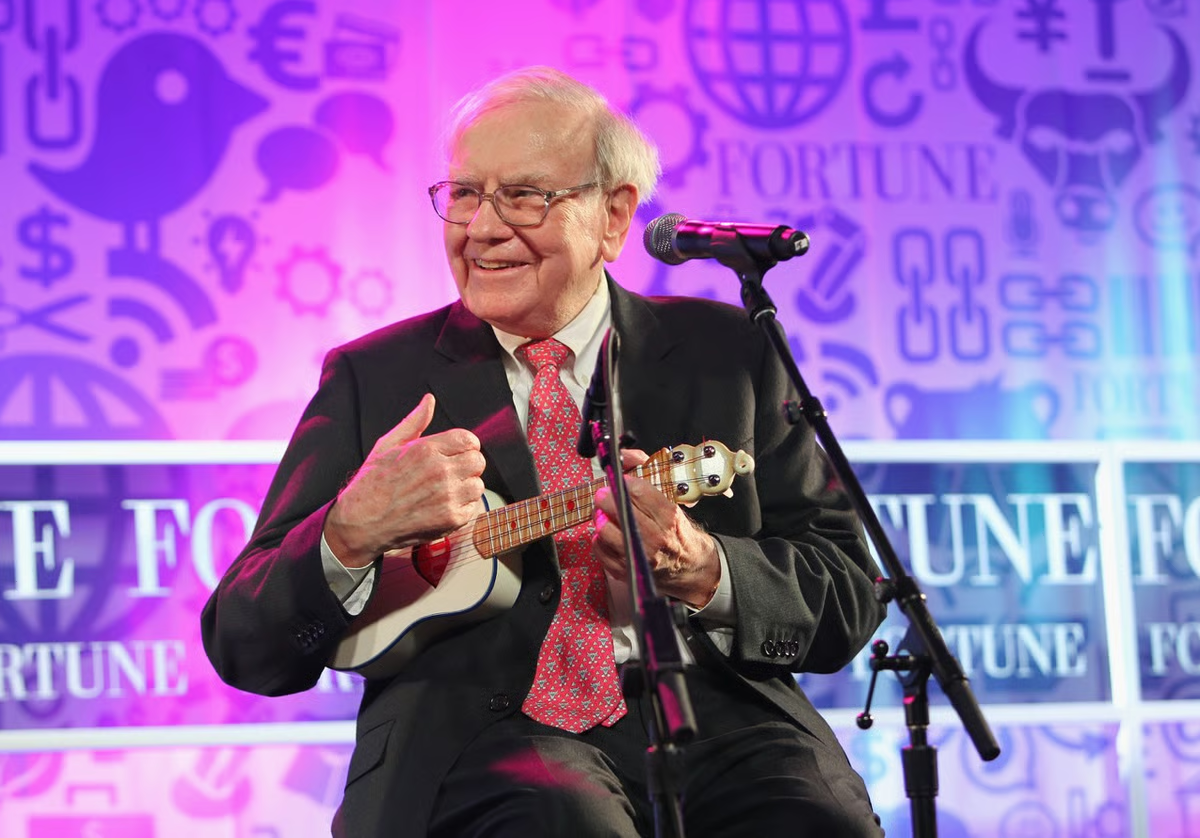
Market volatility and periodic pullbacks frequently trigger apprehension among equity investors questioning whether a deeper correction is on the horizon. Amid fluctuating indexes and macroeconomic crosscurrents, financial analysts often point to foundational guidance from veteran market participants to help temper emotional decision-making.
Among the most enduring perspectives on market crashes is the advice championed by Berkshire Hathaway chairman Warren Buffett. Encapsulated in the famous six-word principle to be greedy when others are fearful, Buffett has long advocated treating market declines not as emergencies, but as favorable pricing environments for disciplined investors.
The instinct to preserve capital during an unexpected market sell-off frequently leads market participants to liquidate assets at or near the bottom. Behavioral finance research consistently demonstrates that fear-driven selling locks in temporary paper losses and causes investors to miss subsequent recoveries. Buffett has repeatedly emphasized that market turmoil shifts high-quality companies from nervous hands to patient owners.
Every major bear market and economic panic in modern financial history has eventually given way to new market highs. The benchmark Standard and Poor's 500 index has weathered world wars, inflationary spikes, banking crises, and global pandemics, ultimately resuming an upward trajectory over multi-decade spans. Investors who remained invested through severe drawdowns, such as the 2008 global financial crisis or the 2020 pandemic shock, achieved far superior returns compared to those attempting to time the market.
A market crash fundamentally alters the risk-reward equation in favor of cash-ready buyers. When widespread selling takes hold, broad index declines indiscriminately compress the valuations of both vulnerable enterprises and exceptionally resilient market leaders. Buffett's framework treats steep drawdowns as a rare clearance sale on productive capital rather than a cause for retreat.
Capitalizing on severe market declines requires preparatory discipline well before volatility arrives. Buffett and his conglomerate have maintained substantial cash reserves for decades, allowing Berkshire Hathaway to provide liquidity and seize generational opportunities during panics. For individual retail investors, maintaining adequate cash cushions and avoiding margin debt provides the fortitude required to withstand downturns without forced selling.
For investors who lack the specialized analytical capability to evaluate individual distressed stocks, passive execution strategies provide an accessible implementation of Buffett's thesis. Systematic dollar-cost averaging into low-cost index funds automatically buys more shares when prices drop and fewer when valuations surge. This programmatic approach eliminates the cognitive strain of guessing the exact market bottom while systematically harnessing downside price movements.
Understanding this market dynamic matters because the greatest threat to wealth accumulation is rarely the crash itself, but an investor's emotional reaction to it. Over a typical retirement horizon spanning several decades, an investor is guaranteed to confront multiple severe corrections and bear markets. Viewing volatility as a companion rather than an enemy represents the single most significant differentiator between building durable wealth and suffering permanent capital impairment.
As markets face shifting interest rate regimes, evolving valuations, and macroeconomic headwinds, speculation regarding the timing of the next downturn will inevitably persist. Historical performance across centuries of equity trading suggests that attempting to forecast when a crash will arrive remains largely futile. Analysts and market historians agree that cultivating emotional composure and viewing downturns through Buffett's counter-cyclical lens remains the most reliable strategy for weathering whatever market conditions lie ahead.
Primary source: Yahoo Finance Markets. Newzly rewrites and structures source reporting for clarity; verify critical details at the original.