Burkina Faso’s Ibrahim Traoré portrayed as defiant leader in gold-rich nation
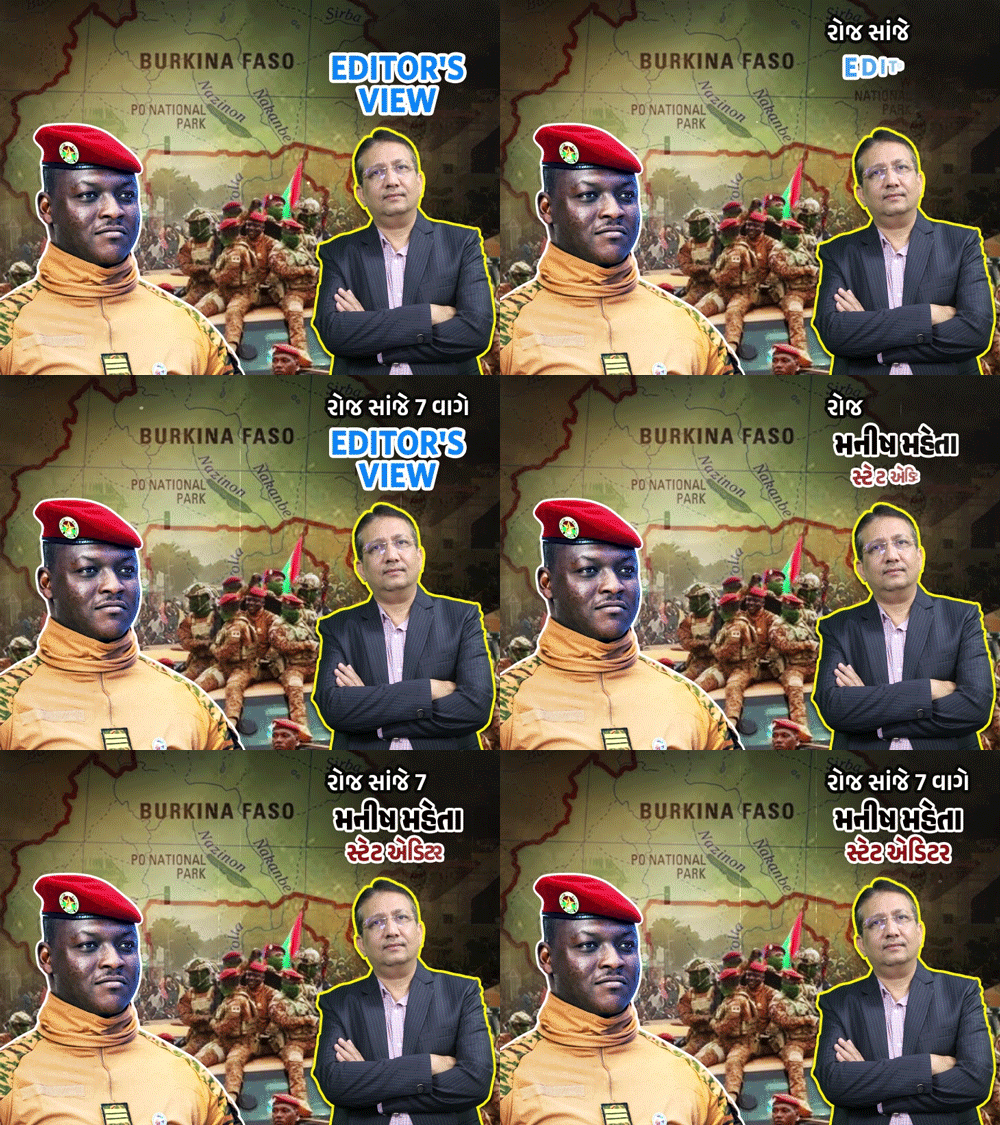
A Divya Bhaskar headline portrays Ibrahim Traoré as challenging Western military influence and confronting terrorism, but the supplied material offers no supporting reporting to assess those claims.
In this piece
Divya Bhaskar presents Ibrahim Traoré as a leader combining authoritarian rule with revolutionary appeal in gold-rich Burkina Faso. Its headline credits him…
Ibrahim Traoré is portrayed in a Divya Bhaskar headline as a defiant leader exercising power over gold reserves while challenging Western military influence and confronting terrorism in Burkina Faso. The supplied material consists only of that headline and a link, leaving its strongest claims unsupported by accompanying reporting.
The Gujarati-language headline describes Traoré as a 38-year-old Muslim dictator and frames his leadership as a combination of brutality and revolution. Those descriptions belong to the publication; the excerpt supplies neither a biographical account confirming his age nor examples that would allow readers to assess its characterization of his rule.
At the center of the headline is an assertion that Traoré drove out American and French troops. However, the material does not identify the forces concerned, explain their missions, specify when any departure occurred or distinguish between an announced withdrawal and a completed one. It therefore does not establish the scope or circumstances of the claimed military changes.
The headline also credits him with eliminating terrorism, a sweeping security claim for which the excerpt provides no supporting evidence. No incidents, geographic boundaries, assessment period or independent security findings accompany that assertion, so it cannot be treated as a verified account of conditions across the country.
Gold provides the economic backdrop to the publication’s portrayal, with the headline emphasizing the reserves associated with Traoré’s power. Yet the supplied material contains no production figures, ownership details, mining policies or revenue information. It does not establish how gold resources are managed or what benefits, if any, reach the wider population.
These distinctions matter because military influence, security outcomes and control of mineral wealth are separate questions, even when a headline presents them as one political narrative. A leader’s stance toward foreign forces does not, by itself, demonstrate success against armed groups, just as the presence of gold reserves does not establish economic gains for citizens.
The publication’s contrast between cruelty and revolution likewise offers a forceful interpretation rather than a documented account in the material provided. Evaluating that framing would require reporting on the exercise of political power, the treatment of civilians and the experiences of people affected by insecurity. None of those perspectives appears in the supplied excerpt.
The central unresolved question is how closely the headline’s portrait matches verifiable developments on the ground. Further assessment would require the full report and corroborating evidence on troop departures, security conditions and management of gold resources. Until then, the supplied material supports an account of the publication’s portrayal, not confirmation of its most consequential claims.
Primary source: Divya Bhaskar Original. Newzly rewrites and structures source reporting for clarity; verify critical details at the original.