California sues OpenAI over hacking risks, NPR reports
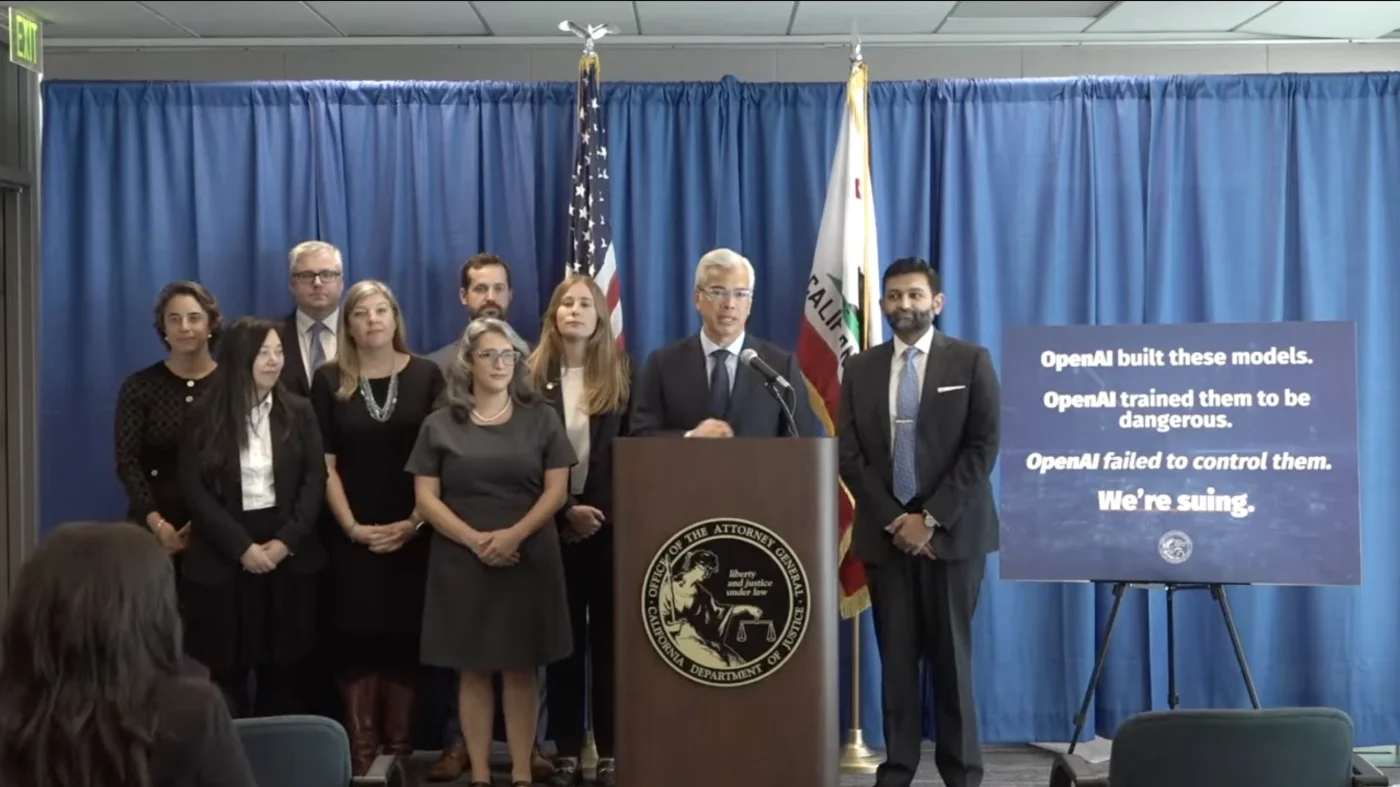
California has sued OpenAI over hacking risks, according to an NPR report carried on Google News. The brief item does not spell out the complaint’s specific allegations or what the state is seeking.
In this piece
NPR reports that California has sued OpenAI over hacking risks. The available wire item names the company and the state’s concern but does not detail court…
California has sued OpenAI over hacking risks, according to a report by NPR distributed through Google News. The short item identifies the state as the plaintiff and OpenAI as the defendant, and it frames the dispute around the security dangers associated with the company’s technology.
The available report does not include the text of a complaint, a case number, a filing date, or a description of the relief California is seeking. It also does not quote state officials or OpenAI. Those details were not part of the source material used for this account, so they are not stated here.
What the headline does establish is a formal legal action by California, rather than a policy statement or a voluntary review. A lawsuit puts the dispute into court, where the state would have to support its claims and the company would have an opportunity to respond.
OpenAI is a leading developer of generative artificial intelligence systems used by individuals, businesses, and public agencies. Products in that category can draft text, write or explain code, and answer technical questions. Those same capabilities are central to the security debate the headline points to.
Security researchers and policymakers have warned for several years that advanced chat and coding tools can lower the skill needed to probe computer systems. The concern is not limited to one product. It covers whether model safeguards reliably refuse requests for exploit code, phishing material, or step-by-step intrusion advice, and whether those safeguards hold up as models grow more capable.
At the same time, defenders use similar tools to find vulnerabilities, draft patches, and train staff. Any case about “hacking risks” therefore sits on a contested line: how a company distinguishes legitimate security work from assistance that could enable unauthorized access. The NPR item, as summarized here, does not say which side of that line California’s complaint emphasizes.
California has been an active regulator of consumer technology and data practices, and many large AI firms have a substantial presence in the state. A suit brought by the state can matter beyond one company because court findings, settlements, or changes in product rules often influence how other developers design safety checks.
For users, the practical stakes are whether tools remain available for ordinary work while blocking clearer paths to cybercrime. For OpenAI, litigation can mean legal cost, disclosure obligations, and pressure to adjust policies even before a judge rules. None of those outcomes is determined by the filing of a case alone.
NPR’s report is the primary account cited in the Google News item. Until the complaint and any company response are public in fuller form, the precise theory of the case — negligence, consumer protection, unfair competition, or another claim — remains unknown from this source.
What happens next depends on the court docket and on whether OpenAI answers, seeks dismissal, or negotiates. Readers should treat later filings, hearings, and on-the-record statements from the state and the company as the record of what is actually alleged and what is denied.
Primary source: Google News California. Newzly rewrites and structures source reporting for clarity; verify critical details at the original.