CCIA Urges More Time for Businesses to Comply with Vermont Age-Appropriate Design Rules
The Computer & Communications Industry Association is urging Vermont regulators to grant tech companies at least a year to comply with new online child safety rules, warning that an impending deadline leaves insufficient time for major technical overhauls.
In this piece
The Computer & Communications Industry Association has called on the Vermont Attorney General’s Office to extend the compliance timeline for its proposed…
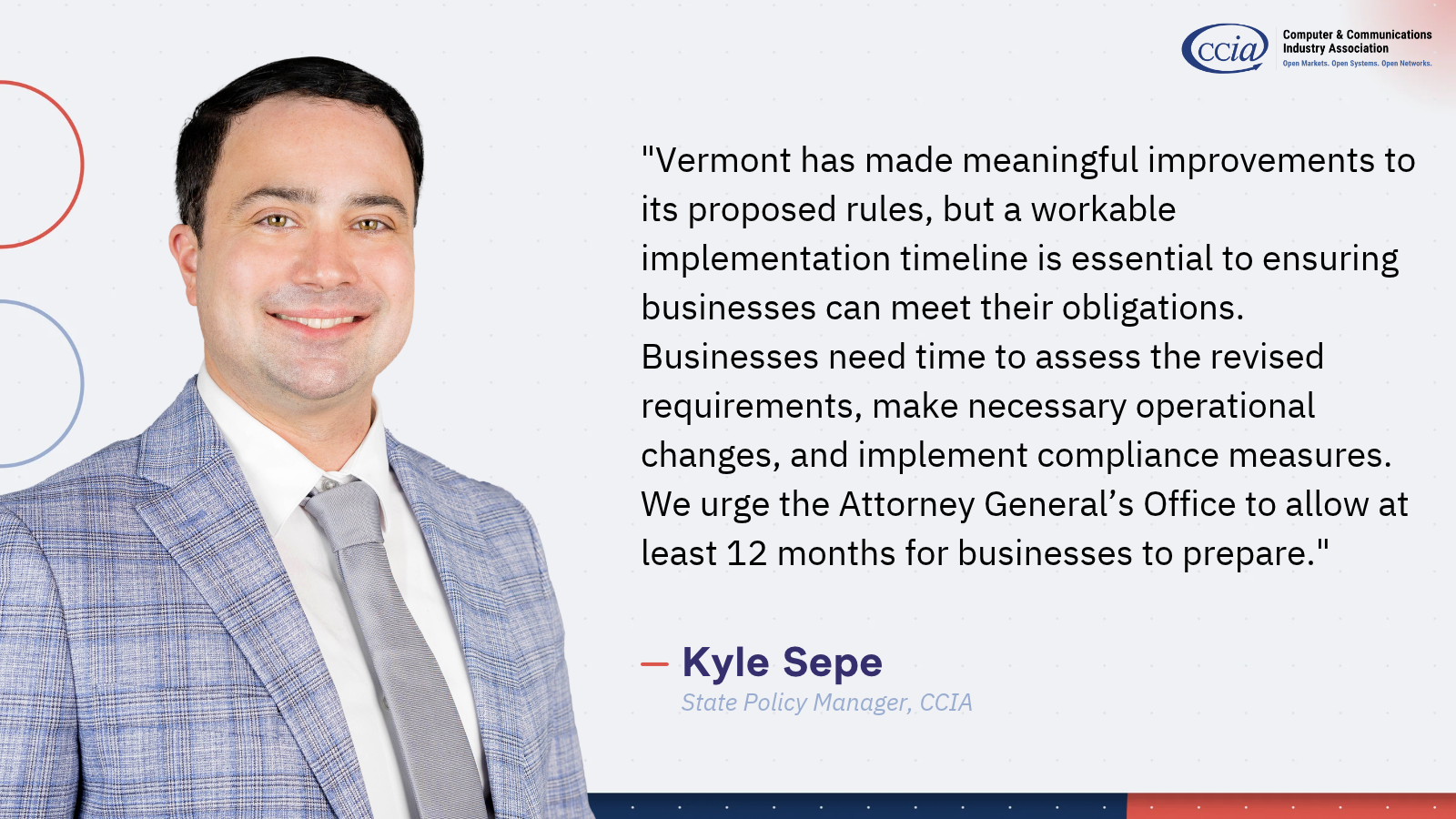
The Computer & Communications Industry Association has formally requested that Vermont regulatory authorities grant digital businesses additional time to adapt to upcoming child safety requirements. In comments submitted to Vermont Attorney General Charity Clark regarding the state's proposed Age-Appropriate Design Code rules, the trade group recommended providing at least a 12-month compliance grace period after regulations are finalized. The organization emphasized that tech platforms require substantial lead time to make complex system and design updates.
Under the current schedule, the state's regulations are slated to take effect on January 1, 2027, following a public comment period that closed late in the rulemaking cycle. According to the CCIA, this framework leaves companies with an exceedingly narrow implementation window of roughly two months between the end of regulatory feedback and statutory enforcement. The trade association cautioned that such a constrained turnaround makes meaningful product testing and policy alignment virtually impossible for digital services of all sizes.
While raising serious timing concerns, the association acknowledged that the Attorney General's Office has made constructive adjustments in its revised draft. The group noted that regulators improved the measure by reducing reliance on ambiguous operational standards and more clearly targeting interactions with known minors. These refinements addressed earlier criticisms from industry stakeholders who warned that vague definitions could create legal confusion and disrupt ordinary digital features.
Implementing age-appropriate design frameworks requires companies to re-engineer core product features, revise data collection mechanisms, and establish new default privacy configurations. Digital platforms must assess how young people interact with their interfaces, eliminate potentially manipulative design patterns, and ensure age-assurance processes do not infringe on user privacy. CCIA officials pointed out that these structural overhauls demand rigorous internal reviews, external audits, and extensive coding across web and mobile ecosystems.
Vermont enacted its Age-Appropriate Design Code Act, known as Act 63, as part of a nationwide push by state lawmakers to enhance online protections for children and teenagers. Modeled in part after international frameworks and earlier state statutes, the legislation mandates that digital products likely to be accessed by minors prioritize safety, privacy, and well-being by default. Lawmakers charged the Attorney General's Office with developing concrete administrative rules to implement and enforce these statutory directives.
A central issue for the tech industry across state design code proceedings is the risk of unintended consequences regarding user data collection. When regulations establish subjective thresholds for identifying younger users, platforms often face pressure to deploy invasive verification tools across their entire user bases. Trade associations have repeatedly cautioned that collecting government identification or biometric scans to prove user age could ultimately compromise privacy rights for adults and minors alike.
The regulatory debate in Vermont unfolds amid a broader, fragmented landscape of state-level child safety legislation across the United States. Similar laws enacted in California, Arkansas, and other jurisdictions have faced fierce federal court challenges, with judges issuing preliminary injunctions over First Amendment and speech restrictions. Against this backdrop of ongoing litigation, tech trade groups are actively lobbying state attorneys general to craft narrower, legally defensible administrative rules that survive judicial scrutiny.
Child safety advocates and state officials maintain that aggressive regulatory timelines are necessary to address youth mental health challenges linked to social media use. Proponents argue that tech giants possess the financial resources and technical talent to prioritize youth safeguards without lengthy delays. However, industry representatives contend that a rushed rollout disproportionately impacts small and medium-sized software developers that lack dedicated compliance teams and specialized engineering budgets.
As the Vermont Attorney General’s Office reviews formal submissions from industry groups, privacy advocates, and public stakeholders, officials must decide whether to adjust the administrative timetable or proceed toward the January 2027 statutory target. The outcome will signal how state regulators balance urgent consumer protection mandates against the operational realities of global software deployment. For tech companies operating in Vermont, the final regulatory text will determine both immediate engineering priorities and future legal exposure in state courts.
Primary source: Google News Vermont. Newzly rewrites and structures source reporting for clarity; verify critical details at the original.