City economists question market bets on UK rates reaching 4.75%
City economists doubt the Bank of England will raise interest rates as sharply as markets anticipate, with some suggesting borrowing costs could fall again by the end of 2027.
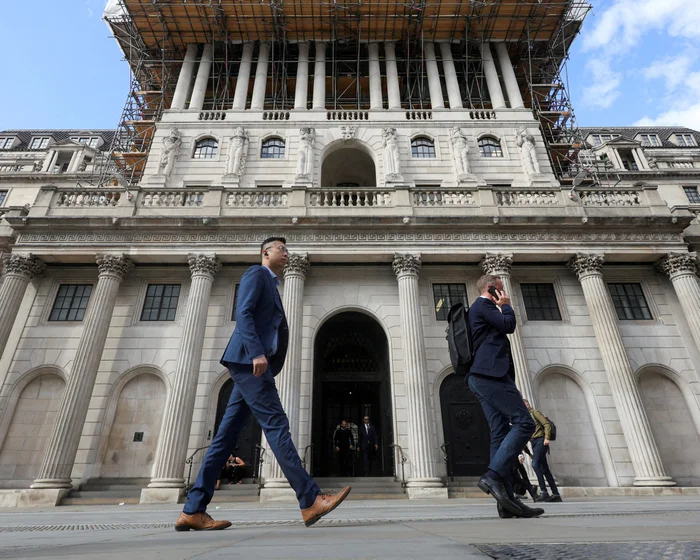
City economists are questioning financial market expectations that the Bank of England will raise interest rates by at least a full percentage point by next summer, according to the Guardian. The disagreement centres on whether the current 3.75% bank rate will climb to 4.75% by the end of July 2027, as market pricing suggests.
The market-implied path described in the report points to at least four increases over the next year. It also indicates that rates could reach 5% by December 2027, equivalent to five quarter-percentage-point rises from the current level. Those figures describe expectations embedded in financial prices, rather than decisions announced by the Bank.
The economists’ assessment is considerably less aggressive. They believe an increase of a full percentage point or more is unlikely, and the report says rates could instead be falling by the end of 2027. That leaves a substantial gap between the trajectory reflected in markets and the outlook described by City forecasters.
The distinction matters because a market-implied interest rate path is not a commitment by policymakers. It provides a snapshot of how financial instruments price the future, while economists’ forecasts offer separate assessments of the most likely outcome. Neither establishes in advance where the Bank will set its benchmark rate at a particular meeting.
For borrowers and savers, the competing outlooks describe materially different interest rate environments. A rise from 3.75% to 4.75% would mean a full percentage point of additional tightening, while a move to 5% would extend that increase further. The possibility of cuts by late 2027 points in the opposite direction, although it does not establish how far rates might subsequently fall.
The disagreement also concerns timing, not simply the eventual peak. Markets anticipate a sequence of increases taking rates higher by next summer, whereas the economists’ outlook allows for a less pronounced rise and a possible reversal before the following year ends. A forecast of eventual cuts should therefore not be read as a prediction that rates cannot increase first.
The figures remain conditional expectations rather than settled outcomes. The report’s suggestion that rates could reach 5% is a possible extension of the market-implied path, not a confirmed destination. Equally, the economists’ view that cuts could arrive by the end of 2027 leaves uncertainty about both their timing and whether they will happen.
The next Bank decisions will help establish which outlook is closer to the eventual policy course. For now, the central message is a disagreement over how much tightening lies ahead, rather than certainty that borrowing costs will move in either direction. The Guardian’s report frames City economists as sceptical of the scale of increases priced into markets.
Primary source: The Guardian Business. Newzly rewrites and structures source reporting for clarity; verify critical details at the original.