Claimed Proof of Riemann Hypothesis Developed With Claude Faces Global Review
A claimed solution to the Riemann hypothesis developed with the assistance of Claude has captured the attention of mathematicians worldwide, who caution that verifying the potential breakthrough could take weeks.
In this piece
Mathematicians are examining a claimed proof of the Riemann hypothesis assisted by the artificial intelligence model Claude, noting that full validation may…
A newly claimed proof of the Riemann hypothesis, developed with the assistance of the artificial intelligence system Claude, has drawn intense scrutiny across the global mathematical community. Observers and researchers have emphasized that while the development could prove historic if confirmed, a rigorous evaluation will be required before any definitive conclusions can be drawn.
The announcement centers on an effort to resolve what is widely regarded as one of the most famous and consequential unsolved problems in pure mathematics. Initial assessments suggest that comprehending and verifying the complete argument may take several weeks, as specialists work through the intricate reasoning and technical machinery deployed in the submission.
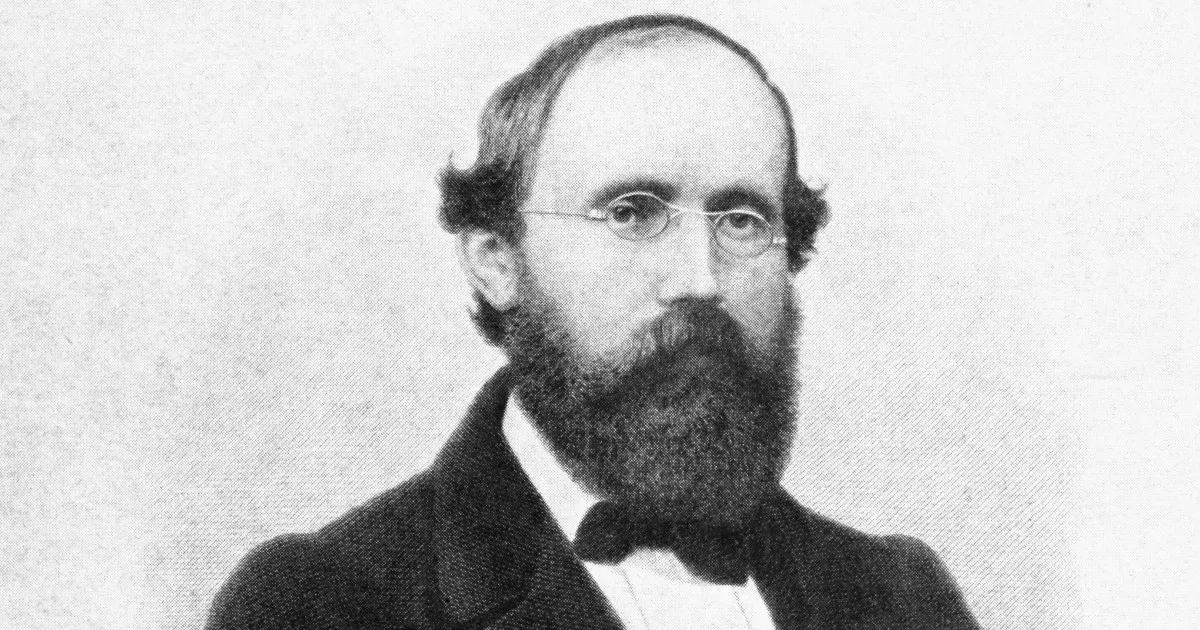
Formulated in 1859 by German mathematician Bernhard Riemann, the conjecture concerns the behavior of the Riemann zeta function and the distribution of its non-trivial zeros. Riemann proposed that all such zeros possess a real part equal to one-half, a condition intimately tied to the fundamental patterns governing prime numbers.
Over the past century and a half, the hypothesis has stood as a central pillar of number theory. A formal resolution is considered so critical to the discipline that the Clay Mathematics Institute designated it one of the seven Millennium Prize Problems in 2000, offering a million-dollar prize for a valid, peer-reviewed solution.
Countless prominent mathematicians have attempted to crack the conjecture over the decades, generating vital intermediate discoveries but repeatedly falling short of a complete proof. As a result, news of a potential breakthrough is routinely met with both excitement and deep institutional skepticism.
What distinguishes the current claim is the collaborative involvement of Claude, a state-of-the-art artificial intelligence model developed by Anthropic. In recent years, researchers have increasingly tested whether machine learning systems can assist with formal proof generation, theorem proving, and complex mathematical reasoning.
The use of artificial intelligence in advanced theoretical work has opened new frontiers, but it also introduces novel challenges for verification. Reviewers must determine whether the steps generated or refined by the AI adhere to absolute logical soundness, as automated systems can sometimes produce seemingly plausible arguments that conceal subtle structural gaps.
If the proof is ultimately validated, the implications would reverberate throughout science, computing, and cryptography. Hundreds of contemporary theorems in number theory currently rest on the assumption that the Riemann hypothesis is true, meaning a certified proof would instantly establish those dependent results as unquestioned facts.
Conversely, should the argument contain an irreparable flaw, it would join a long ledger of ambitious attempts that advanced mathematical discourse without fully conquering the summit. Many historical efforts that proved incomplete nevertheless yielded valuable analytical techniques and fresh perspectives for future researchers.
For now, the academic community is proceeding deliberately, reserving judgment until the argument undergoes comprehensive peer review and communal dissection. The coming weeks are expected to bring initial analyses from number theorists around the world, who will methodically determine whether mathematics has truly crossed a historic threshold.
Primary source: Al Jazeera. Newzly rewrites and structures source reporting for clarity; verify critical details at the original.