Clouds Surround Shivelyuch Volcano, Leaving Summit in View
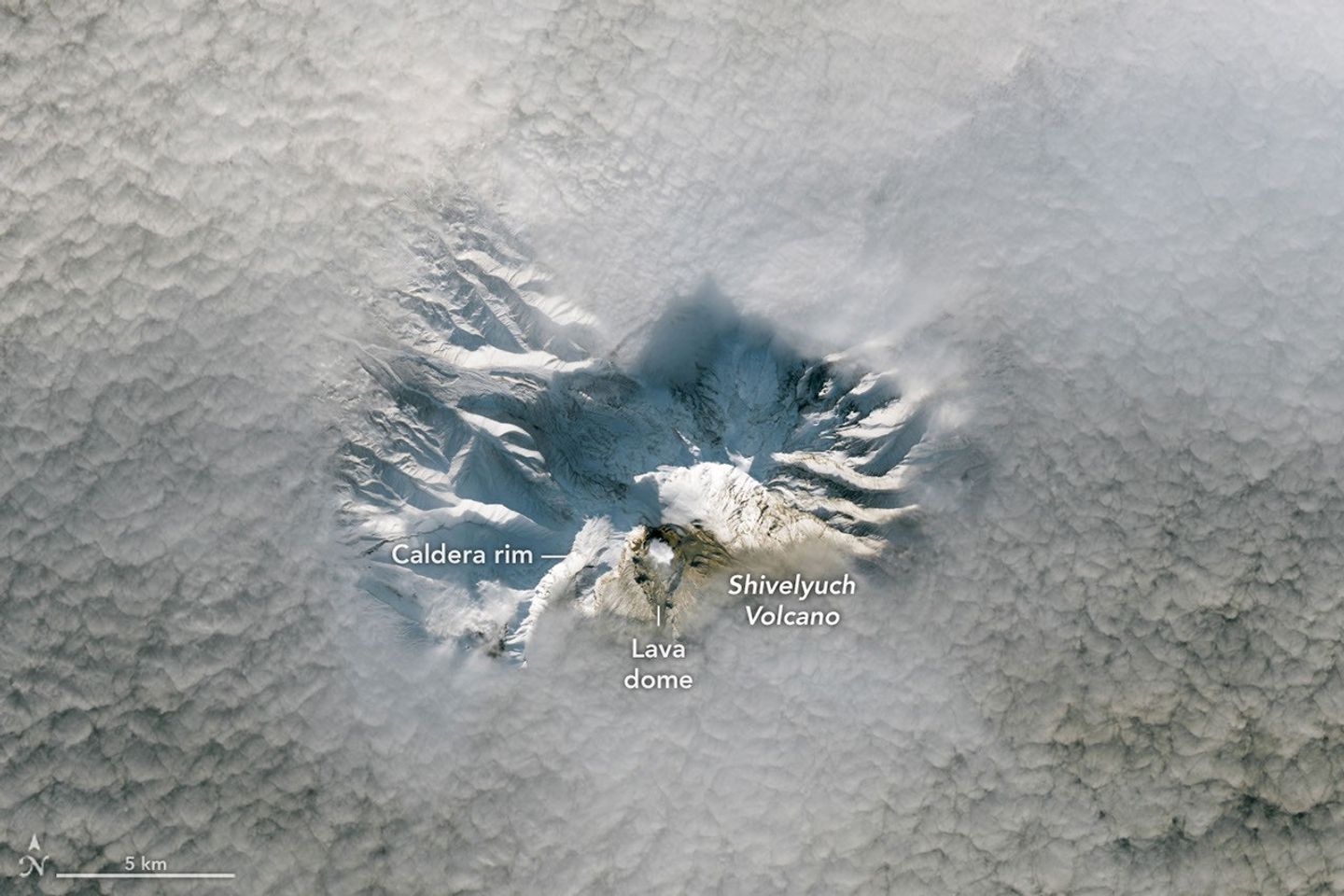
NASA’s Earth Observatory highlighted a view of Shivelyuch on the Kamchatka Peninsula, where clouds wrapped around the volcano’s flanks while leaving its restless summit caldera visible.
In this piece
A cloud layer surrounded the flanks of Shivelyuch volcano on the Kamchatka Peninsula, but its summit caldera remained in view. NASA’s Earth Observatory…
A layer of clouds encircled the flanks of Shivelyuch volcano on the Kamchatka Peninsula, leaving its summit caldera exposed above the surrounding cover, according to NASA’s Earth Observatory. The scene highlighted a contrast between the obscured sides of the volcano and its visible, restless summit.
NASA presented the scene under the title “Shivelyuch Socked In,” describing clouds that surrounded the volcano without concealing its uppermost features. The accompanying description focused on that arrangement rather than providing a detailed account of volcanic activity. It offered a glimpse of the summit while much of the mountain remained hidden.
The distinction between the flanks and the summit is central to understanding the view. Clouds can obscure one part of a mountain while leaving another visible, so the scene should not be read as an unobstructed picture of the entire volcano. Here, the cloud layer framed the caldera rather than covering it.
A caldera is a volcanic depression, and its visibility gives the scene a clear geological focal point. However, being able to see that feature does not, by itself, establish what processes were occurring inside or beneath it. The supplied description does not identify a new change in the caldera or provide observations documenting one.
NASA’s characterization of the summit as “restless” signals volcanic activity in broad terms, but the brief account does not explain the basis for that description. It gives no measurements, eruption timeline or assessment of whether conditions were intensifying. Readers therefore cannot use the description alone to determine the volcano’s immediate operational or safety status.
The cloud layer also needs to be distinguished from any volcanic emissions. The supplied text identifies clouds around the flanks; it does not describe that layer as an ash plume or report a fresh ash release. Treating the visible atmospheric cover as evidence of an eruption would go beyond the information NASA provided.
The scene illustrates both the value and the limits of a single view of a volcano. An exposed summit can reveal features that would otherwise be hidden by weather, while cloud-covered slopes remain unavailable for visual inspection. That uneven visibility is important context when interpreting what the scene shows—and what it cannot establish.
For now, the supported observation is a narrowly defined one: clouds surrounded Shivelyuch’s flanks while its summit caldera remained visible. Any assessment of changing volcanic hazards would require additional monitoring information beyond this description. NASA’s account supplies a striking view of the volcano, not a forecast of what it will do next.
Primary source: NASA Breaking News. Newzly rewrites and structures source reporting for clarity; verify critical details at the original.