Curt Cignetti Amplifies Playoff Criticism as Indiana Drops Out of CFP Field
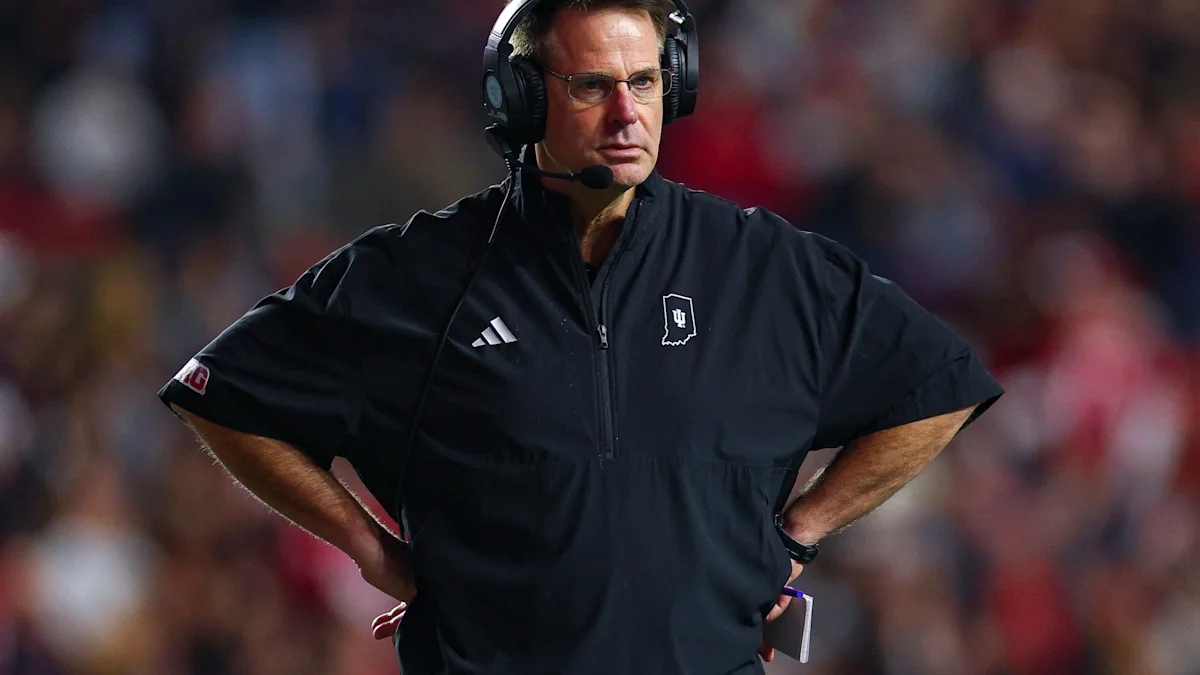
Indiana head coach Curt Cignetti turned to social media to amplify frustration after the Hoosiers plummeted to No. 14 in the College Football Playoff rankings, falling outside the projected 12-team postseason bracket.
In this piece
Indiana head coach Curt Cignetti expressed sharp discontent after the Hoosiers dropped to No. 14 in the latest College Football Playoff rankings. Following a…
Indiana football head coach Curt Cignetti took to social media this week to amplify mounting public frustration over the latest College Football Playoff rankings. The Hoosiers tumbled six spots to No. 14 following a narrow 27-24 overtime loss on the road against Washington, a drop that pushed the program outside the projected 12-team postseason field.
Rather than confining his reaction to routine podium remarks, Cignetti utilized his public X account to repost pointed critiques aimed directly at the selection committee's decision-making. Among the shared commentary was a post describing the rapid sequence of ranking drops as madness, noting the perceived contradiction in how Indiana was penalized following a tightly contested road defeat against an opponent that subsequently entered the national rankings.
The reposted commentary also highlighted what observers framed as an inconsistency in how different programs are judged. Analysts questioned why a one-loss or two-loss team from the Big Ten suffered such a steep fall while programs from other powerhouse conferences, particularly the Southeastern Conference, appeared to retain higher positioning despite comparable or inferior metrics against ranked opposition.
The controversy marks a pivotal juncture in what has otherwise been a historic campaign for the Hoosiers under Cignetti's leadership. In his debut season in Bloomington, Cignetti revitalized a long-struggling program, orchestrating a 9-2 run that propelled Indiana into national title contention and generated unprecedented enthusiasm across the campus.
However, the selection committee's stance underscores the intense scrutiny placed on regular-season strength of schedule. While Indiana assembled a dominant record and earned a signature victory over a ranked Southern California squad, national analysts noted that the Hoosiers lacked a deep portfolio of marquee non-conference wins, leaving little margin for error when tiebreakers and at-large considerations tightened.
The coach's public pushback quickly polarized college football commentators across the country. While Indiana supporters rallied around Cignetti's willingness to advocate publicly for his players and question the committee's transparency, critics in the national media argued that programs building lighter early-season schedules inevitably assume the risk of abrupt playoff penalties after late-season setbacks.
The dispute arrives during the inaugural year of the expanded 12-team College Football Playoff format, an era designed to reduce postseason subjectivity but one that has instead intensified debate around final at-large selections. With conference champions receiving automatic bids and high seeds earning first-round byes, the battle for the final bubble spots has magnified every shift in committee criteria.
Sitting at No. 14, Indiana faces a challenging path back into the bracket with only days remaining before the final selection pairings are revealed. To re-enter the 12-team field, the Hoosiers will likely need favorable outcomes across other conference showdowns and potential losses by several teams positioned immediately ahead of them in the rankings.
For Cignetti and his roster, focus must now shift from committee debates to execution on the field as they prepare for their regular-season finale against rival Purdue. A commanding victory in the annual Old Oaken Bucket rivalry game remains essential to keep Indiana's postseason hopes alive and provide the committee with a final compelling data point before Sunday's final bracket announcement.
Primary source: Google News Indiana. Newzly rewrites and structures source reporting for clarity; verify critical details at the original.