Debate Grows Over AI Safety Oversight as Critics Question Anthropic Ties to Evaluator METR
Scrutiny is mounting over the independence of frontier artificial intelligence evaluations after critics raised concerns about financial and institutional entanglements between AI developer Anthropic and safety assessment group METR.
In this piece
Online discussions and industry commentary have sparked renewed debate over potential regulatory capture in the artificial intelligence sector. Critics have…
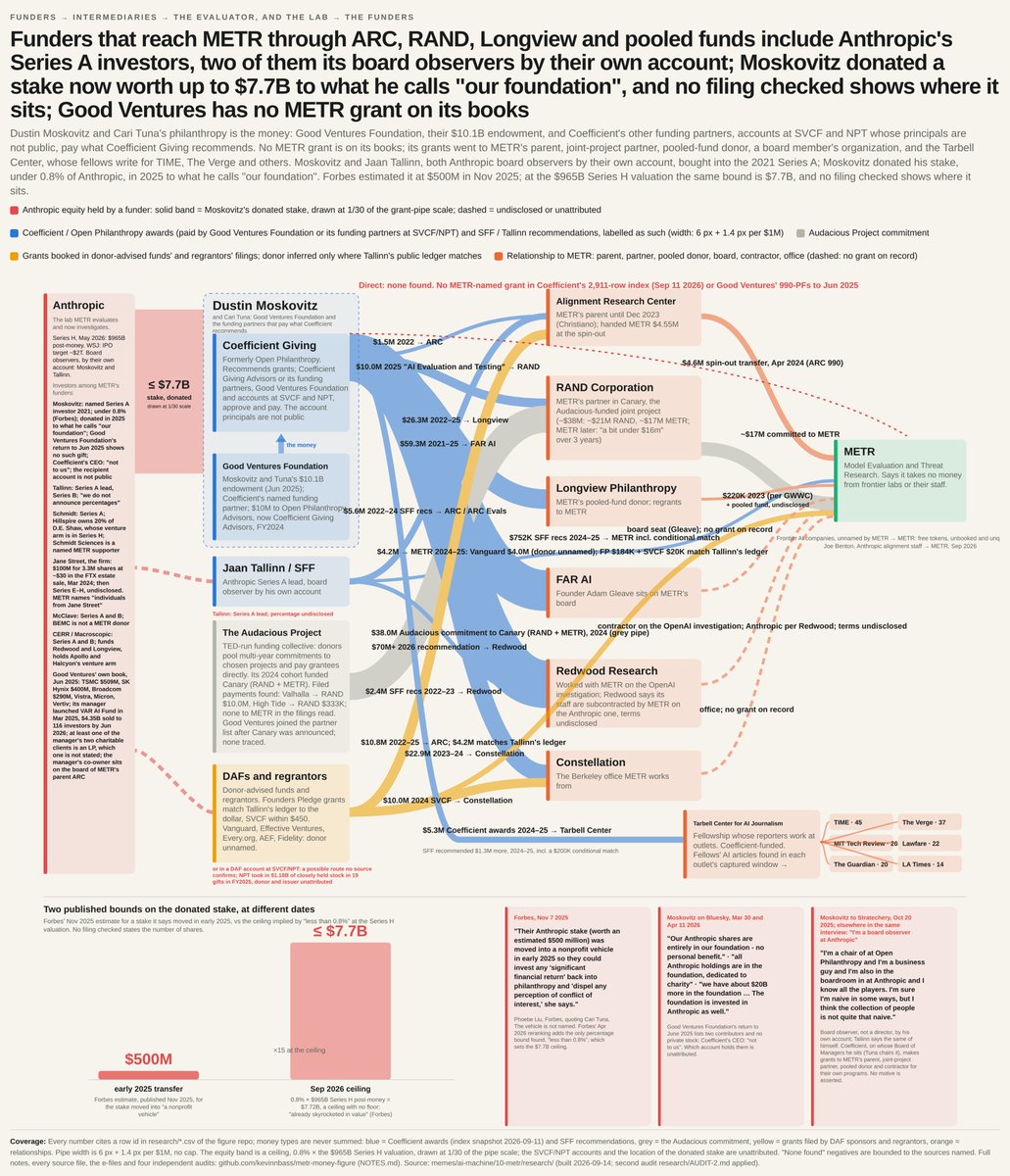
Scrutiny over the governance of artificial intelligence expanded this week following viral discussions spotlighting the tight working relationship and shared funding channels between leading AI developer Anthropic and evaluation organization METR. The discourse, sparked by independent commentary circulating widely across developer and research communities, centers on allegations of potential regulatory capture within the emerging AI safety apparatus.
The controversy revolves around whether independent model evaluations can remain fully objective when testing organizations share deep structural or philanthropic ties with the labs they assess. At the center of the debate is METR, or Model Evaluation and Threat Research, a non-profit research group widely regarded as a pioneer in evaluating frontier models for dangerous autonomous capabilities and severe cyber risks.
Critics, including researcher Kevin Bass whose commentary catalyzed the latest round of discussions, argue that circular financial dynamics could compromise regulatory neutrality. They point to overlapping funding networks within the broader philanthropic and effective altruism ecosystem, where major donors and foundations maintain substantial financial interests in commercial AI firms while simultaneously financing key safety auditing bodies.
The critique gained renewed momentum amid Anthropic's move to grant embedded METR evaluators unprecedented access to its internal systems and development pipelines. While supporters praised the arrangement as a benchmark for rigorous white-box evaluations, skeptics countered that such proximity risks establishing a de facto gatekeeping system that favors well-resourced incumbents over open-source developers and smaller startups.
The dispute arrives at a critical juncture for AI policy, as lawmakers and regulators across the globe debate mandatory third-party audits for high-capability models. If standard-setting bodies and trusted auditing groups are perceived as closely aligned with commercial developers, industry observers warn that resulting compliance frameworks could inadvertently stifle competition.
Defenders of METR and the current evaluation architecture contend that close collaboration is a technical necessity rather than a compromise. Conducting thorough, pre-deployment capability evaluations requires deep architectural transparency, specialized compute access, and ongoing dialogue with the engineers building the models. Without trusted access arrangements, safety researchers argue they would be relegated to superficial black-box testing.
Furthermore, analysts note that METR operates as an independent non-profit entity governed by its own charter, rather than as a commercial subsidiary or vendor under Anthropic's direct control. While both organizations draw attention within the specialized community focused on catastrophic AI risks, philanthropic capital in early AI safety has historically been concentrated among a relatively small circle of donors.
Nonetheless, the controversy reflects growing unease in the wider tech community regarding who defines safety benchmarks and who audits compliance. Open-source advocates and venture investors have frequently voiced concern that stringent compliance regimes championed by leading frontier labs could create insurmountable legal and financial barriers for independent builders.
The debate underscores the broader institutional challenge confronting policymakers striving to build credible AI accountability regimes. Similar dynamics have historically emerged in traditional industries, from finance to aviation, where technical complexity frequently necessitates drawing regulatory expertise directly from the private sector.
As legislative proposals for algorithmic auditing advance, industry experts anticipate increasing calls for structural reforms and diversified funding models for safety evaluators. Future oversight standards may ultimately require strict firewall protections, public funding alternatives, and transparent conflict-of-interest disclosures to ensure third-party reviews maintain public and industry confidence.
Primary source: Hacker News. Newzly rewrites and structures source reporting for clarity; verify critical details at the original.