Debate Over AI Credit Sparks After Essay Critiques Riemann Proof Framing
A critical essay by developer Fernando Borretti argues that attributing mathematical breakthroughs directly to artificial intelligence models diminishes human agency and distorts the true nature of scientific achievement.
In this piece
Software developer Fernando Borretti has published a viral essay challenging the attribution of mathematical breakthroughs to artificial intelligence models…
Software developer and essayist Fernando Borretti has published a sharp critique titled "Re: Riemann," addressing the growing tendency within the technology industry to attribute scientific breakthroughs directly to artificial intelligence systems. The essay responds to an announcement by mathematician Levent Alpöge, who reported advancing a proof connected to the Riemann Hypothesis using Anthropic's Claude artificial intelligence model.
Borretti took particular aim at the rhetorical framing surrounding the announcement, specifically highlighting passages that celebrated the machine's perceived agency. The mathematician had written that the AI model flew, danced, and sparkled near the finish line of the mathematical work, a description Borretti characterized as an unsettling cultural shift toward anthropomorphizing automated tools.
In his essay, Borretti argued that transferring the intellectual spotlight from human researchers to computational models constitutes a betrayal and a surrender of human agency. He contended that such narratives diminish the immense discipline, conceptual groundwork, and rigorous verification that human mathematicians must supply to make any automated assistance meaningful.
The commentary connected the episode to a broader current in Silicon Valley thought, including high-profile essays such as Anthropic chief executive Dario Amodei's "Machines of Loving Grace." Borretti expressed skepticism toward visions that position artificial intelligence as an autonomous benefactor, arguing that these narratives erode the vital sense of human pride and accountability in intellectual discovery.
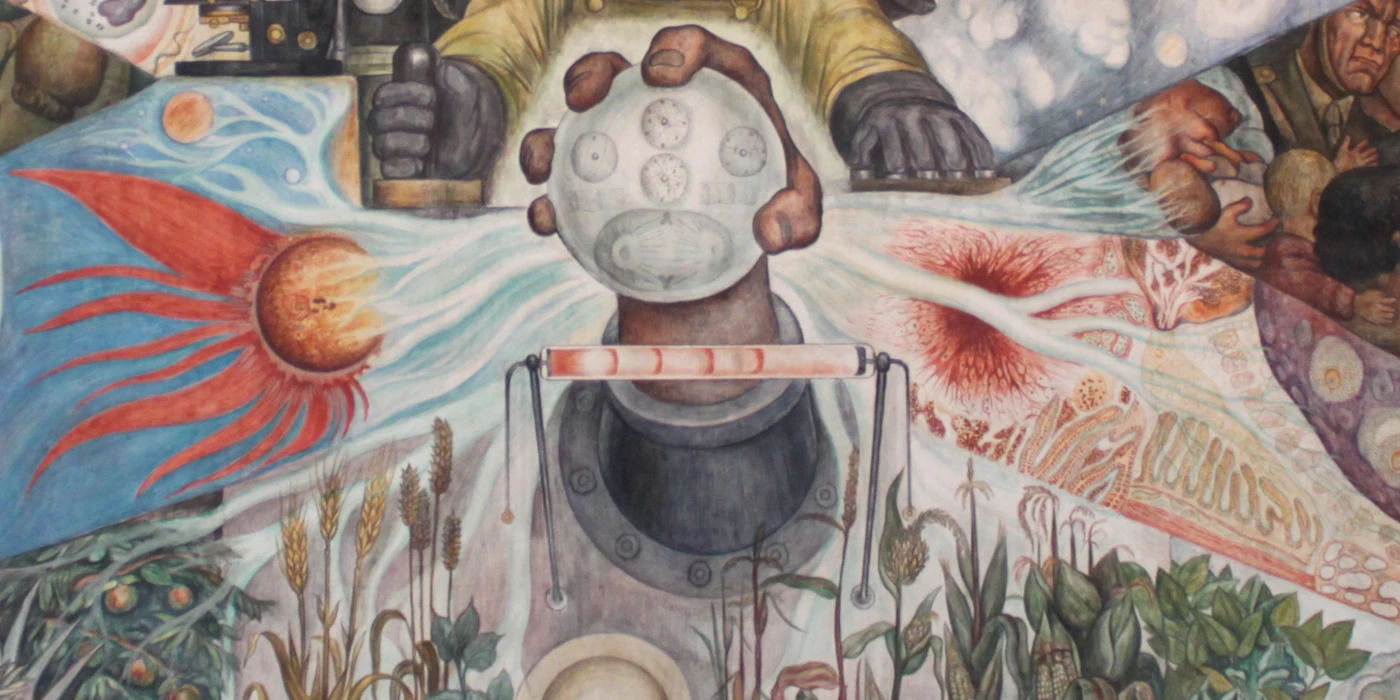
To illustrate his argument, Borretti invoked Diego Rivera's famous mural "Man, Controller of the Universe," which depicts a human worker firmly grasping technological controls. The artwork, Borretti noted, reflects an older and healthier cultural understanding in which machines amplify human capability rather than supplanting human dignity and command.
Borretti also cited author Ayn Rand's commentary on the 1969 Apollo 11 lunar landing to contrast modern attitudes toward engineering achievements. Whereas the Apollo mission was celebrated as an unapologetic triumph of human reason and willpower over natural constraints, Borretti argued that today's tech discourse increasingly celebrates the machine itself while marginalizing the humans behind the keyboard.
The controversy arrives amid heightened scrutiny within the global mathematics and computer science communities over the role of large language models in formal proof generation. While automated theorem provers and frontier AI models have demonstrated growing utility in exploring proof steps and verifying code, mathematicians continue to debate whether current systems possess genuine reasoning capabilities or merely perform sophisticated pattern matching.
The essay quickly gained traction across developer forums, including Hacker News, sparking intense debate over how scientific institutions should attribute discoveries in the era of generative AI. Many technologists echoed Borretti's concerns, warning that crediting models with creative inspiration obscures the reality of how software operates and risks alienating future researchers.
As frontier artificial intelligence labs push deeper into scientific and mathematical domains, the questions raised by Borretti's essay are expected to intensify. Observers suggest that establishing clear ethical guidelines and precise attribution standards will be essential to ensure that human researchers remain recognized as the primary architects of future intellectual breakthroughs.
Primary source: Hacker News. Newzly rewrites and structures source reporting for clarity; verify critical details at the original.