December policy calls may raise loan EMIs and reshape FD and SIP returns, report says
A Divya Bhaskar report warns that two December policy shocks, linked to the RBI and the US Federal Reserve, could push up loan instalments and alter returns on deposits and mutual-fund SIPs as household budgets stay under inflation pressure.
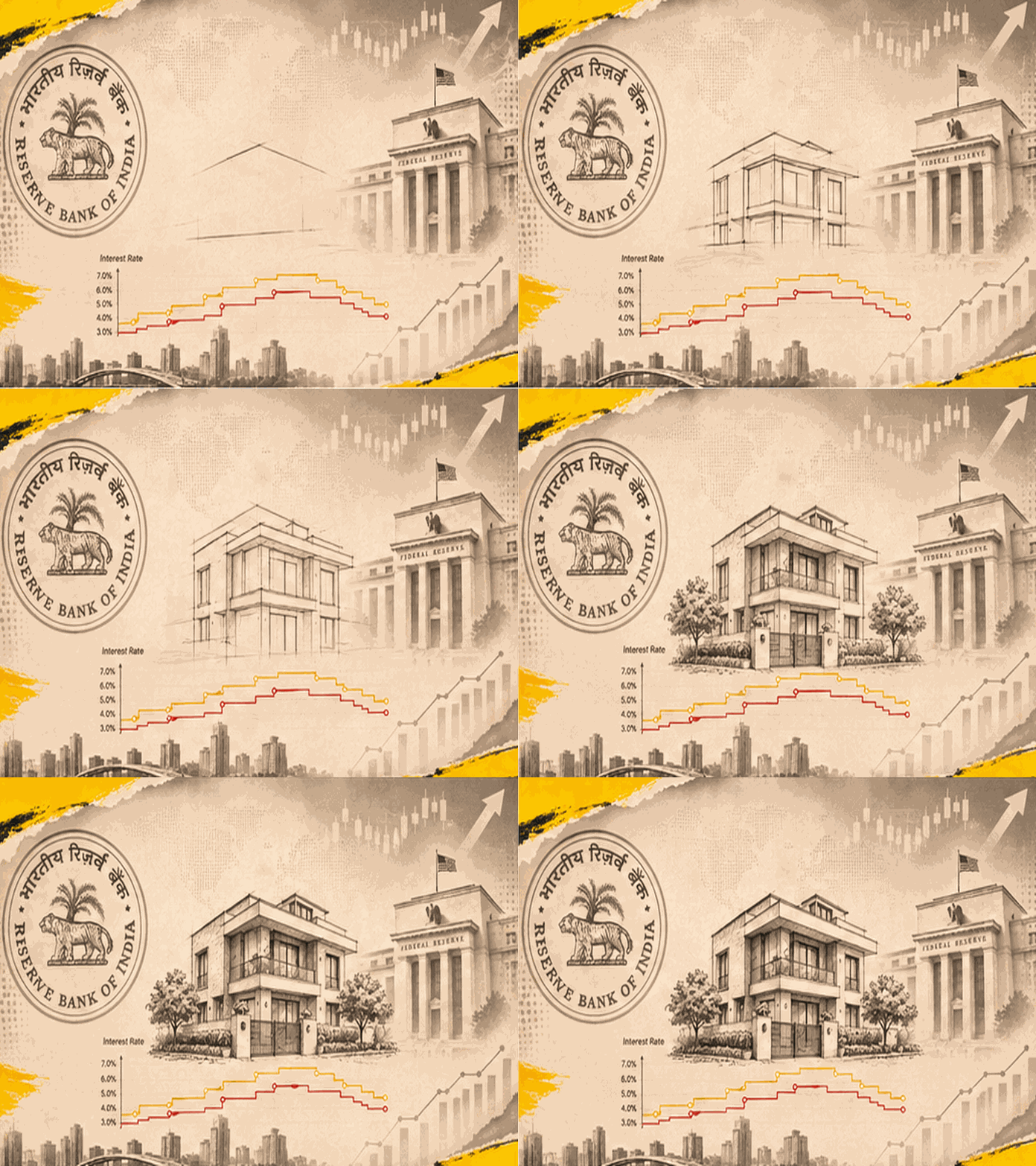
In this piece
Divya Bhaskar reports that possible December moves by the Reserve Bank of India and the US Federal Reserve could make loan EMIs harder to pay and change the…
Loan instalments could become harder to manage if two large policy shocks land in December, according to a report published by Divya Bhaskar. The Gujarati daily’s headline ties those possible shocks to interest-rate decisions associated with the Reserve Bank of India and the US Federal Reserve, and says the effects could reach fixed deposits and systematic investment plans as well as borrowers.
The report, carried in the paper’s Gujarat news section, frames the risk in household terms: monthly loan payments may rise in difficulty, returns on deposits and SIPs may face a cut, and family budgets already dealing with inflation may deteriorate further. The headline uses cautious language — shocks “may” hit — rather than treating a December outcome as settled.
No figures for any rate change, no named officials and no quoted forecasts appear in the material available from the item. The url attached to the story points to an article on how RBI and Fed rate moves could affect EMIs, SIPs and fixed deposits, which matches the headline’s subject but does not, on its own, supply a schedule, a vote count or a basis-point projection.
For borrowers, the channel the report highlights is familiar. When policy rates move higher, banks’ cost of funds often follows, and floating-rate home, auto and personal loans can reset so that the equated monthly instalment rises or the tenure lengthens. The Divya Bhaskar headline stresses the EMI side of that adjustment and the strain it can place on a monthly budget.
Fixed deposits sit on the other side of the same rate cycle. A higher policy rate can, over time, lift the interest banks offer on new deposits, while a cut can pull fresh FD rates down. The headline’s image of a “scissors” over FDs and SIPs signals that savers and investors should be ready for returns to be trimmed, without spelling out which way each product would move or by how much.
Systematic investment plans are not priced like a bank loan. SIP contributions buy mutual-fund units at whatever the market level is on each instalment date. Rate decisions still matter because they can change bond yields, equity valuations and the appetite for risk, which in turn can change how those accumulated units behave. The report groups SIPs with FDs as products where investors should prepare for a possible cut in outcomes, again without giving fund-level detail.
Inflation is the third thread in the headline. The paper says that, amid dearness, the household budget will worsen further if the December shocks arrive. Higher prices already absorb a larger share of income; a larger EMI would leave less room for the same basket of spending, even if salary or business receipts stay flat.
Why the story matters is the overlap of those pressures. A borrower who also runs an SIP and holds FDs can feel one policy round in three places at once: the loan debit, the deposit rate on money set aside, and the market path of the monthly fund investment. The report presents December as the window when two major decisions — one domestic, one from the US central bank — could land close together.
Readers should treat the warning as a scenario, not a confirmed decision. Central-bank meetings can end in a hike, a hold or a cut, and transmission to retail EMIs and deposit cards is rarely immediate or uniform across lenders. Nothing in the sourced headline confirms that either institution has already voted, or that every bank will reprice on the same day.
What happens next depends on the actual December policy outcomes and on how Indian lenders and markets pass them through. Households watching EMIs, new FD cards and ongoing SIPs will get a clearer picture only after those decisions are announced and banks publish revised rates. Until then, the Divya Bhaskar account is best read as a caution that two upcoming rate calls could tighten an already inflation-strained budget.
Primary source: Divya Bhaskar Original. Newzly rewrites and structures source reporting for clarity; verify critical details at the original.