Democrats remain divided after midterm wins, BBC reports
Despite gaining power in Congress, Democrats gathered in Denver for a conference that, according to BBC reporting, was marked by frustration and debate over the party’s next steps.
In this piece
BBC US & Canada reports that Democrats remain a divided party after winning big in the midterms. A conference in Denver was animated by discussion of the best…
Democrats remain a divided party despite winning big in the midterms, according to BBC US & Canada, which described the mood among some as “frustrated.” After gaining power in Congress, the party’s internal debate has not receded.
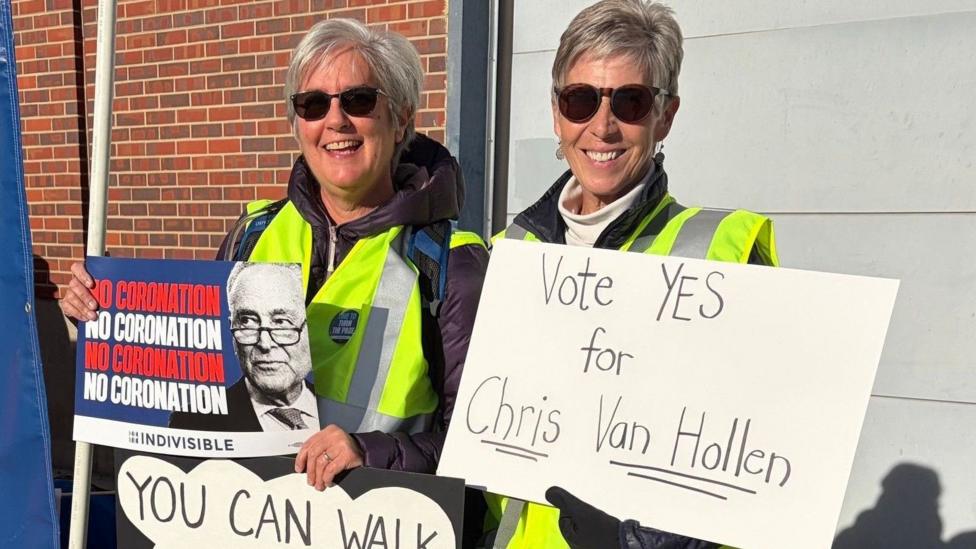
A Democratic conference in Denver was animated with talk on the best way forward, the BBC reported. The gathering became a venue for competing views about how the party should use its new congressional position rather than a simple victory lap.
The BBC’s framing centers on a familiar tension in U.S. politics: electoral success does not automatically produce a single governing strategy. Winning seats and winning an argument about priorities are different tasks, and the Denver meeting, as described, highlighted the latter.
Details of specific votes, speakers, or policy planks were not included in the brief account provided here. What is clear from that reporting is that Democrats used the conference to argue over direction after taking power in Congress.
That debate matters because control of Congress is a means, not an end. Parties that gain majorities still have to decide which bills to prioritize, how far to push the White House or the other chamber, and how to hold together members from very different districts.
Frustration, as the BBC headline put it, often follows wins of that kind. Lawmakers and activists who campaigned on different theories of change can find that a shared opponent is easier to unite against than a shared agenda is to write.
Denver’s role in the story is as the site of that conference, not as a local policy dispute. The reporting is national in scope: it is about the Democratic Party’s posture after the midterms, as covered by BBC US & Canada.
Context from the same report is limited. It does not, in the material available here, name factions, quote individual members, or tally internal votes. Any fuller picture of who argued for what would require the original BBC article beyond this synopsis.
Why the divide is newsworthy is straightforward. A party that has just won power is expected to govern; unresolved arguments about “the best way forward” can slow legislation, confuse voters, and invite the other party to exploit splits.
What happens next, on the BBC’s telling, is continued argument rather than an announced settlement. The conference showed Democrats talking through their path; it did not, in this account, show them closing the conversation.
Readers should treat the tone—“frustrated,” divided, still debating—as the BBC’s characterization of the Denver gathering and the post-midterm moment. Additional names, numbers, and outcomes are not established in the source excerpt and are not inferred here.
Primary source: BBC US & Canada. Newzly rewrites and structures source reporting for clarity; verify critical details at the original.