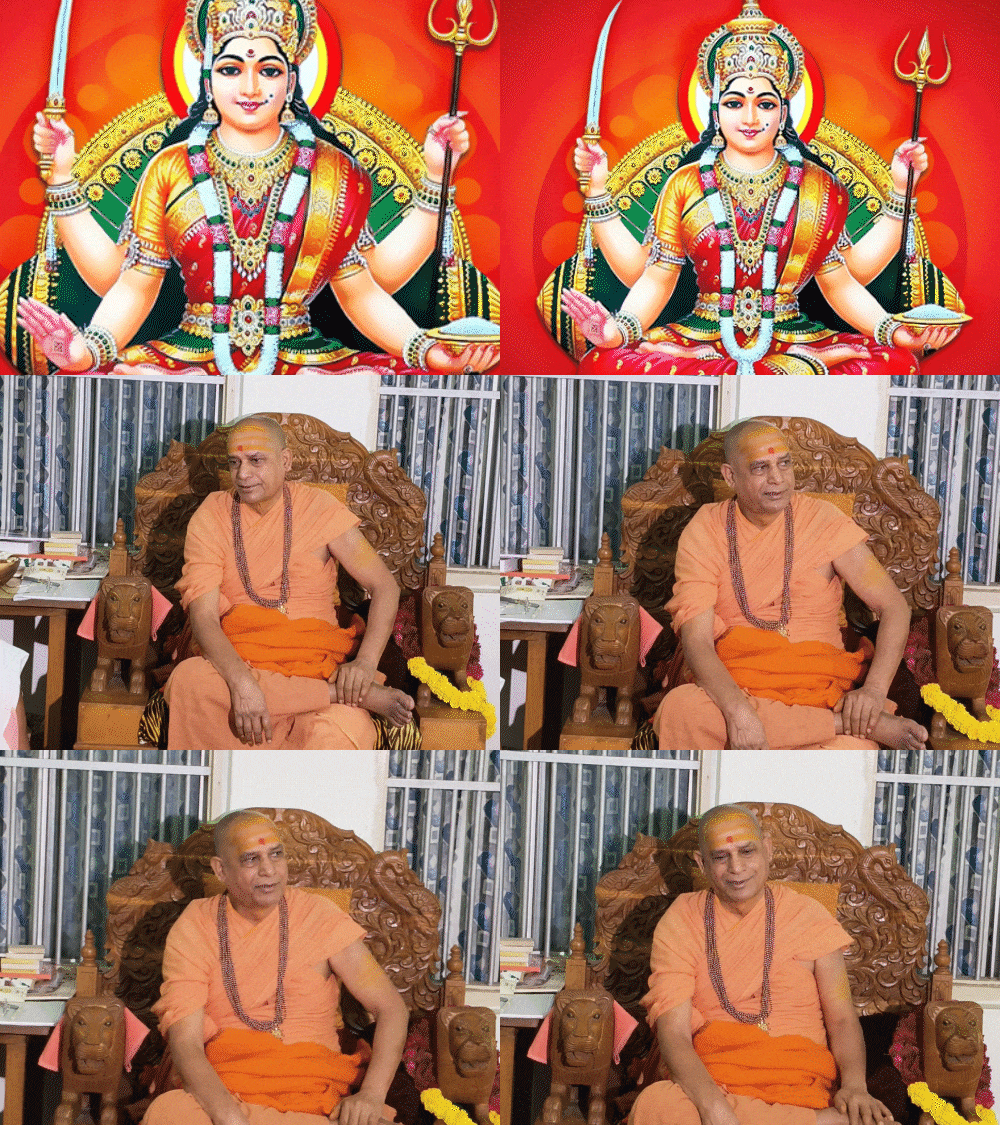
Dwarka Peeth Shankaracharya says Santoshi Mata was created by filmmakers, not named in scriptures
The Shankaracharya of Dwarka Peeth said Santoshi Mata’s name is absent from the scriptures and was shaped by cinema, while also alleging a foreign plot against Hindu deities and rising person-worship in sects.
In this piece
According to a Divya Bhaskar report, the Shankaracharya of Dwarka Peeth said Santoshi Mata was created by the film world and is not named in the scriptures. He…
The Shankaracharya of Dwarka Peeth has said that Santoshi Mata was created by people in the film world and that her name does not appear anywhere in the scriptures, according to a report by Divya Bhaskar. The remarks, headlined by the Gujarati daily, place a widely worshipped goddess at the center of a dispute over scriptural authority and popular devotion.
In the same reported statement, he said there is a foreign conspiracy directed against Hindu gods and goddesses. He also said that worship of individual persons has increased within religious sects. The published headline presents those claims as his words; the desk did not have a fuller transcript or additional quotations from the address.
Santoshi Mata is a familiar figure in household worship across large parts of India, especially through the Friday fast observed by many devotees. Her public profile grew sharply in the decades after popular cinema portrayed her story. The Shankaracharya’s reported formulation goes further, treating that film association as the origin of the goddess rather than as a later telling of an older tradition.
Dwarka Peeth, also known as Sharada Peeth, is one of the monastic seats traditionally linked to Adi Shankaracharya and is based in Dwarka, Gujarat. Holders of the title speak with authority for many followers on questions of doctrine, ritual and what counts as authentic Hindu worship. A judgment from that seat on a goddess with a large lay following is therefore more than a private theological aside.
The claim that a deity’s name is absent from the scriptures is a strong one, and it is reported here as the Shankaracharya’s assertion rather than as an independent finding. Hindu textual tradition is vast, and communities often disagree about which works are authoritative and how later forms of worship should be read against older texts. The available report does not cite particular scriptures, passages or scholars in support of the statement.
His reported warning about person-worship in sects points to a separate, long-running tension in Indian religious life: the line between reverence for a guru or leader and the worship reserved for the divine. The headline says that such person-worship has increased. It does not name sects, leaders or incidents, so the scope of the charge remains general in the material at hand.
The allegation of a foreign conspiracy against Hindu deities is likewise presented only in outline. The report, as summarized in the headline, does not identify governments, organizations or individuals, and it does not describe evidence. Readers are left with the charge as he is said to have framed it, without a documented account of how such a plot is supposed to operate.
For devotees, the stakes are immediate. Many who keep the Santoshi Mata fast understand the practice as a vow to the divine mother, not as a debate about cinema or textual catalogs. A senior monastic voice describing that worship as a film-era creation can be heard as a challenge to the legitimacy of a living ritual, even when the speaker does not address any single temple or community by name.
The remarks also sit inside a wider argument about who may define Hindu tradition: monastic seats that claim scriptural succession, popular practice that spreads through homes and films, and organizations built around living teachers. Divya Bhaskar’s account, on the material provided, records the Shankaracharya’s position without quoting replies from devotees, filmmakers or sect leaders.
No official response, clarification or follow-up program is described in the source material available for this article. Whether the comments remain a single reported statement or become a longer public dispute will depend on how worshippers, other religious leaders and the Peeth itself choose to address them.
Until a fuller text of the remarks is published, the record rests on three linked claims attributed to the Dwarka Peeth Shankaracharya: that Santoshi Mata was made by the film world, that her name is not found in the scriptures, and that Hindu deities face a foreign conspiracy while person-worship grows inside sects.
Primary source: Divya Bhaskar Original. Newzly rewrites and structures source reporting for clarity; verify critical details at the original.