world·Gujarat·Ahmedabad District
Dwarka Shankaracharya Urges Devotees to Avoid Fabricated Deities and Uphold Vedic Texts
Dwarka Sharda Peeth Shankaracharya Swami Sadanand Saraswati has called on devotees to abandon fabricated deities and adhere strictly to Vedic scriptures, criticizing Bollywood for manufacturing fictional objects of worship.
In this piece
During a visit to Ahmedabad's Vishv Umiya Dham, Shankaracharya Swami Sadanand Saraswati urged Hindus to reject fabricated deities created by cinema and stick to…
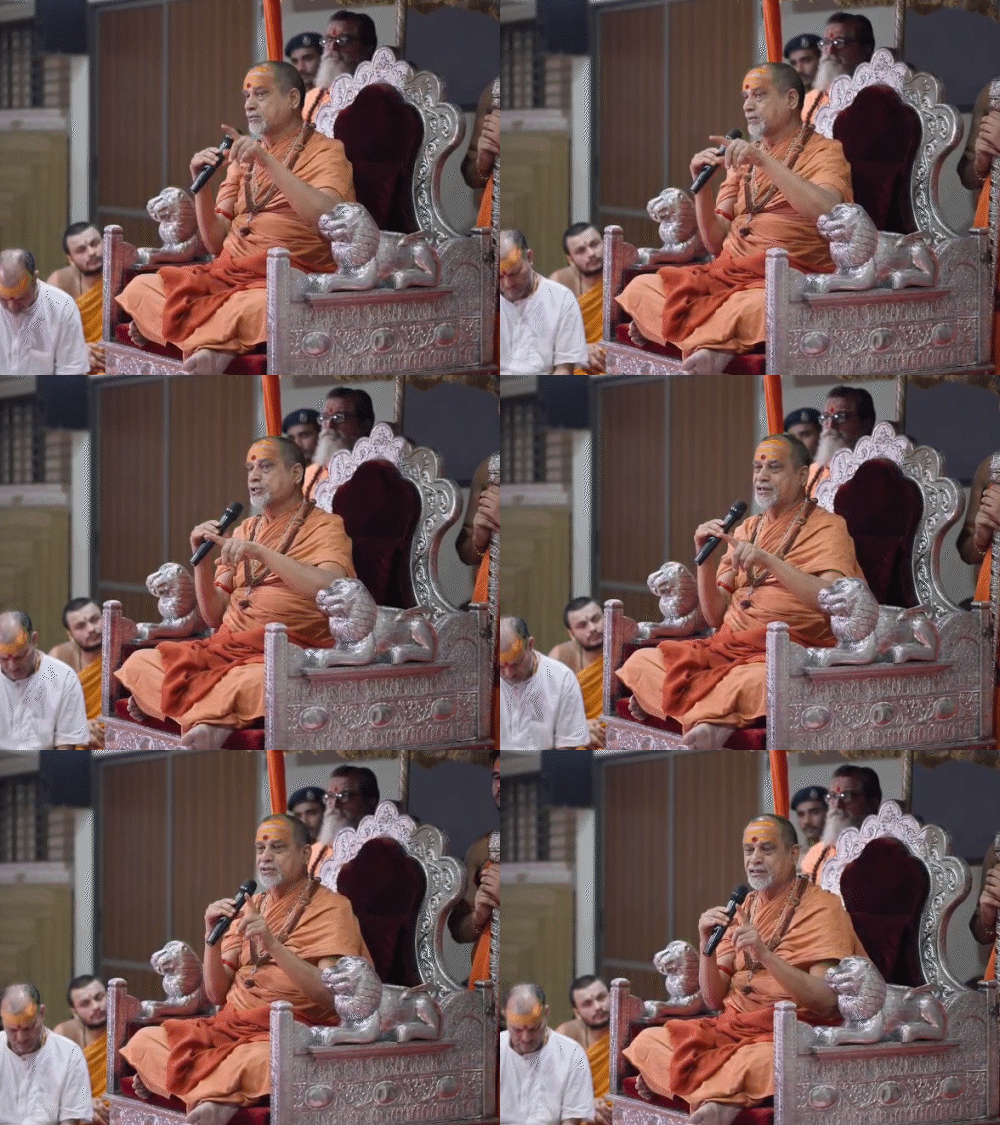
Shankaracharya Swami Sadanand Saraswati of the Dwarka Sharda Peeth has urged Hindu devotees to adhere strictly to foundational scriptures and avoid the worship of modern, fabricated deities. Addressing an audience during a visit to the Vishv Umiya Dham temple complex in Ahmedabad, Gujarat, the spiritual leader criticized cinema culture, specifically calling out Bollywood for creating fictional objects of devotion that lack canonical sanction.
Speaking at the temple site in Jaspur, the Shankaracharya cautioned that deities popularized through movies and television screens do not represent legitimate spiritual figures in Sanatan Dharma. He asserted that characters produced in Mumbai entertainment studios should not be treated as divine beings when they have no mention in the Vedas, Upanishads, or ancient Puranas.
The seer emphasized that practitioners should remain firmly rooted in traditional Vedic practices, highlighting the worship of the classical Panchadeva alongside foundational deities such as Shiva and Shakti. According to the Shankaracharya, spiritual reverence should remain aligned with the longstanding domestic and ancestral rituals that preceding generations practiced for centuries.
His remarks came as he inspected the ongoing construction of Vishv Umiya Dham, a massive temple project dedicated to Maa Umiya, the patron deity of the Kadva Patidar community. During the visit, the Shankaracharya performed a traditional Shila Pujan consecration ritual at the sanctum sanctorum and reviewed architectural progress alongside temple trust administrators.
While the pontiff did not single out specific films or contemporary regional sects by name, his statements touch upon an enduring debate within orthodox Hindu circles regarding media-manufactured folklore. Over recent decades, popular theatrical depictions and folklore adaptations have repeatedly sparked localized followings and non-canonical devotional practices across India.
Traditionalist scholars affiliated with India's prominent peeths have long argued that departing from classical texts risks diluting ancestral theological lineages. Swami Sadanand Saraswati reinforced this view, urging families to educate younger generations on authentic scriptural history rather than allowing commercialized media portrayals to dictate their religious identity.
The setting for his discourse added notable prominence to the remarks, given the planned scale and public visibility of the Vishv Umiya Dham complex. The campus in Jaspur is envisioned by its organizers as an expansive center for cultural heritage, social welfare initiatives, and the preservation of Vedic culture.
The leader's critical assessment of screen-driven religiosity drew substantial attention among the assembled devotees and community leaders present at the venue. The commentary has since sparked wider conversations across the state regarding the balance between scriptural orthodoxy, folk belief, and the growing influence of modern entertainment on religious life.
As development at the temple complex moves forward under the guidance of its organizing trustees, religious discourses by senior seers are expected to help frame its cultural programming. For the Dwarka Peeth, the visit marks another public appeal aimed at guiding Hindu institutions toward classical scriptural preservation in an evolving media landscape.
Primary source: Divya Bhaskar Gujarat. Newzly rewrites and structures source reporting for clarity; verify critical details at the original.