Early Ethereum Investor Cashes Out 3,000 ETH for $7.23 Million After Nine-Year Dormancy
An early Ethereum investor who acquired coins at roughly $18 in 2017 has deposited 3,000 ETH to Kraken, locking in an estimated 128-fold profit after nearly a decade of dormancy.
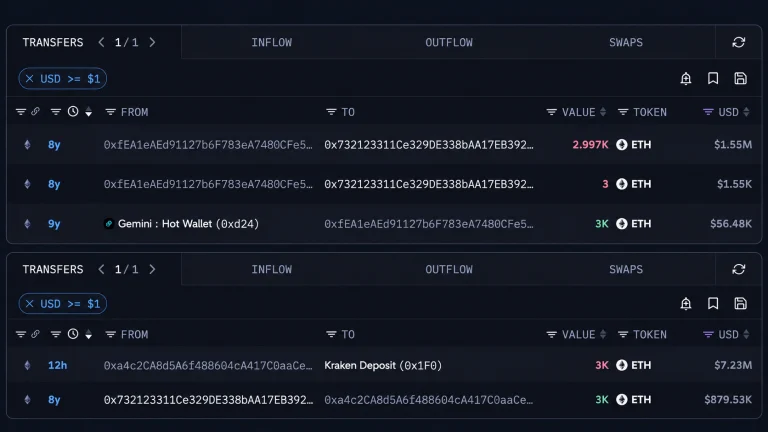
An early cryptocurrency investor has ended nearly a decade of wallet inactivity by transferring 3,000 ether to an exchange deposit address, locking in millions of dollars in gains. The transaction, identified through blockchain records, liquidated a position accumulated when the digital asset traded for a tiny fraction of its current market value.
According to transaction data surfaced by analytics platform Arkham Intelligence, the whale moved the 3,000 ETH stack into a Kraken deposit wallet. At prevailing prices near $2,410 per token during the transfer, the total value of the transaction reached approximately $7.23 million.
The origins of the holdings trace back approximately nine years to early 2017, when the investor withdrew the tokens from a Gemini hot wallet. Records indicate the purchase was executed at an average price of roughly $18.83 per coin, representing an initial outlay of around $56,480.
The subsequent liquidation marks a roughly 128-fold return on capital, delivering a net profit exceeding $7.17 million. After the initial withdrawal from Gemini, the tokens passed through several intermediary addresses before settling into cold storage, where they remained untouched through multiple volatile market cycles.
Blockchain monitoring accounts, including Lookonchain and independent on-chain researchers, noted that this wallet forms part of a wider cluster linked to similar early accumulations. Analysts observed that the same entity had previously offloaded another batch of vintage ether, bringing the total realized volume across related addresses to roughly 6,000 ETH in recent months.
The prolonged holding duration highlights the patient custody strategies employed by early adopters who entered the ecosystem during Ethereum's formative years. The investor preserved the position through the sharp bull markets of late 2017 and 2021, as well as the deep contractions that followed, before finally transferring the balance to an exchange.
Inflows of dormant tokens to centralized exchanges are closely watched by traders because deposits typically signal an intention to sell on the open market. While sudden multi-million-dollar transfers from long-inactive addresses can rattle short-term sentiment, liquid trading pairs across major platforms generally absorb seven-figure volume without significant disruption.
The move mirrors a broader pattern observed across the digital asset sector over the past year, as vintage wallets from the 2015 to 2017 eras have periodically reawakened. Analysts attribute these selective liquidations to a mix of estate planning, profit-taking, and portfolio rebalancing following years of institutional adoption and regulatory milestones.
Whether the entity intends to fully exit the market or retain additional unmapped reserves remains uncertain based on publicly available ledger records. Market observers and automated trackers continue to monitor adjacent addresses for further signs of movement as legacy participants reassess their long-term holdings.
Primary source: Bitcoin.com News. Newzly rewrites and structures source reporting for clarity; verify critical details at the original.