world·Sikkim·ake centered in eastern nepal's taplejung district
Earthquake in Nepal Triggers Tremors Across North Bengal and Sikkim
A moderate earthquake centered in eastern Nepal's Taplejung district sent tremors across Sikkim and north Bengal early in the morning, rattling homes and prompting residents to rush outdoors, with no initial casualties reported.
In this piece
A moderate earthquake originating in Nepal's eastern Taplejung district shook parts of Sikkim and northern West Bengal, causing momentary panic among residents…
A moderate earthquake originating in eastern Nepal sent noticeable tremors across border districts of northern West Bengal and Sikkim, disrupting morning routines and creating brief moments of panic. Residents in several hill towns and foothill plains hurried out of their houses into open streets and public squares as ground vibrations rattled doors, windows, and light household fixtures.
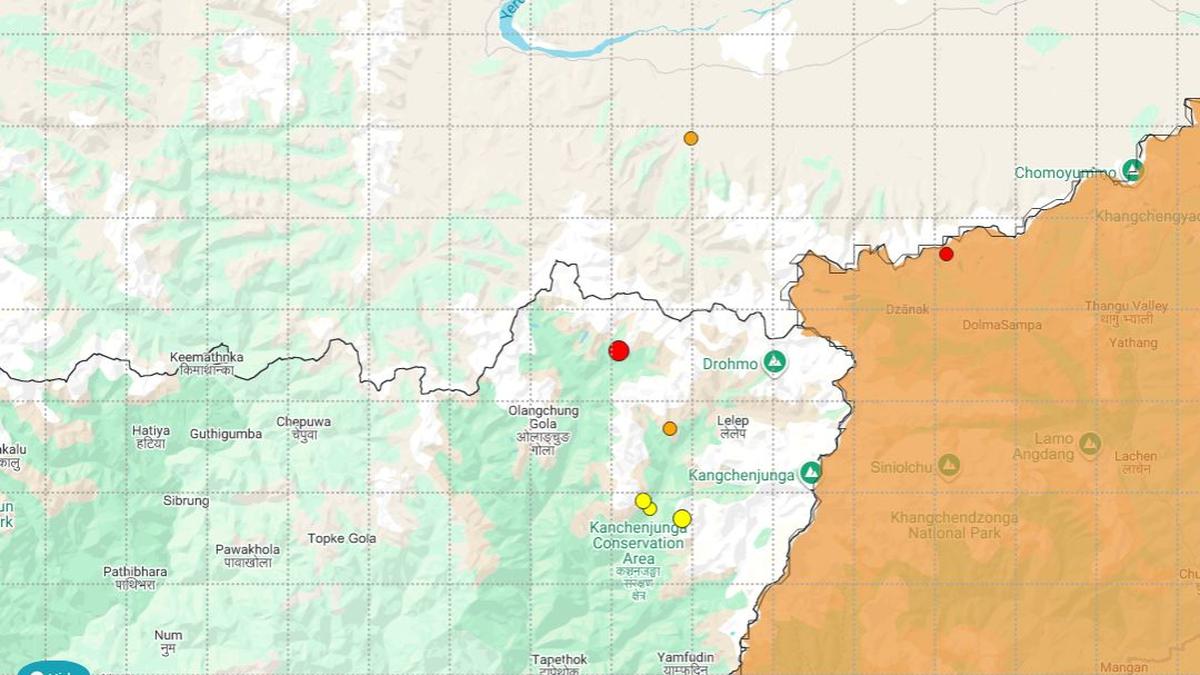
Seismological monitoring centers recorded the tremor at an estimated magnitude between 5.3 and 5.6, originating at a shallow depth of roughly 10 kilometers below the earth's surface. The epicentre was located in Nepal's rugged Taplejung district within Koshi Province, situated near Olangchung Gola and Lelep close to the borders with India and the Tibet Autonomous Region.
Across the frontier in India, the seismic waves were widely felt across the northern districts of West Bengal, including Darjeeling, Kalimpong, Jalpaiguri, and Cooch Behar, as well as the capital town of Gangtok and surrounding areas of Sikkim. Dispersed tremors were also reported in parts of northern Bihar and border hamlets in western Bhutan as shockwaves traveled outward from the source.
Despite the sudden alarm that reverberated through densely populated neighborhoods and mountain settlements, disaster management teams in both Nepal and India reported no initial casualties or catastrophic structural collapses. Emergency personnel began conducting routine field assessments to verify that critical infrastructure, highways, and public buildings remained structurally sound and unobstructed by debris.
The entire Himalayan belt is recognized by earth scientists as one of the world's most seismically volatile zones, shaped by the continuous tectonic collision of the Indian plate sliding underneath the Eurasian landmass. This persistent northward geological movement steadily builds immense crustal strain, which is periodically released through tremors ranging from minor rumblings to powerful, widespread earthquakes.
Communities situated along the eastern Himalayan ranges, including mountainous sectors of eastern Nepal, Sikkim, and the Darjeeling ridge, face heightened vulnerability due to steep topography and fragile slopes. Even when tremors cause minimal direct structural damage to concrete structures, the resulting ground shaking can occasionally loosen hillside scree or compromise unstable embankments.
In recent years, regional disaster response agencies across the northeastern border states have stepped up community preparedness programs and reinforced standard building codes for seismic zones. Memories of earlier major earthquakes in the broader Himalayan arc have instilled widespread caution among local populations, making immediate evacuation to open ground a common and practiced response during tremors.
Seismologists and local administration officials will continue tracking seismic activity in the region, keeping watch for aftershocks that frequently accompany shallow earthquakes of moderate intensity. District authorities across north Bengal and Sikkim have asked local administrative divisions and police stations to remain alert and maintain open communication channels in case localized issues are identified in more remote mountain pockets.
Primary source: Google News Sikkim. Newzly rewrites and structures source reporting for clarity; verify critical details at the original.