world·New Jersey·Burlington County
EF-1 Tornado With 100 MPH Winds Damages Homes in Burlington County, New Jersey
An EF-1 tornado packing 100 mph winds touched down in Burlington County, New Jersey, damaging homes, a barn, and trees before lifting without causing injuries.
In this piece
A confirmed EF-1 tornado with 100 mph winds struck Burlington County, New Jersey, damaging several homes and knocking down trees and utility lines. The National…
A tornado confirmed as an EF-1 on the Enhanced Fujita scale struck Burlington County, New Jersey, packing peak winds of up to 100 mph. The National Weather Service verified the touchdown following detailed ground surveys across the affected region. The storm caused localized structural damage across parts of Chesterfield Township and adjacent communities before dissipating.
According to storm survey assessments, the twister carved a continuous track approximately 1.5 miles long with a maximum width of about 100 yards. The funnel remained on the ground for roughly five minutes as it traversed a corridor near Old York Road. Forecasters noted that the rapid movement of the storm contributed to concentrated pockets of intense wind damage along its narrow trajectory.
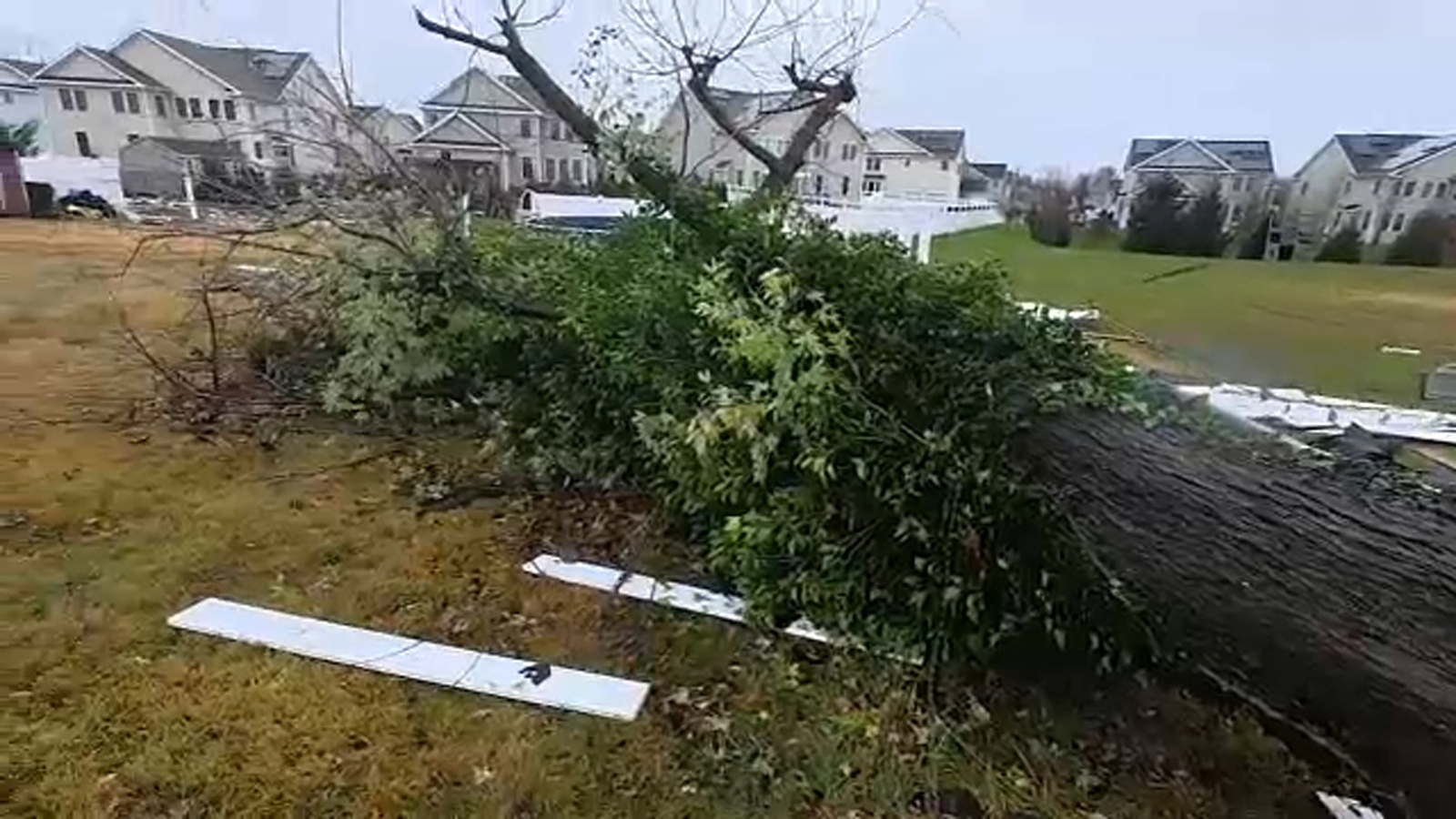
Property damage along the path was visible on multiple residential lots and farmsteads. The high-velocity winds tore shingles, gutters, and fascia boards from several single-family homes, leaving insulation and building material strewn across lawns. An agricultural barn sustained substantial damage, with sections of its exterior walls collapsing under the strain of the cyclonic pressure.
Community structures also felt the brunt of the fast-moving storm, including an area school building that sustained roof damage. Debris was launched into neighboring yards, with splintered wooden beams and large pieces of sheet material found driven directly into the turf. First responders cordoned off affected perimeters to protect residents from scattered nails and unstable building remnants.
The storm took a significant toll on local vegetation and electrical distribution networks. Scores of mature hardwood trees were either snapped midway up their trunks or completely uprooted by the 100 mph gusts. Many of these falling trees struck utility poles and overhead lines, which triggered electrical outages and blocked several municipal roadways.
Despite the sudden violence of the weather event, county emergency management officials reported that no injuries or fatalities occurred. Many residents were able to seek shelter in basements and interior rooms as severe thunderstorm and tornado alerts were transmitted across the region. Local authorities credited timely warning dissemination with keeping community members out of harm's way.
The Burlington County tornado formed as part of an active severe weather front that pushed through the Delaware Valley and broader Mid-Atlantic area. Warm, humid summer air masses interacting with approaching frontal boundaries provided the atmospheric lift and instability necessary for severe thunderstorm development. These conditions fostered rotating updrafts capable of producing isolated but damaging funnel clouds.
Tornadoes remain relatively uncommon in New Jersey compared to the central plains of the United States, yet the state experiences several confirmed touchdowns in an average year. Most tornadoes documented in the state fall into the EF-0 or EF-1 categories, which are capable of inflicting serious property damage and tree destruction despite their modest scale. Meteorologists point to events like this to highlight that even low-tier tornadoes pose substantial threats to life and property.
In the aftermath of the touchdown, municipal emergency teams, public works crews, and utility contractors worked to clear thoroughfares and restore electric service. Homeowners began the process of documenting losses and contacting insurance carriers to begin repairs on damaged roofs and outbuildings. Township officials coordinated debris removal efforts to ensure fallen limbs and hazardous materials were cleared safely.
With cleanup efforts well underway, emergency officials and the National Weather Service continue to encourage residents to review their severe weather safety plans. Meteorologists noted that unpredictable summer weather patterns can generate rapid changes in atmospheric conditions with little advance warning. County agencies reaffirmed that maintaining battery-powered weather radios and mobile phone alert notifications remains crucial during severe storm seasons.
Primary source: Google News New Jersey. Newzly rewrites and structures source reporting for clarity; verify critical details at the original.