European Commission accused of overstating Egypt’s progress to unlock loans
Leaked documents raise questions about whether Egypt met welfare targets linked to €2.5 billion in loans under a broader European Union partnership, according to a Guardian report.
In this piece
The European Commission faces allegations that it presented figures too favorably to justify releasing loans to Egypt. The Guardian says leaked documents cast…
The European Commission has been accused of presenting figures too favorably to enable the release of funds to Egypt under its partnership with President Abdel Fatah al-Sisi’s government, according to the Guardian. The report says leaked documents raise questions about claims that Egypt met welfare targets needed to qualify for €2.5 billion in loans.
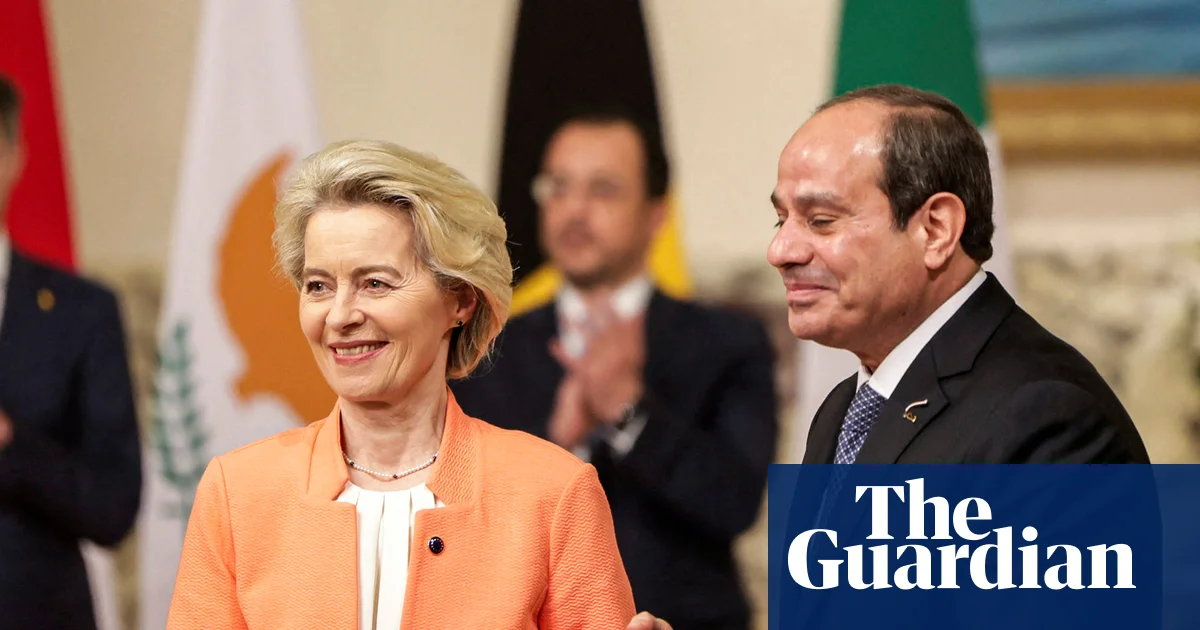
The allegations concern a €7.4 billion agreement that European Commission President Ursula von der Leyen promised to al-Sisi during a high-profile visit to Cairo in 2024. Described as a three-year “strategic and comprehensive partnership,” the arrangement brought together economic support, migration objectives and concerns about regional stability within a single framework.
The partnership was intended to bolster Egypt’s shaky economy while deterring migrants from coming to Europe. It also sought to shore up a region reeling from the 7 October attacks and Israel’s war in Gaza, giving the agreement a strategic purpose beyond its financial provisions.
At the center of the reported dispute is the assessment of welfare targets tied to the €2.5 billion in loans. The allegation is not simply that Egypt faced economic difficulties, but that the commission portrayed relevant figures more positively than warranted when determining whether the conditions for funding had been satisfied.
That distinction matters because the stated conditions provide a basis for judging eligibility for the loans. If the assessment overstated progress, it would raise questions about how the commission applied those requirements. The supplied report excerpt, however, does not establish that the allegation has been independently verified or that any formal finding of wrongdoing has been made.
The available material does not identify the individual welfare indicators, reproduce the disputed figures or explain how they were calculated. It therefore does not allow a detailed comparison between Egypt’s reported performance and the thresholds it was expected to meet, or establish the scale of any discrepancy alleged in the leaked documents.
The excerpt also does not include a response from the European Commission or Egypt’s government. Their explanations would be necessary to assess whether the dispute concerns the underlying data, the interpretation of the targets or the commission’s judgment about compliance. Without those details, the reported accusation remains distinct from a demonstrated breach of the funding conditions.
The Guardian’s report places scrutiny on how the EU balances the partnership’s economic and strategic aims with its welfare requirements. Further assessment will depend on the contents of the leaked documents and responses to the allegations. The supplied material does not say whether the claims will prompt a formal review or affect subsequent funding decisions.
Primary source: The Guardian World. Newzly rewrites and structures source reporting for clarity; verify critical details at the original.