Eurovision Format Expands to Asia as Inaugural Contest Launches in Bangkok
The Eurovision Song Contest makes its official debut in Asia on Saturday, bringing together musical artists from eleven nations in Bangkok for an ambitious live international competition modeled after the legendary European broadcast.
In this piece
The world's longest-running international music competition is officially expanding into Asia with an inaugural live broadcast from Bangkok, Thailand. Featuring…
The Eurovision Song Contest is making an unprecedented leap into new territory as its inaugural Asian edition takes the stage on Saturday in Bangkok, Thailand. The landmark event brings the world's longest-running and largest international music competition to the region for the first time in its seven-decade history. Staged live from the One Bangkok Forum, the Grand Final marks a significant milestone in global broadcasting and musical cross-pollination.
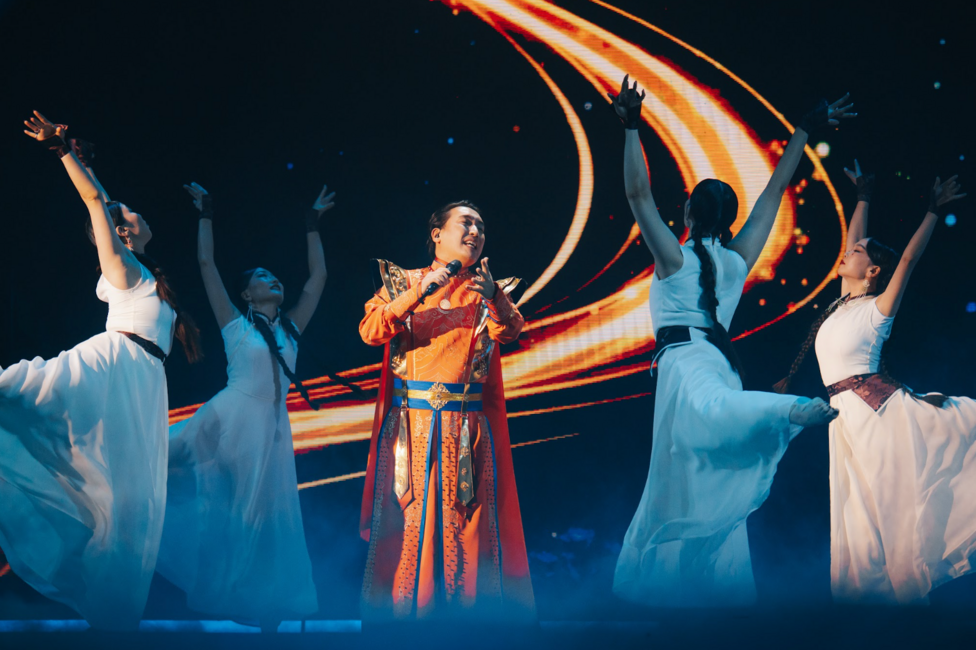
Eleven nations from across South, Southeast, and East Asia are fielding musical acts in the historic first edition. Represented countries include Bangladesh, Bhutan, Cambodia, Laos, Malaysia, Mongolia, Nepal, the Philippines, South Korea, Thailand, and Vietnam. Each participating delegation has brought forward original live acts that span diverse genres, ranging from contemporary pop and electronic anthems to deeply rooted regional balladry.
Produced under official license from the European Broadcasting Union by Voxovation and S2O Productions, the Asian tournament closely follows the competitive architecture established in Europe. Contestants perform original songs entirely live before an international audience, adhering strictly to timing limits and live vocal standards. Winners will be determined through a blended system combining the assessments of professional national juries with public voting conducted across digital platforms and QR codes.
An Asian adaptation of Eurovision has been discussed within international television circles for years, driven by the global popularity of the European spectacle and Asia's booming entertainment sector. While European audiences have watched the contest evolve since 1956 into a platform that launched global icons, adapting the multi-national broadcast for Asia required navigating complex media landscapes, varied regulatory environments, and diverse broadcast traditions.
Bangkok was selected as the launchpad for the historic showcase, with Thailand's Channel 3 serving as the official host broadcaster. Organizers transformed the One Bangkok Forum into a state-of-the-art television production arena equipped with massive LED displays, kinetic staging, and synchronized lighting rigs. The production aims to match the visual grandeur that has long defined the European flagship while celebrating Southeast Asia's growing reputation as an entertainment hub.
For the participating performers, the stage represents a rare opportunity to share indigenous languages and regional artistic traditions with a continental and global audience. Contestants such as Vietnam's Toc Tien, Malaysia's Aina Abdul, and South Korea's Junhee bring established regional followings, while rising stars from Bhutan, Nepal, and Mongolia bring musical styles seldom showcased on prime-time international television. The mix highlights the vast cultural breadth of Asia's contemporary music industries.
The launch of Eurovision Asia arrives at a moment of profound transformation in how global audiences discover and consume music. With Asian artists already dominating international charts and streaming metrics, the competition provides an institutional framework for regional cultural diplomacy through song. Beyond the trophy, participants and industry observers see the platform as a way to build lasting cross-border creative collaborations across Asian markets.
Despite significant enthusiasm, mounting an event of this scale presents distinct challenges compared to the European original. Unlike Europe's tightly knit public broadcasting network under the EBU, Asian broadcasters operate across vastly different commercial models, cultural sensitivities, and media infrastructures. Organizers have worked carefully to ensure that voting protocols, lyrical guidelines, and production standards reflect regional norms without diluting the vibrant spirit of the contest.
As final rehearsals conclude ahead of Saturday's broadcast, public anticipation continues to build across participating nations and the global Eurovision fan community. Organizers have signaled that a successful inaugural broadcast in Bangkok could pave the way for additional Asian countries to join future editions. For the eleven acts stepping into the spotlight, Saturday night marks not only the culmination of months of intense preparation, but the beginning of a new chapter in international music television.
Primary source: BBC Asia. Newzly rewrites and structures source reporting for clarity; verify critical details at the original.