world·Nagaland·Kohima District
Exhibition at Kohima Museum Unearths Nagaland's Ancient Past
A new archaeological exhibition at the State Museum in Kohima unveils centuries of prehistoric settlement in Nagaland, spotlighting groundbreaking excavations from Meluri and Noklak districts.
In this piece
A joint exhibition by Nagaland University and the Department of Art and Culture opened at the State Museum in Kohima, showcasing rare prehistoric artifacts.…
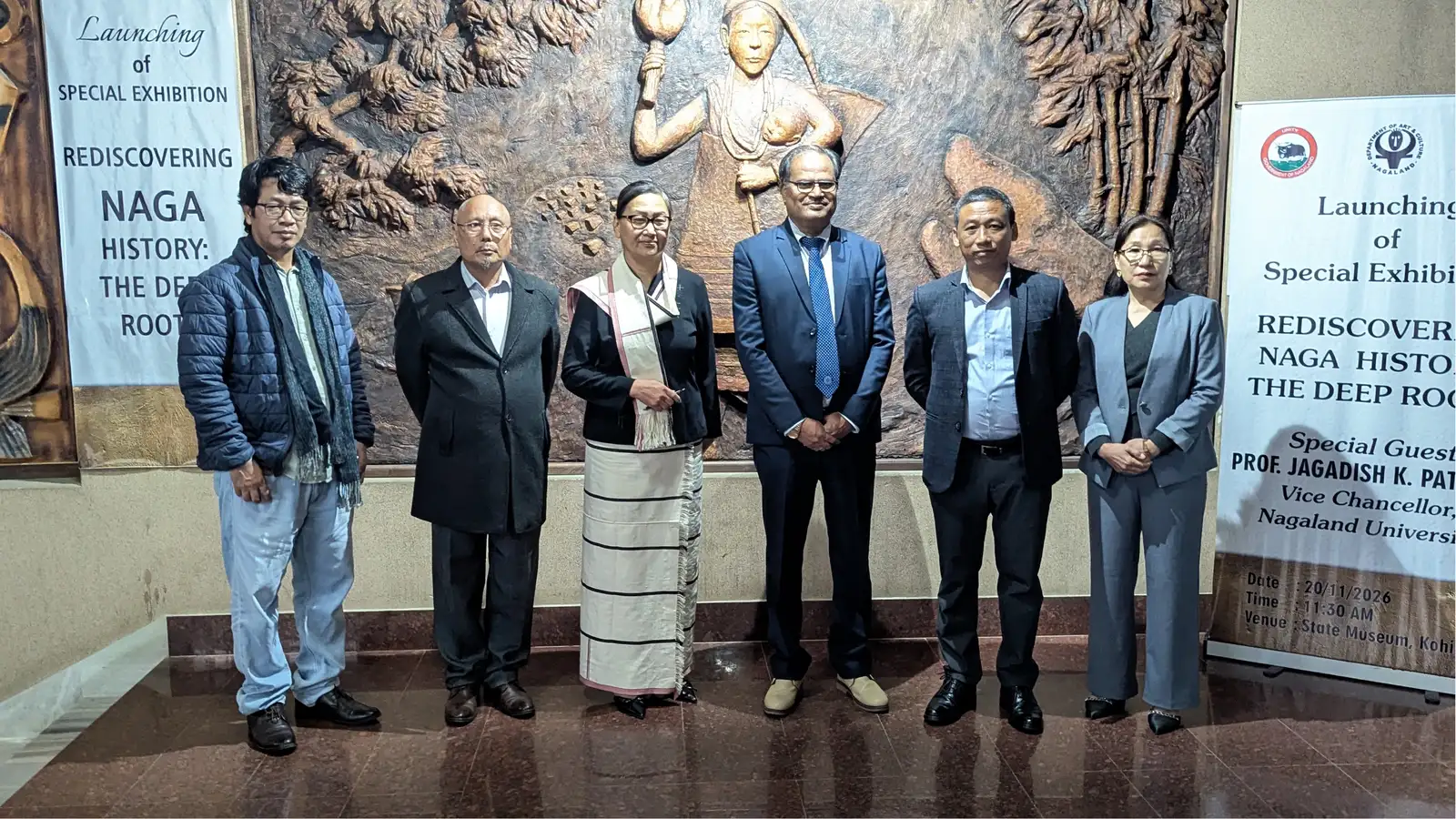
A landmark archaeological exhibition titled "Rediscovering Naga History: The Deep Roots" opened at the State Museum in Kohima, unveiling prehistoric artifacts and excavation findings that illuminate the ancient settlement history of Nagaland. Jointly organized by the state Department of Art and Culture and the Department of History and Archaeology at Nagaland University, the exhibition brings public visibility to rigorous academic field research across the region. Officials noted that the initiative aims to connect modern communities with the tangible remnants of their earliest ancestors.
During the opening ceremony, Nagaland University Vice-Chancellor Prof. Jagadish K. Patnaik inaugurated the exhibition and officially released a documentary film titled "Burakha: Reading the Land." The documentary chronicles the intensive archaeological journey and excavations led by Prof. Tiatoshi Jamir at New Phor, a village historically designated as Burakha in Meluri district. Speakers at the launch emphasized the role of visual documentation in preserving regional history for wider audiences.
The curated installation features 15 comprehensive photographic panels detailing site backgrounds, excavation methodologies, and field surveys, alongside eight dedicated display tables. These tables showcase an extensive array of recovered relics that provide rare glimpses into ancient material culture, early technologies, and domestic subsistence strategies. Visitors can examine pottery sherds, lithic implements, and structural evidence systematically gathered during recent academic expeditions.
A focal section of the exhibition pays tribute to Dr. Vikuosa Nienu, recognized as the first Naga archaeologist, who carried out the earliest systematic excavations at Burakha in 1980. Dr. Nienu donated his foundational collection of recovered artifacts to the State Museum, providing an invaluable reference point for subsequent generations of scholars. Those historic items are now permanently housed and integrated into the museum's Archaeological Gallery.
The exhibition consolidates findings from sustained academic fieldwork across eastern Nagaland, including investigations conducted between 2025 and 2026. Researchers focused their recent efforts on significant archaeological landscapes, examining both open-air village settlements in Meluri district and limestone cave sites near Chipur village in Noklak district. These distinct topographies have yielded layered sequences of long-term human habitation and resource use.
Material evidence gathered from these excavations has substantially revised historical chronologies, pushing back the timeline of prehistoric human activity in Nagaland by thousands of years. The discoveries challenge older scholarly assumptions that viewed Naga history primarily through the lens of colonial records or late medieval migrations. Instead, the physical record demonstrates deep ancestral roots embedded in the regional landscape.
Archaeologists point out that the utilitarian pottery, crafted stone tools, and hearth features unearthed at New Phor demonstrate sophisticated adaptations to a rugged montane environment. The recovered items also suggest that ancient inhabitants participated in early regional exchange networks across the eastern Himalayan corridor. Such findings underscore the complexity of early tribal economies and cross-border mobility.
Organizers stressed that the collaboration between the Department of Art and Culture and Nagaland University marks an essential step toward bridging formal academic research and community outreach. By moving artifacts from university storage into a public cultural institution, the organizers hope to foster greater historical consciousness among youth and local communities. The initiative also reinforces the importance of scientific preservation for state heritage assets.
The exhibition remains open to visitors at the State Museum in Kohima, with educational programs planned for schools and university groups. Looking ahead, university researchers intend to continue multidisciplinary analyses on excavated organic residues and expand exploratory surveys into previously unmapped cave systems. These continued scientific endeavors seek to construct an ever more detailed and empirical portrait of Nagaland's ancient past.
Primary source: Google News Nagaland. Newzly rewrites and structures source reporting for clarity; verify critical details at the original.