Experts Cast Doubt on Anthropic Claims of Workplace AI Shift
Anthropic claims its internal workforce is radically transforming as AI agents handle technical tasks, but labor economists and industry analysts express skepticism over whether the startup's findings reflect the broader economy.
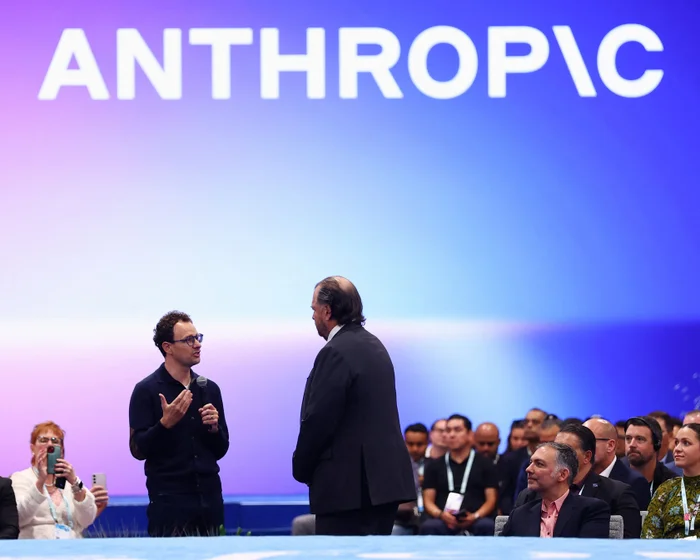
Anthropic has released an internal study detailing how artificial intelligence has altered its own corporate workforce, reporting a sharp reduction in entry-level technical hiring as automated agents handle routine programming. The findings, published in a research paper examining internal operations, suggest that human attention rather than task execution has emerged as the company's primary operational bottleneck. However, independent labor economists and technology analysts have voiced skepticism over the report's conclusions and its relevance to the broader economy.
According to the company, interactive sessions driven by its Claude artificial intelligence agents have grown rapidly across engineering and product teams. Anthropic disclosed that the hours logged by its autonomous software agents now substantially outpace the total working hours of its human staff. The company stated that junior technical positions have fallen sharply as a share of overall technical roles, dropping from more than a quarter of the group to single digits as systems take on introductory coding assignments.
The paper argues that as output volumes multiply, human employees increasingly function as reviewers and supervisors rather than individual contributors. Anthropic noted that the vast majority of agent runtime is spent idling while awaiting human instruction, clarification, or final approval. Workers are reportedly spending extensive portions of their schedules triaging automated drafts, configuring review thresholds, and building oversight tools rather than drafting technical materials from scratch.
The findings arrive against the backdrop of earlier, highly ambitious claims made by the artificial intelligence laboratory's leadership. Last year, Anthropic chief executive Dario Amodei warned that advances in generative technology could eliminate half of all entry-level white-collar positions and predicted that automated models would write ninety percent of software code within six months. Those specific projections did not materialize across the commercial market, creating enduring skepticism around the company's public pronouncements.
Outside observers point out that the operational shifts documented within an artificial intelligence developer may not reflect general business conditions. Critics note that leading machine learning laboratories possess unique incentives to aggressively adopt their own products and portray them as indispensable operational engines. Unlike conventional enterprises, frontier AI developers operate in hyper-specialized technical environments where employees possess deep familiarity with model limitations and prompting workflows.
Economists also emphasize that white-collar productivity improvements rarely translate immediately into widespread organizational restructuring. Traditional corporate environments face legal compliance mandates, complex legacy architectures, and regulatory constraints that significantly slow down agent deployment. In many conventional sectors, delegating mission-critical technical execution to probabilistic models remains prohibitively risky without extensive human redundancies.
The reduction of junior hiring at Anthropic highlights a growing debate regarding the long-term pipeline for skilled professionals. If companies rely on autonomous agents to complete entry-level tasks, opportunities for early-career workers to build core competence through hands-on practice could dwindle. Several workforce researchers argue that eliminating entry-level roles threatens the institutional knowledge transfer necessary to cultivate future senior managers and domain specialists.
Anthropic maintained in its publication that its recruitment criteria have pivoted away from manual technical implementation toward higher-level strategic discernment. The company indicated that hiring managers are now prioritizing autonomy, operational judgment, and problem definition over traditional software development skills. Internal staff members are also frequently moving across functional domains as automated agents assume repetitive project workloads.
Whether Anthropic's internal experience serves as a genuine bellwether or an isolated corporate experiment will depend on enterprise adoption over the coming years. Enterprise software buyers continue to evaluate agentic platforms with caution, demanding verifiable accuracy and clear liability frameworks before overhauling their staffing models. For now, analysts expect corporate leaders to proceed cautiously, balancing enthusiastic vendor claims against the practical friction of real-world integration.
Primary source: The Guardian Business. Newzly rewrites and structures source reporting for clarity; verify critical details at the original.