FAA Orders Nationwide Ground Stop Over Air Traffic Communications Failure
The Federal Aviation Administration ordered a rare nationwide ground stop following a widespread communication failure across air route traffic control centers, halting departures across Texas and leaving thousands of travelers stranded.
In this piece
The Federal Aviation Administration issued a nationwide ground stop on departing flights after a communication issue hit air traffic control centers across the…
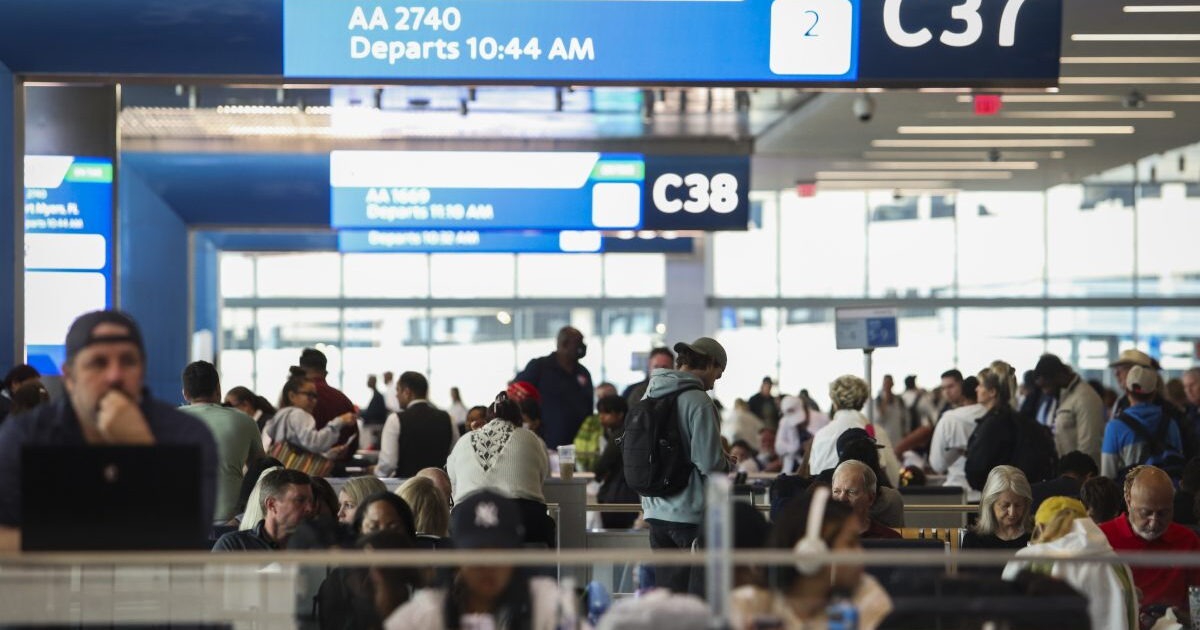
The Federal Aviation Administration issued a sweeping nationwide ground stop on all departing flights, bringing airline operations to a sudden halt at airports across Texas and throughout the United States. The federal directive required commercial airliners and private aircraft to remain parked at their gates while aviation authorities addressed a critical system disruption. Airport terminals quickly filled with stranded travelers as departure boards showed widespread cancellations and indefinite holds.
U.S. Transportation Secretary Sean Duffy confirmed that the emergency halt was triggered by a severe communication issue impacting all Air Route Traffic Control Centers across the country. These regional control facilities coordinate aircraft moving at cruising altitude between major metropolitan areas and across state lines. The unexpected communication breakdown compromised essential links needed to guide flights safely along domestic airway corridors.
Federal regulators stated that the drastic measure was taken due to extraordinary circumstances and strictly for reasons of passenger and crew safety. Under standard federal aviation protocols, controllers cannot clear departures when primary or secondary communication networks experience widespread technical anomalies. Aviation officials instructed all affected facilities to hold outbound traffic on the ground until technicians could verify the integrity of air traffic systems.
In Texas, the order triggered immediate disruptions across some of the country's busiest travel gateways, including Dallas Fort Worth International Airport and Dallas Love Field. Major travel hubs in Houston, including George Bush Intercontinental Airport and William P. Hobby Airport, similarly suspended all scheduled departures. Facilities at Austin-Bergstrom International Airport and San Antonio International Airport likewise reported grounded aircraft lining taxiways and gates.
While outbound domestic flights were brought to a complete standstill, federal controllers implemented contingency procedures for aircraft that were already airborne when the order took effect. Officials confirmed that inbound international flights were being managed and cleared on a case-by-case basis as they entered domestic airspace. This approach allowed long-haul flights to touch down safely without overtaxing regional air traffic centers facing technical constraints.
System-wide ground stops of this magnitude are extraordinarily rare events within the United States civil aviation network. Broad national halts have occurred only a handful of times in recent decades, notably in the immediate aftermath of the September 11, 2001, terrorist attacks and during a severe pilot notification system failure in January 2023. The rarity of the directive reflects the critical importance of maintaining continuous, uninterrupted communication between controllers and cockpit crews.
Air Route Traffic Control Centers represent the invisible backbone of commercial aviation, monitoring thousands of flights simultaneously as they navigate high-altitude airways. Without reliable communication channels, air traffic managers cannot maintain mandated safety intervals between planes or provide necessary vectoring instructions. Grounding aircraft prior to departure remains the primary protocol to ensure that potential technical failures do not compromise safety in mid-flight.
The nationwide stoppage is expected to generate widespread logistical complications across the entire airline industry. Commercial carriers face severe scheduling bottlenecks, displaced flight crews, and out-of-position aircraft that can disrupt operations for days after ground orders are lifted. Passengers traveling through Texas hubs connecting to regional and international routes are likely to encounter cascading delays well into the week.
Technical specialists and network engineers from the FAA are actively investigating the exact source of the communication breakdown within the air route control architecture. Regulators have not yet disclosed whether the failure stemmed from hardware malfunctions, software glitches, or external network provider interruptions. Officials noted that teams are working urgently to isolate the problem and restore normal operational capacity.
Airline operators have urged all passengers with upcoming departures from Texas and other domestic airports to monitor flight trackers and check with their carriers before heading to the airport. The FAA indicated that it will provide further operational updates as technical evaluations proceed and conditions permit a phased resumption of flight activity. For now, travelers remain on hold as federal authorities prioritize system verification over rapid schedule recovery.
Primary source: Google News Texas. Newzly rewrites and structures source reporting for clarity; verify critical details at the original.