Farhan Akhtar, Ashutosh Gowariker, and Madhur Bhandarkar Mark 25 Years of Landmark 2001 Films
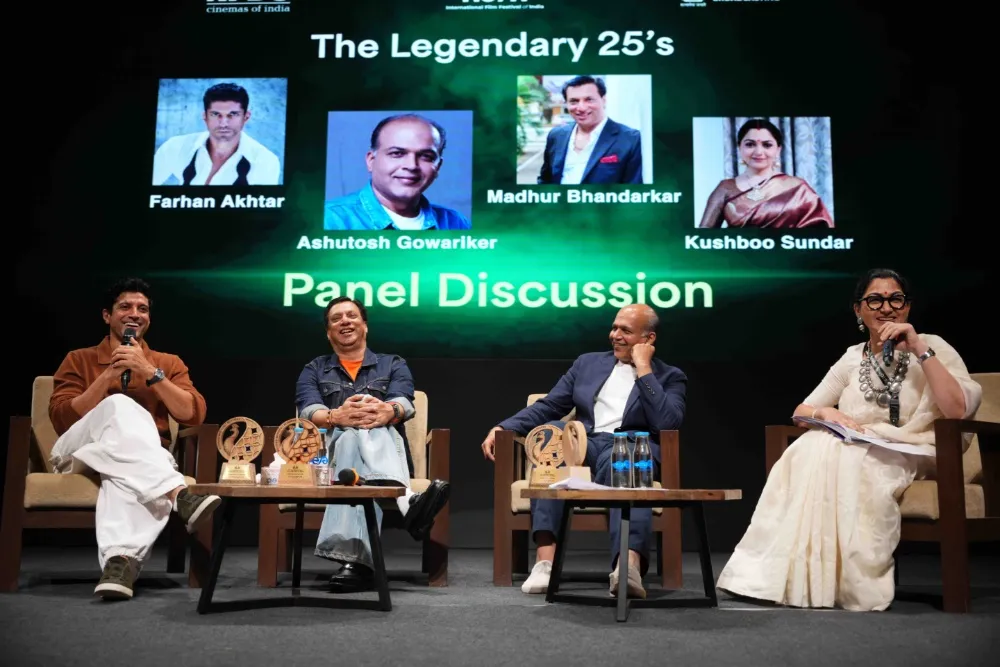
At the International Film Festival of India in Goa, directors Farhan Akhtar, Ashutosh Gowariker, and Madhur Bhandarkar reunited to reflect on 25 years since their landmark 2001 releases transformed Hindi cinema.
In this piece
Filmmakers Farhan Akhtar, Ashutosh Gowariker, and Madhur Bhandarkar gathered at IFFI in Goa to mark the 25th anniversary of 'Dil Chahta Hai,' 'Lagaan,' and…
Filmmakers Farhan Akhtar, Ashutosh Gowariker, and Madhur Bhandarkar reunited at the International Film Festival of India in Goa to commemorate the 25th anniversary of their groundbreaking 2001 releases. Speaking during a retrospective panel session titled "The Legendary 25s," the three directors reflected on how their respective films challenged traditional storytelling paradigms in Hindi cinema.
The milestone celebration honored Akhtar's coming-of-age directorial debut "Dil Chahta Hai," Gowariker's period sports drama "Lagaan," and Bhandarkar's gritty underworld drama "Chandni Bar." Released within months of one another in 2001, each production pushed Bollywood into uncharted thematic territory while offering distinct artistic visions. Together, they signaled an enduring creative turning point for the industry at the turn of the millennium.
For Akhtar, "Dil Chahta Hai" redefined the representation of contemporary urban youth, conversational dialogue, and modern friendship on Indian screens. The director revisited the creative risks of departing from the heightened melodrama and traditional song-and-dance formulas that had long dominated mainstream commercial cinema. The film's nuanced character dynamics and fresh aesthetic language ultimately resonated across a rising generation of moviegoers.
Gowariker detailed the monumental challenges involved in realizing "Lagaan," an ambitious colonial-era epic centered on a high-stakes cricket match between impoverished Indian villagers and British officers. The production navigated numerous industry rejections and arduous location shooting in rural Gujarat before securing international acclaim and an Academy Award nomination for Best Foreign Language Film. Gowariker highlighted how steadfast conviction in an unconventional narrative helped overcome widespread initial skepticism.
Bhandarkar discussed his immersion into the margins of Mumbai's nightlife to craft "Chandni Bar," a hard-hitting portrayal of women trapped in the city's dance-bar ecosystem. Operating on a modest budget and confronting institutional resistance, the director pursued an uncompromising, realistic lens that departed sharply from conventional romantic melodramas. The film's critical triumph helped legitimize a wave of socially conscious, female-led neo-realist cinema in Bollywood.
The retrospective underscored how 2001 served as a watershed year for Indian cinema, establishing that diverse cinematic forms could find commercial viability and critical acclaim simultaneously. Prior to their debuts, industry orthodoxy heavily favored formulaic family dramas and star-driven romantic sagas. The simultaneous success of three radically different concepts dismantled prevailing assumptions about what mainstream audiences would embrace.
Industry observers have long pointed to the trio of films as catalysts for modern multiplex culture and the diversification of Bollywood screenplays. By proving that authentic dialogue, historical sports drama, and unflinching social critique could succeed, the filmmakers cleared a path for a new wave of independent-minded writers and directors. Their structural and technical innovations transformed how Indian stories were financed, produced, and perceived globally.
During the festival panel in Goa, the directors emphasized that creative perseverance and personal authenticity were critical to enduring storytelling. Audience members and fellow delegates engaged the panel on the changing landscape of film distribution, noting how theatrical exhibition has evolved over the past quarter-century. The conversation reiterated the value of original authorial voices amid an era increasingly shaped by algorithms and franchise filmmaking.
As Indian cinema navigates evolving global distribution models and changing audience habits, the legacy of 2001 continues to provide a vital benchmark for artistic daring. Festival organizers highlighted that anniversary retrospectives serve not only as tributes to past triumphs, but as essential reminders of the rewards of narrative risk-taking. For the assembled filmmakers, the lasting relevance of their work reinforces the timeless appeal of distinct, uncompromising cinematic storytelling.
Primary source: Variety. Newzly rewrites and structures source reporting for clarity; verify critical details at the original.