Five New Diminutive Horned Frog Species Discovered in Arunachal Pradesh
Scientists have discovered five new species of diminutive horned frogs in Arunachal Pradesh, including a snail-swallowing amphibian, expanding known global diversity of the genus Jingophrys while spotlighting Himalayan biodiversity.
In this piece
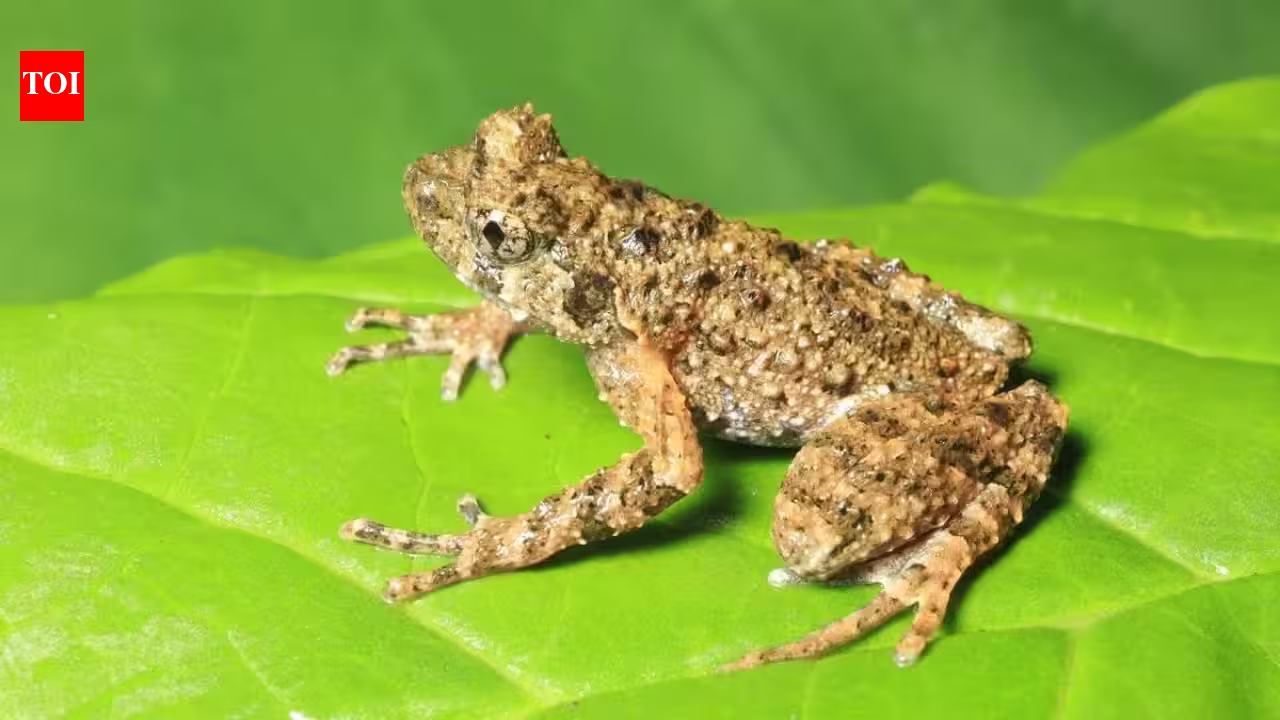
Researchers from the University of Delhi and Harvard University have discovered five new species of diminutive horned frogs in Arunachal Pradesh. Among them is…
Researchers have discovered five new species of diminutive horned frogs in the montane forests of Arunachal Pradesh, including one extraordinary amphibian capable of eating land snails whole. The findings were formally revealed in a study published in the peer-reviewed journal Royal Society Open Science, concluding five years of rigorous field investigations and laboratory analyses in northeastern India.
The breakthrough resulted from a collaborative expedition conducted by scientists from the University of Delhi and the Museum of Comparative Zoology at Harvard University. Under the leadership of Dr. Sonali Garg and noted amphibian researcher S.D. Biju, the international team combined traditional ecological field surveys with modern molecular genetics, bioacoustic analysis of mating calls, and high-resolution three-dimensional micro-computed tomography imaging.
All five newly described amphibians belong to the genus Jingophrys, known colloquially as diminutive horned frogs because of their miniature body proportions and prominent horn-like skin projections above their eyelids. The discovery more than doubles the known global diversity of the genus, expanding the catalog of recognized species from six to eleven worldwide.
Within Indian borders, the research marks an unprecedented sevenfold surge in documented Jingophrys species. Prior to this comprehensive study, only a single species of the genus had been recorded within the country, highlighting how historical biodiversity surveys overlooked cryptic amphibians nestled beneath dense canopy covers.
One of the most biologically striking additions is Jingophrys tanogogo, officially designated as the Snail-eating Horned Frog. Field examinations and internal anatomical scans revealed that the miniature predator preys on terrestrial snails, swallowing the mollusks whole alongside their hard protective shells.
Scientists identified this feeding habit as the first documented instance of snail-eating behavior among frogs in India. Furthermore, the specialized molluscivorous diet had never before been observed across any member of the wider frog family Megophryidae, demonstrating rare evolutionary specialization among forest-floor dwellers.
The newly named species also reflect strong cultural and geographical connections to the northeastern frontier state. Among them is Jingophrys taniitatii, commonly called the Tanii Horned Frog, named in honor of the indigenous Apatani community and incorporating the native Tanii language term for frogs.
Another newly classified amphibian, Jingophrys siangensis, draws its scientific designation from the ecologically diverse Siang river basin where researchers encountered the population. The remaining two novel species, Jingophrys hrdy and Jingophrys wularsoni, honor dedicated scientific supporters who facilitated prolonged evolutionary and conservation investigations across the eastern Himalayas.
The discovery underscores the eastern Himalayas as a critical, under-explored biodiversity hotspot harboring ancient lineages of specialized wildlife. Because these miniature amphibians depend heavily on undisturbed leaf litter and humid montane microclimates, scientists view them as vital biological indicators of ecosystem stability in fragile mountain landscapes.
Researchers emphasized that comprehensive documentation in remote border regions remains urgent as environmental changes and infrastructural development progress across the landscape. The team noted that upcoming field initiatives will center on tracking wild population sizes, defining precise geographical ranges, and formulating targeted conservation assessments for each newly identified species.
Primary source: Google News Arunachal Pradesh. Newzly rewrites and structures source reporting for clarity; verify critical details at the original.