Footage Alleging GTA 6 Running on Windows Sparks Community Debate
Clips shared on social media and developer forums claim to show an early build of Grand Theft Auto VI running on Windows, highlighting enduring interest in an eventual PC release.
In this piece
Footage circulated by an independent developer claims to demonstrate an early Grand Theft Auto VI build running natively on Windows. The viral demonstration has…
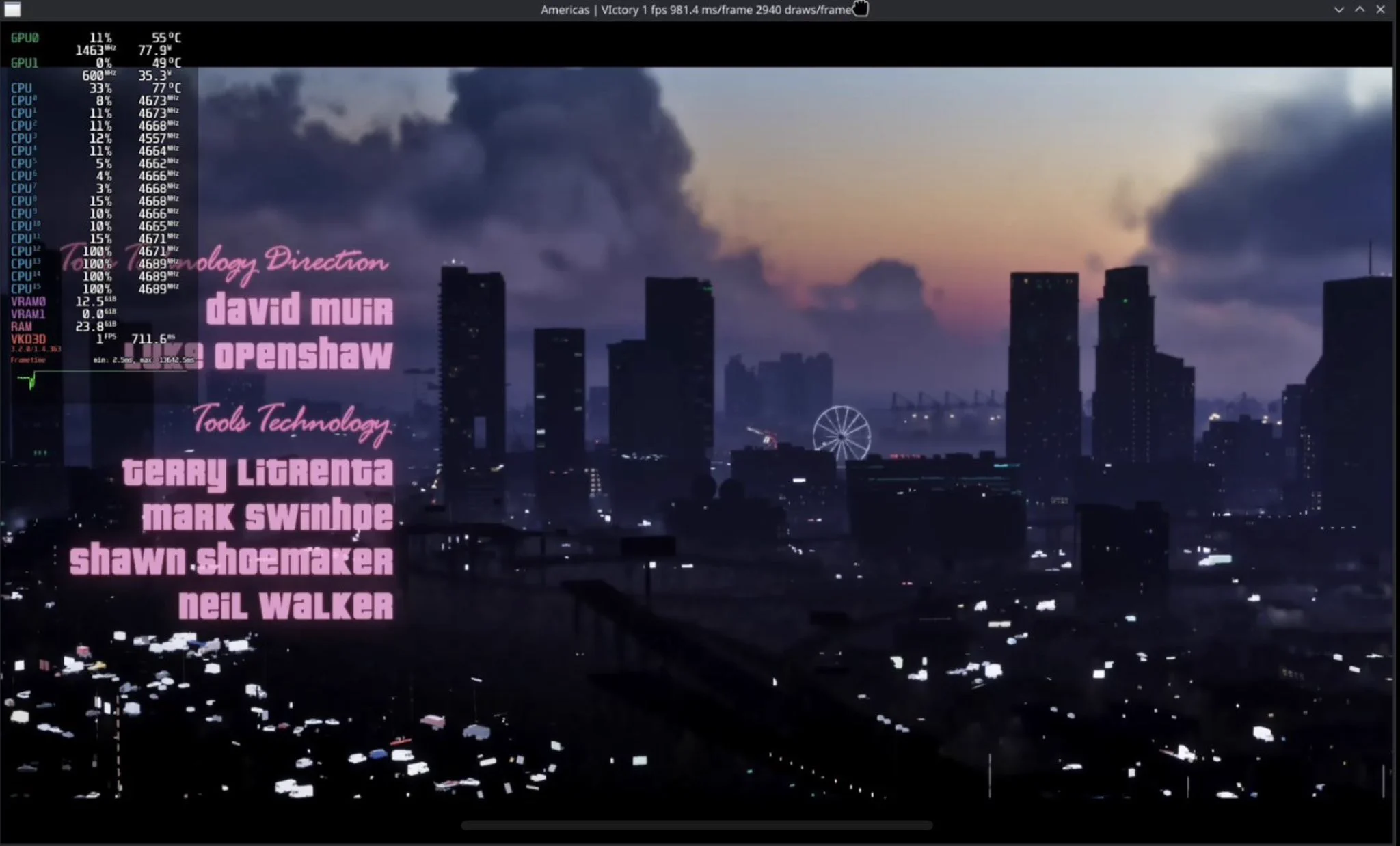
Online discussions across tech forums and social media erupted this week after developer footage surfaced claiming to show an early build of Grand Theft Auto VI running on a Windows PC. The demonstration, shared on X by developer @raul_bs3 and highlighted on Hacker News, reportedly features an unofficial execution of early game code compiled for desktop hardware.
While the brief clip quickly gained traction among gaming and programming communities, the nature and authenticity of the demonstration remain subjects of active technical scrutiny. Online observers noted that the footage appears to stem from reverse-engineering experiments and community-driven recompilation efforts rather than an official, finished build from Rockstar Games.
The prospect of running Grand Theft Auto VI on PC touches on a long-standing point of anticipation and frustration for desktop gamers. Rockstar Games and parent company Take-Two Interactive have historically prioritized home consoles for initial franchise rollouts, releasing blockbuster titles such as Grand Theft Auto V and Red Dead Redemption 2 on PC months or years after their console debuts.
Official announcements for Grand Theft Auto VI have so far concentrated exclusively on current-generation consoles, specifically the PlayStation 5 and Xbox Series X and S. That deliberate rollout strategy has left PC enthusiasts eager for any indication of desktop compatibility or early development builds, creating a fertile environment for independent technical explorations.
The developer community's ability to experiment with PC execution traces back to extensive leaks of developmental data and early testing footage that surfaced in late 2022. Those leaked assets, which originally originated from developer workstations running PC-based development environments, provided modders and hobbyist programmers with unprecedented insights into the game engine's internal architecture.
Specialized programmers within the reverse-engineering community have since analyzed file structures, asset formats, and runtime libraries to understand how the proprietary RAGE engine operates under modern APIs. Projects of this nature typically aim to decipher compiled binaries or patch development executables to run in standalone desktop environments without internal studio infrastructure.
Despite the enthusiasm generated by the demonstration, technical observers caution that such informal builds are far from playable games. Demonstrations at this stage generally show rudimentary asset rendering, broken shaders, and missing physics systems rather than a cohesive gameplay experience. Without complete assets, runtime scripts, and official optimization, these experiments remain technological curiosities rather than viable alternatives to an official release.
Efforts surrounding unauthorized or decompiled builds also navigate significant legal and security minefields. Take-Two Interactive has consistently issued copyright enforcement notices against projects utilizing leaked assets or proprietary code, while cybersecurity analysts frequently warn that unverified executable files shared online can harbor malicious software targeting eager fans.
For the broader gaming community, official channels remain the only verified route to experiencing the next chapter of the Grand Theft Auto series. As Rockstar Games continues refining the title ahead of its scheduled console debut, industry analysts expect any legitimate PC edition to follow on the studio's own timeline with dedicated graphical features, anti-cheat systems, and platform integration.
Primary source: Hacker News. Newzly rewrites and structures source reporting for clarity; verify critical details at the original.