Four-Day Chhath Festival Commences in Bihar With Nahay Khay Rituals
The four-day Chhath festival began across Bihar with the observance of Nahay Khay, initiating extensive fasting routines and communal celebrations dedicated to the Sun God.
In this piece
Bihar has begun the annual four-day Chhath festival with the traditional ritual of Nahay Khay. Worshippers across the state marked the opening phase through…
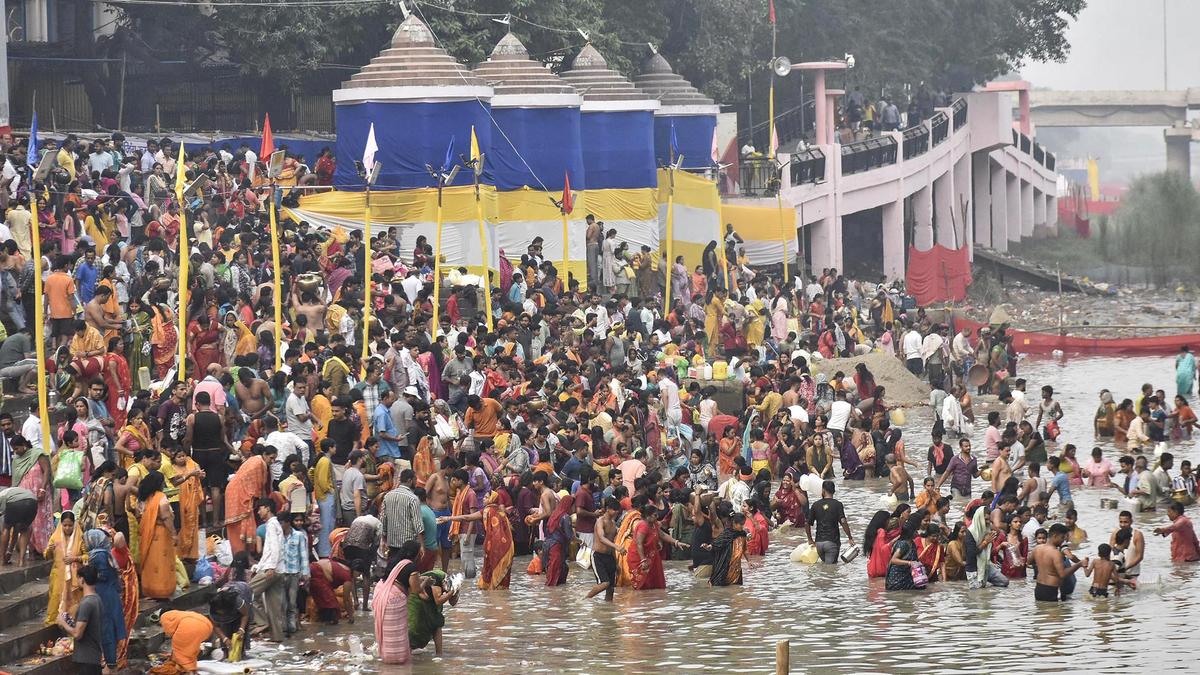
The four-day religious festival of Chhath commenced across Bihar with the traditional observance of Nahay Khay, marking the start of one of the region's most prominent cultural celebrations. Devotees throughout the state initiated the rigorous four-day observance dedicated to the Sun God and Chhathi Maiya following customary purification practices. The festival is widely regarded as a cornerstone of community life in Bihar, drawing families together for elaborate devotional rituals.
Nahay Khay marks the opening phase of the ancient festival, characterized by ritual bathing and the preparation of consecrated vegetarian meals. Worshippers, traditionally known as vrattis, clean their households thoroughly, take sanctifying baths in nearby rivers or local water bodies, and consume a simple meal prepared under strict hygienic conditions before entering intensive fasting stages. The practice is viewed as essential preparation for the physical and spiritual demands of the days ahead.
The customary meal on this inaugural day typically includes bottle gourd, gram lentils, and rice, prepared without onions or garlic and cooked in accordance with long-standing traditions. This ceremonial meal signifies inner cleansing and self-discipline, serving as the sole nourishment for devotees before prolonged fasts take effect. Families often share the sanctified food among relatives and neighbors in an expression of communal solidarity.
The festival proceeds over four consecutive days, each marked by distinct observances that test spiritual resolve and physical endurance. Following the opening rites of Nahay Khay, devotees observe Kharna on the second day, which features a day-long fast broken only in the evening after offering sweetened kheer and flatbreads to the deity. That evening meal marks the final intake of food and water for vrattis until the conclusion of the entire festival.
The climax of Chhath involves a rigorous thirty-six-hour waterless fast that extends through the third and fourth days. Devotees and their families gather at riverbanks and designated ghats during sunset to offer Sandhya Arghya, or evening offerings of seasonal produce and sweets to the setting sun. The prolonged fast concludes early the next morning with Usha Arghya, an identical offering made to the rising sun at dawn.
Across Bihar, Chhath holds unmatched cultural significance, transcending social divisions and uniting urban and rural communities. Millions of people who live and work outside the state return to their ancestral hometowns and villages specifically to participate in the festival. The collective spirit is reflected in public volunteering, neighborhood cleanups, and widespread community participation in preparing ritual items.
Civic authorities and local administrations across Bihar undertake extensive arrangements to manage the immense public gatherings along riverfronts and reservoirs. Special efforts are typically directed toward clearing approach paths, barricading water depths along the Ganges and local ponds, and installing lighting and safety monitoring systems. Voluntary civic organizations also assist local bodies in distributing supplies and guiding pilgrims arriving at major ghats.
Cultural historians and sociologists note that Chhath remains distinguished by its close relationship with the natural environment and solar worship. The rituals require no intermediary priesthood, relying instead on direct personal devotion, handmade bamboo baskets, earthenware, and locally harvested agricultural produce. This emphasis on simplicity and nature worship preserves centuries-old traditions that continue to define the cultural heritage of the region.
With the completion of the opening Nahay Khay rituals, neighborhoods across the state have entered a period of solemn focus and bustling preparation for the upcoming fasting phases. Devotees will spend the coming days preparing ceremonial offerings and arranging processions to local ghats, where the festival will culminate with the traditional morning prayers at sunrise.
Primary source: Google News Bihar. Newzly rewrites and structures source reporting for clarity; verify critical details at the original.