Four Planets Align in the Pre-Dawn Sky for November Celestial Parade
Mercury, Venus, Mars, and Jupiter are gathering along the morning horizon throughout November, offering skywatchers an accessible astronomical display before sunrise across the globe.
In this piece
A rare planetary parade featuring Mercury, Venus, Mars, and Jupiter is gracing the pre-dawn sky throughout November. The four planets appear aligned along the…
Early risers across the globe are in for a rare astronomical display this November as four of the solar system's prominent planets gather in the early morning sky. According to reporting from BBC Science, Mercury, Venus, Mars, and Jupiter are appearing in a loose alignment visible in the pre-dawn hours throughout the month.
The celestial event, often termed a planetary parade, occurs when several planets line up along the ecliptic plane from the vantage point of Earth. While the worlds remain millions of miles apart in their respective orbits around the Sun, their positions temporarily make them appear near one another along a single arc across the sky.
Skywatchers looking toward the eastern horizon before sunrise will have the opportunity to see these distinct planetary neighbors sharing the same expanse of darkness. Such simultaneous appearances offer a visual representation of the solar system's shared orbital plane, drawing interest from seasoned astronomers and casual stargazers alike.
Each planet in the morning lineup presents distinct visual characteristics that aid in identification against the background stars. Brilliant Venus and giant Jupiter typically shine with steady, unmistakable radiance, often ranking among the brightest natural objects visible before dawn breaks.
Mars, easily recognizable by its characteristic reddish hue, joins the formation at a dimmer but discernible intensity. Meanwhile, Mercury, the closest planet to the Sun, stays lower to the horizon and can be more elusive, requiring viewers to catch it during the narrow window before twilight washes out the sky.
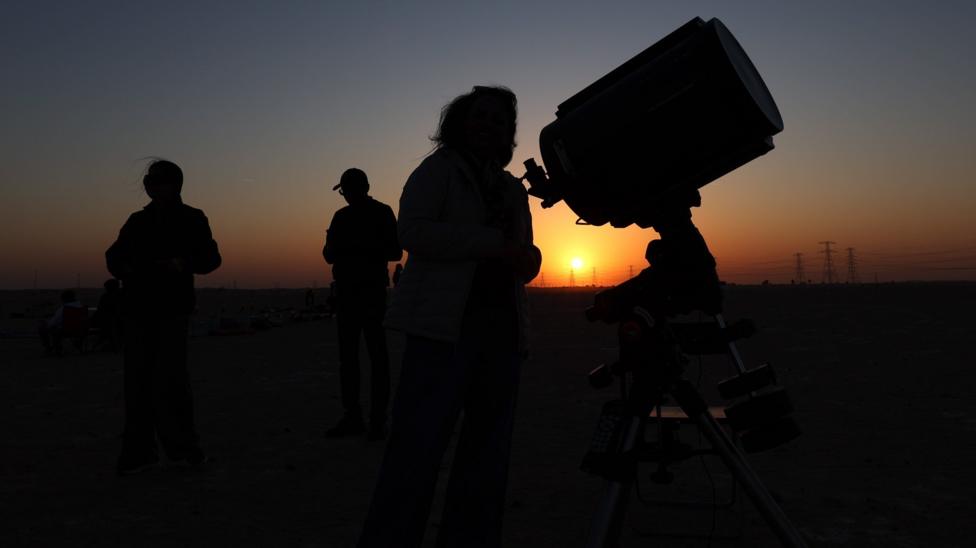
Astronomical observers note that witnessing planetary alignments does not require specialized equipment, making the November event broadly accessible. Clear weather conditions and an unobstructed view of the horizon away from tall buildings and trees remain the most essential factors for successful viewing.
While binoculars or small telescopes can reveal additional details such as Jupiter's larger moons or the phases of Venus and Mercury, all four planets can typically be tracked with the naked eye under favorable atmospheric conditions. Light pollution from urban centers may diminish visibility, prompting enthusiasts to seek darker rural skies for the clearest views.
Events of this nature serve as valuable reminders of the dynamic mechanics governing our planetary neighborhood. Because each planet orbits the Sun at a different speed and distance, configurations involving four or more bright worlds occur only periodically, shifting as individual orbital motions carry them into new alignments.
The pre-dawn parade is expected to remain a notable feature of the early morning sky through the remainder of November, gradually changing as the planets continue along their paths. Observers are encouraged to check local weather forecasts and monitor clear morning windows to witness the celestial gathering before the seasonal progression alters the view.
Primary source: BBC Science. Newzly rewrites and structures source reporting for clarity; verify critical details at the original.