Georgia Stuns North Carolina 78-70 Behind Dominant Rebounding and Late Surge
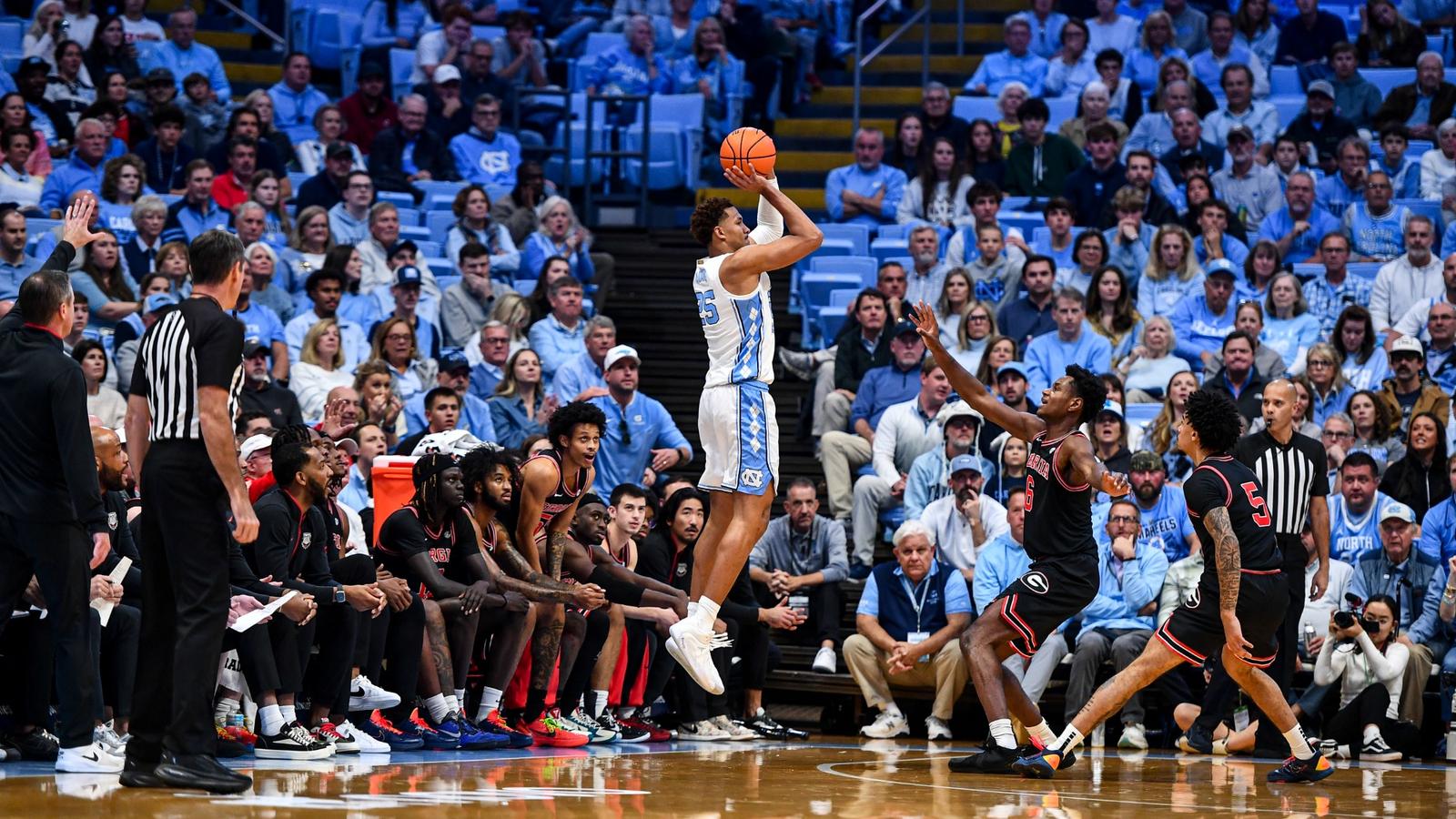
Georgia dominated the glass and closed on a 10-2 run to hand North Carolina a 78-70 defeat in Chapel Hill, as the Tar Heels struggled through a record 38 three-point attempts.
In this piece
The Georgia Bulldogs defeated North Carolina 78-70 at the Dean E. Smith Center behind a dominant 52-43 rebounding advantage. UNC held a late lead before going…
The Georgia Bulldogs handed North Carolina a frustrating home defeat at the Dean E. Smith Center, surging in the final minutes to secure a 78-70 victory over the Tar Heels. Georgia closed the contest on a decisive 10-2 run to erase a late deficit and capture an emphatic non-conference road win in Chapel Hill. The outcome marked a sharp setback for North Carolina in front of its home crowd.
North Carolina appeared positioned to take control of the matchup late in the second half, holding a three-point lead with roughly five minutes remaining on the clock. A missed open perimeter shot that could have stretched the margin to six points quickly shifted the energy inside the arena. Georgia seized on that sudden opening, turning defensive stops into immediate offensive momentum.
Following that missed opportunity, the Tar Heels went cold across the floor, connecting on just three of their final 11 field goal attempts down the stretch. Georgia capitalized on North Carolina's scoring drought with disciplined possessions and steady execution at the free-throw line. The Bulldogs steadily pulled ahead as the Tar Heels struggled to generate clean looks.
Dominance on the backboards served as the defining foundation of Georgia's winning effort throughout the contest. The Bulldogs outrebounded the Tar Heels by a lopsided 52-43 margin, asserting control inside the paint from the opening tip. Their physical presence prevented North Carolina from establishing a consistent transition rhythm or dictating the tempo.
Georgia's physical edge was especially damaging on the offensive glass, where the visitors collected 18 offensive rebounds. Those extra possessions generated 15 critical second-chance points, with 13 of those points arriving during a physical second half. North Carolina's inability to secure defensive rebounds repeatedly extended Bulldog possessions at critical junctures.
At the same time, the Tar Heels struggled to establish reliable offensive flow, settling for outside jump shots that rarely found the net. North Carolina launched a program-record 38 attempts from three-point range but managed to convert only nine of them, finishing with an anemic 23.7 percent success rate from deep.
That sustained perimeter slump dragged down the Tar Heels' broader offensive output, leaving the team with an overall field goal percentage of just 32.9 percent. With outside shots failing to connect and limited interior scoring balance, North Carolina was unable to construct sustained scoring runs to withstand Georgia's late surge.
Amid the team's widespread offensive difficulties, guard Terrence Brown offered a standout individual performance that kept North Carolina competitive. Brown paced the Tar Heels with a team-high 21 points, sinking four three-pointers and drawing five fouls while consistently driving into the Georgia defense. His aggressive second-half scoring provided virtually the only steady spark for the hosts.
As highlighted in GoHeels columnist Adam Lucas's post-game rapid reactions, the loss exposed significant early-season vulnerabilities that North Carolina must address quickly. The combination of defensive rebounding lapses and a heavy reliance on high-volume, low-efficiency perimeter shooting proved fatal against a physical and composed opponent.
Moving forward, the Tar Heels face immediate pressure to shore up box-out assignments and create more diverse scoring paths inside the arc. Georgia departs Chapel Hill with an impressive resume-building non-conference victory that validated its relentless effort on the boards and poise in late-game execution.
Primary source: Google News Georgia. Newzly rewrites and structures source reporting for clarity; verify critical details at the original.