Global Showcase Highlights How Sustainable Architecture Combines Eco-Friendly Design With Aesthetics
From a Brazilian community village to a bamboo gym in Bali, a new showcase of eco-friendly architecture highlights how innovative design can dramatically lower building emissions without sacrificing visual beauty.
In this piece
With the construction sector driving more than a third of global greenhouse gas emissions, sustainable architecture has emerged as an essential climate…
A newly highlighted showcase of international architecture is putting sustainable design at the center of the global climate conversation, demonstrating that environmentally responsible construction can achieve remarkable aesthetic heights. Across diverse geographies, designers are proving that low-carbon structures need not compromise on visual elegance or structural ingenuity. The survey highlights projects ranging from Latin America to Southeast Asia and Europe, reframing green building from a technical compromise into an inspiring creative pursuit.
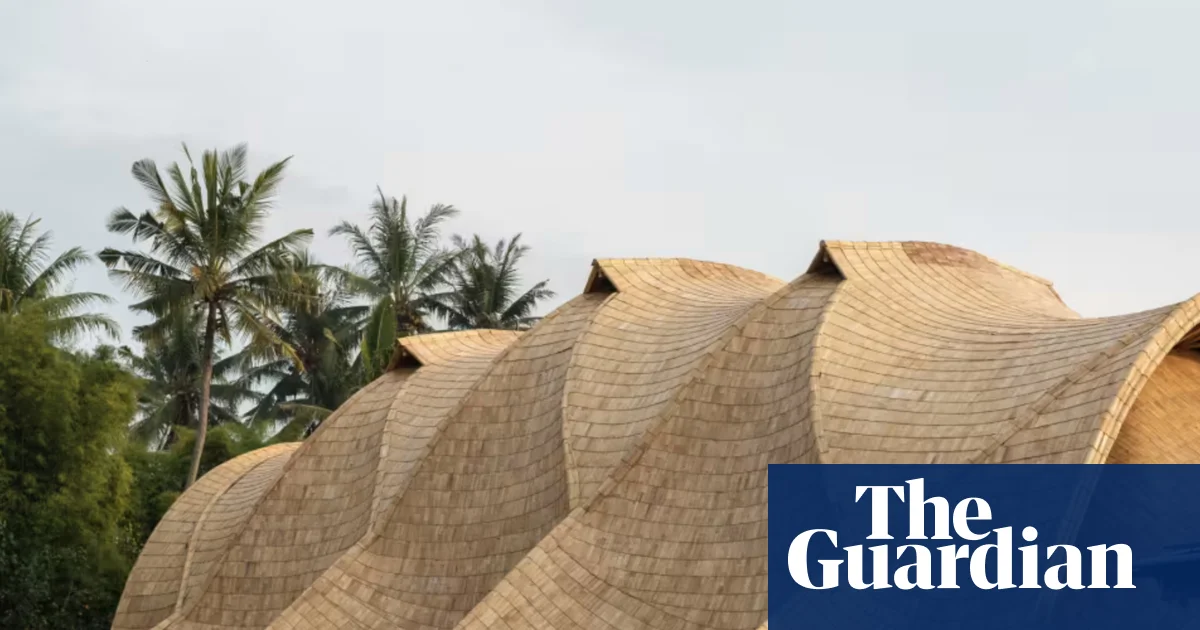
Among the featured creations is the Children's Village in Tocantins, Brazil, an ambitious complex designed to integrate community needs with environmental awareness. In Southeast Asia, an innovative bamboo gymnasium in Bali exemplifies how renewable, fast-growing natural materials can shape large-scale functional spaces. Meanwhile, in Wiltshire in the United Kingdom, a private home constructed from compacted earth demonstrates that age-old regional vernaculars can be reimagined for modern residential living.
The focus on ecological building practices comes as the global building and construction sector confronts its massive environmental footprint. According to international energy and environmental assessments cited in the survey, construction and building operations currently account for more than a third of all global greenhouse gas emissions. As urbanization accelerates and infrastructure demands rise, mitigating the industry's carbon intensity has become a decisive factor in whether global climate targets can realistically be reached.
Traditional building practices have long relied heavily on energy-intensive materials, notably conventional concrete and structural steel, which carry immense embodied carbon burdens. In contrast, the projects highlighted in the compilation embrace vernacular and bio-based alternatives, such as sustainably harvested bamboo and raw earth. By turning to locally abundant resources, architects can substantially reduce the energy expended in extraction, manufacturing, and transport.
Beyond raw materials, sustainable architecture increasingly prioritizes passive design principles that respond directly to local microclimates. Structures such as the complex in Tocantins leverage natural ventilation, expansive shading, and thermal mass to minimize reliance on artificial cooling and heating systems. This climate-responsive methodology demonstrates how buildings can maintain occupant comfort while drastically curbing ongoing operational energy consumption.
For decades, eco-friendly architecture faced skepticism from critics who perceived sustainable construction as visually utilitarian or structurally constrained. The featured international developments actively challenge that notion, proving that environmental stewardship can yield striking, sculptural forms that celebrate their surroundings. Architects involved in such work describe the ability to harmonize ecological rigor with breathtaking form as a creative ideal, transforming constraints into pioneering design languages.
The broader significance of these pioneering builds extends beyond individual site honors and architectural prestige. Urban planners and policymakers are increasingly looking to such showcase projects for proof of concept as cities introduce stricter building codes and embodied carbon standards. Demonstrating that natural earth and timber or bamboo engineering can satisfy rigorous structural demands provides a vital precedent for wider commercial and institutional adoption.
Despite growing enthusiasm, mainstreaming sustainable building methodologies on a planetary scale presents substantial structural hurdles. Sourcing certified renewable materials, training local labor in specialized construction techniques, and navigating outdated municipal zoning regulations continue to impede widespread replication. While the featured projects in Brazil, Bali, and England illustrate successful outcomes, scaling these individualized solutions into high-density urban environments remains an ongoing challenge.
Looking ahead, the evolution of sustainable architecture will depend on deeper collaboration between innovative design studios, material scientists, and regulatory bodies. As decarbonization mandates tighten across international markets, the lessons derived from projects like the Children's Village and bio-based builds worldwide are poised to inform next-generation building standards. For practitioners in the field, proving that low-impact architecture can be universally compelling offers a viable roadmap toward an ecologically resilient built environment.
Primary source: The Guardian Culture. Newzly rewrites and structures source reporting for clarity; verify critical details at the original.