Google Gemini's 'Tasks' Personal Assistant Rolls Out for Free
Google has made its agentic 'Tasks' assistant feature in Gemini available for free to users across six countries, opening up automated multi-step workflows, scheduling, and research without a paid subscription.
In this piece
Google has rolled out its Tasks in Gemini personal assistant feature at no cost for eligible users in select regions, including the U.S. and India. The tool…
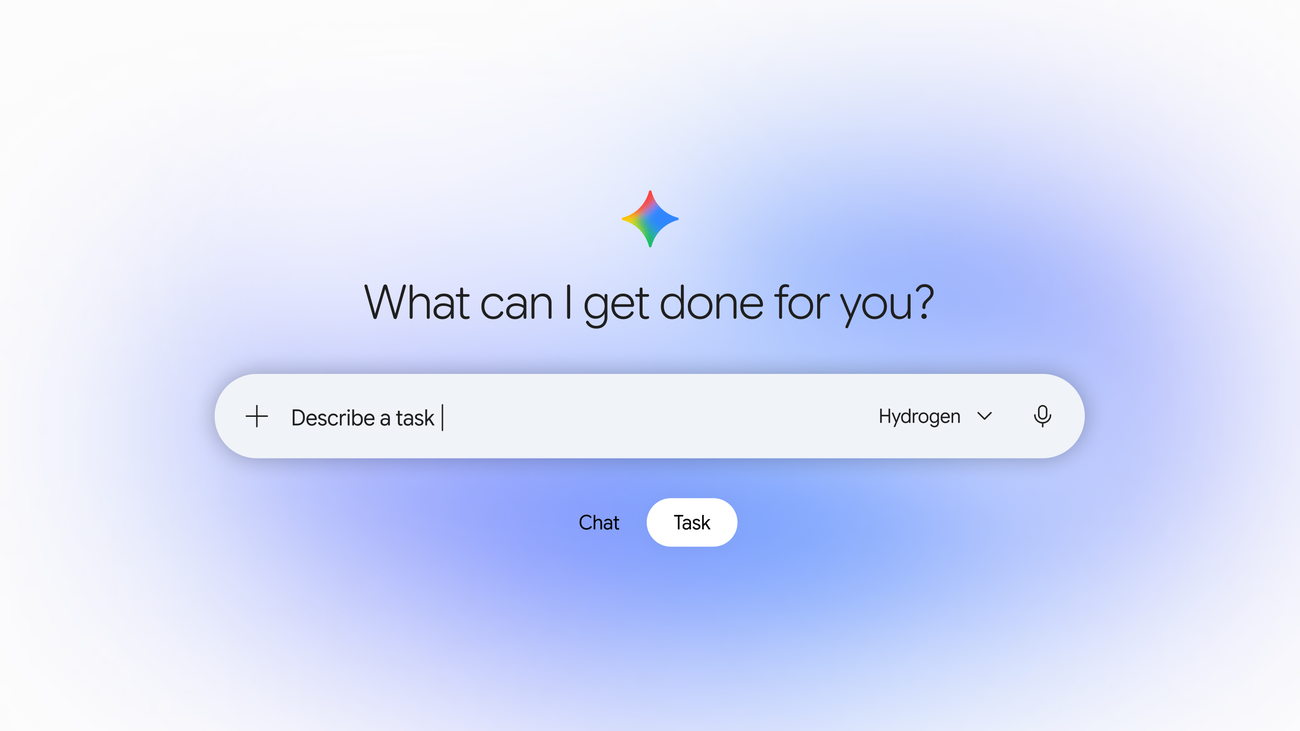
Google has officially made Tasks in Gemini, its autonomous personal assistant capability, free to all eligible users across six countries. The release enables Gemini to execute complex multi-step workflows, appointment scheduling, and background data synthesis without requiring a paid subscription tier.
The expanded rollout introduces a dedicated toggle between chat and task modes directly within the Gemini web interface, desktop client, and mobile applications. Eligible users aged 18 and older across the United States, Canada, Australia, India, Japan, and South Korea can access the capability using their standard personal Google Accounts with activity history turned on.
The feature previously surfaced in limited trials under names including Gemini Spark and Task Mode. By removing the paywall, Google is transitioning what was once an experimental productivity tool for premium subscribers into a mainstream feature designed for everyday consumer workflows.
At the system level, the feature is supported by Google's Gemini 4 Hydrogen model, an architecture optimized specifically for low-latency background reasoning and multi-step execution. Unlike standard conversational interactions, this framework manages asynchronous operations independently, allowing the software to pursue prolonged objectives while the user handles other tasks.
In practical application, the assistant can organize complex logistical projects such as drafting detailed travel itineraries, managing calendar availability, and parsing utility statements or invoices through linked Google Workspace accounts. Users can direct the tool to aggregate information from disparate documents and automatically compile the findings into structured spreadsheets or written briefs.
The assistant is also capable of taking real-world operational steps through integrations with Google Maps and voice telephony. When prompted to secure local services, the system can contact businesses directly, identify itself as an automated assistant, verify open hours or slot availability, and coordinate directly with Google Calendar to finalize bookings.
Commercial workflows have also been integrated through connections with Google's Shopping Graph. The assistant can compare retail offerings, clarify specific user preferences regarding product specifications, identify relevant discount codes, and complete checkouts through authenticated credentials saved in Google Pay and Google Password Manager.
The shift to offer agentic capabilities at no cost comes amid escalating competition across the generative artificial intelligence industry. Major rivals including OpenAI, Microsoft, and Anthropic have rapidly expanded their investments in computer-use agents and automated task planners, turning everyday utility into a vital consumer acquisition channel.
Entrusting autonomous systems with direct access to email archives, payment credentials, and live telephone calls continues to generate discussion regarding privacy and operational guardrails. Google has incorporated mandatory confirmation checkpoints for sensitive actions, requiring users to explicitly approve financial transactions and critical account updates before execution.
Google is expected to extend Tasks in Gemini to additional languages and geographic regions as server infrastructure and regional compliance frameworks expand. Industry observers anticipate that as multi-step autonomous systems mature, traditional conversational interfaces will increasingly serve as coordination hubs for background digital agents.
Primary source: Hacker News. Newzly rewrites and structures source reporting for clarity; verify critical details at the original.