Google Tests AI-Powered Custom Home Screen Widgets on Android
Android users may soon build bespoke home screen widgets using generative AI prompts, as Google experiments with Gemini-powered tools that turn natural language requests into functional mobile shortcuts.
In this piece
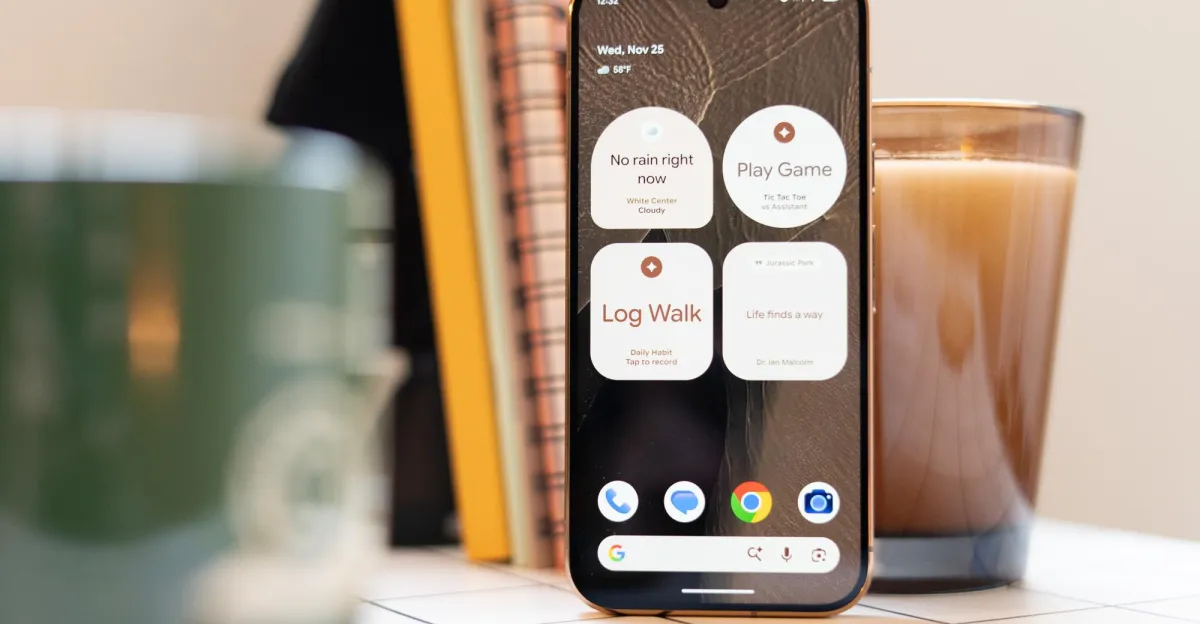
Google is testing an experimental feature that allows Android users to generate custom home screen widgets using natural language prompts powered by Gemini. The…
Google is testing an experimental Android feature that allows smartphone owners to generate custom home screen widgets through conversational artificial intelligence prompts. The tool, linked to Android Intelligence and powered by Google Gemini, enables users to describe specific on-screen utilities in plain language rather than waiting for third-party developers to release pre-made tools. Early tests documented by tech reviewers show the system interpreting everyday requests into interactive dashboard elements directly on the device.
Among the practical use cases explored in hands-on demonstrations is tracking hyper-local public transit arrivals without opening dedicated navigation applications. By prompting the system to display arrival times for a specific neighborhood bus stop, users can theoretically bypass multi-step app navigation in favor of an instant glanceable card. The capability mirrors the broader concept of prompt-based software creation, commonly referred to as vibe-coding, where conversational guidance replaces manual programming.
Home screen widgets have long stood as one of Android's signature customization features, dating back to the earliest iterations of the mobile operating system. Over the years, standard widgets have typically relied on rigid templates provided by application developers, limiting users to the specific data views and refresh cycles coded by those creators. While power users frequently turned to third-party widget engines to build bespoke layouts, the process historically required extensive configuration and technical patience.
The emergence of on-device and cloud-connected artificial intelligence models has begun reshaping how mobile software is assembled and served. Google has steadily integrated its Gemini ecosystem deeper into Android system services, deploying machine learning models to manage notification summaries, screen context analysis, and automated messaging replies. Extending that intelligence layer into user interface generation represents an ambitious evolution toward software that adapts on demand to an individual user's immediate routine.
Behind the conversational interface, dynamically generating functional widgets requires combining generative code capabilities with live data feeds and system permissions. A widget tracking transit schedules or upcoming calendar events must reliably tap into relevant application programming interfaces without compromising operating system security. Analysts note that while generating basic visual displays is relatively straightforward for modern large language models, maintaining persistent, low-latency background updates presents ongoing engineering hurdles.
Mobile hardware limitations also present unique challenges for AI-constructed widgets operating on persistent background threads. Excessive background network pings or unoptimized scripts can quickly drain smartphone battery life and consume system memory. For a custom widget feature to achieve mainstream viability, platform architects must implement strict sandboxing and standardized refresh limits to protect overall device stability.
The experiment comes as the wider technology sector explores dynamic user interfaces generated entirely by artificial intelligence. Hardware and operating system competitors have increasingly showcased proof-of-concept interfaces where software adapts in real time to ambient user behavior rather than remaining static. Empowering end users to author specialized micro-software through natural language reflects an expanding push to democratize development across mobile computing platforms.
Google has not yet detailed a formal release schedule or confirmed whether the DIY widget generation tool will roll out broadly to consumer devices. For now, the implementation remains an experimental capability subject to ongoing evaluation and developer refinement. How smoothly Android reconciles conversational interface creation with battery efficiency and data accuracy will likely dictate whether bespoke AI widgets become a staple of future mobile releases.
Primary source: The Verge. Newzly rewrites and structures source reporting for clarity; verify critical details at the original.