world·Gujarat·Ahmedabad District
Gujarat BJP Gathering Sparks Buzz After Key Union Ministers Skip Event
The absence of Union ministers C.R. Patil, Mansukh Mandaviya, and Nimuben Bambhaniya from a Gujarat BJP festive meet has triggered political speculation alongside subdued cadre turnout.
In this piece
Prominent Union ministers from Gujarat, including C.R. Patil and Mansukh Mandaviya, skipped a state-level BJP get-together in Gujarat, raising eyebrows within…
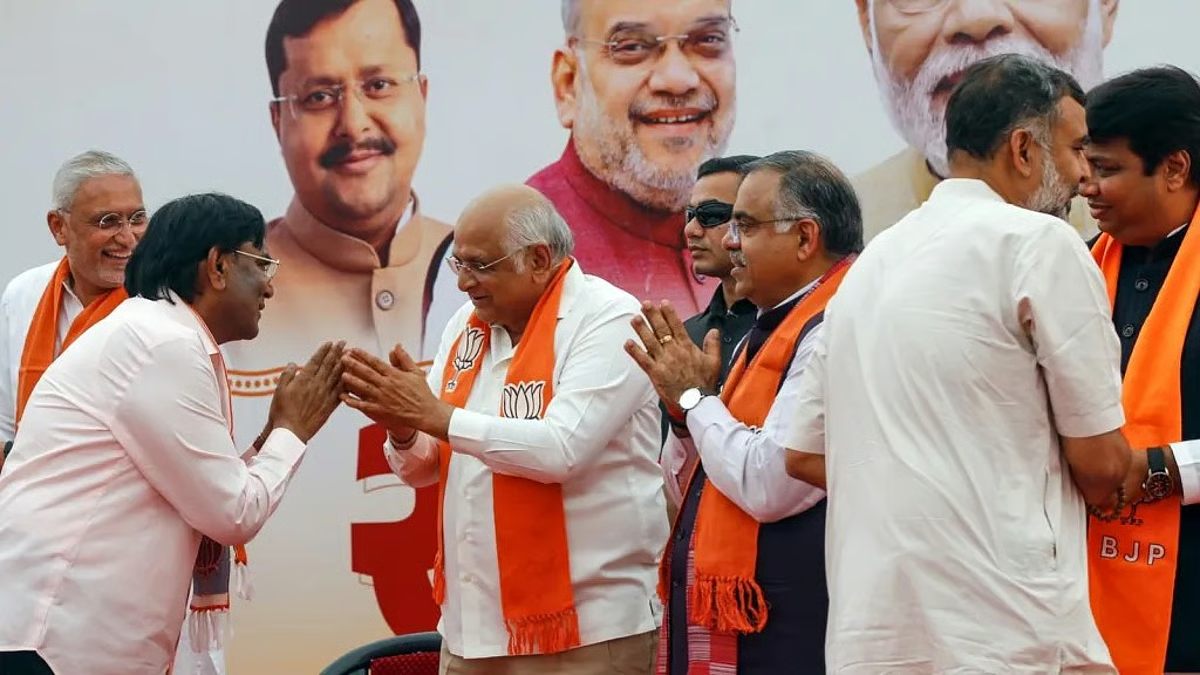
The absence of prominent Union ministers from Gujarat at a recent state-level Bharatiya Janata Party gathering has triggered widespread political discussion across the state. Central ministers C.R. Patil, Mansukh Mandaviya, and Nimuben Bambhaniya did not attend the high-profile Diwali and New Year Sneh Milan event. The gathering, organized for party leaders and cadres to exchange festive greetings and review organizational coordination, quickly became the subject of intense speculation due to the vacant seats on the dais.
The state-level event was held under the leadership of Gujarat Chief Minister Bhupendra Patel alongside senior state party figures. Intended as a routine post-festival coordination meeting, the platform brought together elected representatives, office bearers, and regional functionaries. However, the conspicuous non-attendance of three senior ministers representing Gujarat in the Union council drew immediate attention from observers and attendees alike.
Among the absentees, the omission of C.R. Patil was particularly notable given his pivotal role in steering the state unit through previous electoral sweeps before taking charge of the Union Jal Shakti Ministry. Similarly, Mansukh Mandaviya, who oversees major central portfolios and has long been a heavyweight in Gujarat's regional politics, was absent from the stage. Their joint absence alongside Union Minister of State Nimuben Bambhaniya led to questions regarding scheduling conflicts or potential internal communication gaps.
Compounding the discussions around the leadership dais was a reported drop in overall attendance among grassroots workers. Observers noted that the gathering saw a lower-than-expected turnout of party cadres compared to previous high-energy get-togethers in the state. For an organization renowned for its rigorous booth-level mobilization and disciplined event attendance, the subdued hall numbers did not go unnoticed.
Adding another layer of curiosity among attendees was the prominent presence of national secretary Rohan Gupta on stage. Gupta, a former national spokesperson and digital communications head for the Congress party who joined the BJP earlier, was seated prominently alongside senior leaders. His visible placement sparked conversations among traditional party loyalists assessing organizational hierarchies and incoming leadership roles.
Gujarat has long served as the foundational fortress for the ruling party, where organizational meetings are typically marked by unanimous presence and meticulous choreography. The state unit has consistently operated with tight message discipline and visible unity among central and local leadership. When prominent figures fail to appear together at premier state assemblies, political observers invariably look for deeper indicators of internal dynamics and shifting responsibilities.
The Sneh Milan meetings traditionally serve as crucial networking bridges between state administrators, national ministers, and ground-level workers following the Diwali holiday season. These interactions typically offer booth workers direct informal access to ministers and provide leadership an opportunity to boost morale ahead of upcoming civic and organizational activities. A subdued attendance during such flagship conventions naturally raises questions about communication protocols within regional branches.
Party insiders and regional observers have pointed out that demanding ministerial schedules in New Delhi could easily account for travel disruptions during festive periods. Union ministers frequently manage extensive official responsibilities and parliamentary committee duties that complicate regional travel. Nonetheless, without formal clarifications explaining the simultaneous absences, regional observers continue to debate whether the event pointed to simple calendar clashes or deeper organizational realignment.
Moving forward, party leadership in Gujarat is expected to focus on tightening internal coordination and re-energizing cadre networks across districts. Political analysts will be watching subsequent state executive gatherings and district coordination sessions to see whether full attendance is restored among Gujarat's central representatives. As the ruling party prepares for future organizational milestones, demonstrating seamless synergy between Gandhinagar and New Delhi will remain a top priority.
Primary source: Google News Gujarat. Newzly rewrites and structures source reporting for clarity; verify critical details at the original.