Haryana Orders Stepped-Up Vigilance to Curb Stubble Burning
Authorities across Haryana have instructed district officials to intensify field surveillance and strictly enforce penalties against crop residue burning as winter pollution concerns escalate across northern India.
In this piece
Haryana authorities have directed district administrations and police units to step up vigilance against illegal stubble burning amid worsening seasonal air…
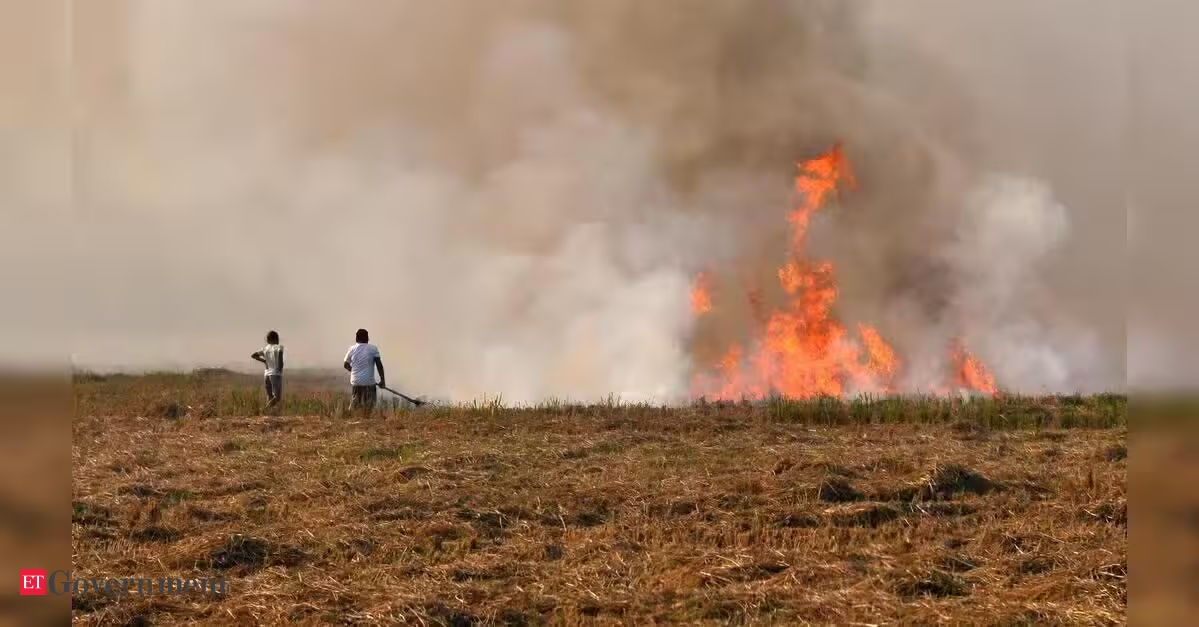
State authorities in Haryana have directed district administrations and law enforcement personnel to intensify vigilance against stubble burning as air quality concerns escalate across northern India. Multi-departmental teams have been ordered to maintain round-the-clock monitoring to curb open-field burning during the critical post-harvest window.
The directives instruct field functionaries, agriculture officers, and local police units to coordinate closely across high-risk agricultural belts. Senior officials emphasized that administrative laxity will not be tolerated, warning that supervisory personnel face disciplinary scrutiny if unmonitored farm fires occur under their watch.
Enforcement mechanisms include the deployment of flying squads, village-level nodal officers, and specialized surveillance tools to spot active fires rapidly. In several sensitive pockets, authorities are utilizing satellite tracking and aerial monitoring via drones to identify farm fire locations in real time.
The administration has stepped up deterrent measures against non-compliant landholders, including registering police cases and levying environmental compensation penalties. Farmers found violating statutory bans also risk adverse entries in official land revenue records, which can restrict access to subsidized agricultural programs and government support mechanisms.
The intensified campaign comes during the annual post-harvest cycle when growers rapidly prepare fields for winter wheat sowing. The narrow turnaround between harvesting summer paddy and planting the winter crop leaves farmers with limited time and labor, frequently prompting open burning as the fastest residue clearance method.
The practice of burning agricultural residue coincides with seasonal meteorological shifts, including cooling temperatures and dropping wind speeds that trap airborne pollutants near the ground. Plumes of particulate matter drift across the regional airshed, sharply degrading ambient air quality indices across Haryana and the surrounding National Capital Region.
Alongside punitive enforcement, the state framework seeks to promote crop residue management through in-situ and ex-situ technical alternatives. Subsidized agricultural implements such as super seeders, balers, and happy seeders are being promoted to allow direct sowing without clearing residue by fire.
State programs also offer direct financial incentives per acre to cultivators who adopt verified sustainable residue management practices. In addition, administrative channels are facilitating links between farming communities and industrial users, such as biomass energy plants and ethanol processing units, to build viable off-field demand for paddy straw.
Accountability measures have extended beyond landholders to government field monitors assigned to track rural blocks. State reviews have resulted in formal inquiries and show-cause notices for nodal officers in areas where ground reporting lagged behind detected thermal anomalies.
As harvesting operations peak over the coming weeks, inter-agency task forces plan to sustain intensified field inspections and awareness campaigns across rural communities. State authorities maintain that combining strict ground surveillance, technological monitoring, and accessible machinery remains essential to containing farm fires and mitigating regional winter pollution.
Primary source: Google News Haryana. Newzly rewrites and structures source reporting for clarity; verify critical details at the original.